People
Clear responsibilities, consultation and competent supervision help workers understand the task, the hazards and when work must stop or change.

Workplace safety culture
Construction safety matters because the decisions made before and during work affect people, programme certainty, quality and public confidence. This article explains the culture and coordination behind safer delivery.
A strong safety culture helps teams identify hazards early, communicate clearly and make decisions before a problem reaches the work front. It supports workers and site visitors while also helping clients, contractors and project stakeholders understand how activities will be coordinated.
Construction safety is not a promise that risk can be eliminated. It is an ongoing process of planning, consultation, control, supervision, verification and review. The exact duties and controls depend on the work, the site and the people or organisations responsible for each scope. For the statutory context, see the guide to NSW workplace health and safety legislation.
Clear responsibilities, consultation and competent supervision help workers understand the task, the hazards and when work must stop or change.
Early planning and coordinated work fronts can reduce avoidable disruption, rework and uncertainty without treating safety as a separate activity.
Documented decisions and visible verification give project stakeholders a clearer basis for understanding how risks are being managed.
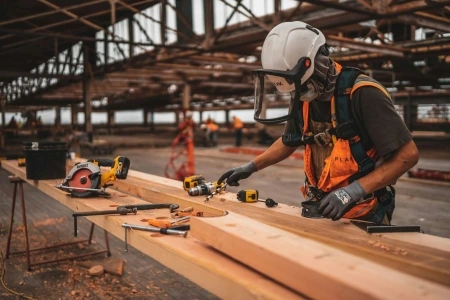
Effective workplace safety begins with a shared understanding of the scope, site constraints, interfaces and responsibilities. Depending on the activity, preparation may include risk assessments, Safe Work Method Statements, inductions, access planning, equipment checks, environmental controls and emergency arrangements.
The value comes from using those documents and conversations to guide real work. Conditions can change, so teams need practical ways to report concerns, reassess controls and coordinate with other trades or stakeholders.
A concern about fatigue, excessive time pressure or conflicting instructions needs a response in the work plan. Agree who will receive the concern, who can change the sequence or resources, and how affected crews will hear the decision. Close the loop after the control has been checked on site; a completed reporting form alone does not establish that the hazard has been controlled.
Engineering input may be required where structural stability, temporary works, loads, sequencing or other technical constraints affect how work can proceed. The relevant engineers and competent practitioners remain responsible for design, verification and certification within their appointed scopes.
SCE coordinates with project engineers and other specialists and can assist engineering-related delivery where the project scope and supporting evidence allow. This helps connect technical requirements with practical site planning without overstating the role of any one contractor.
For service context, review SCE’s building services and civil services.

SCE brings a highly qualified, skilled and experienced building and civil team to project planning and delivery. Within the agreed scope, that can include work-front coordination, site communication, documentation, inspections assigned to the delivery team and early escalation of constraints that need specialist input.
SCE operates certified ISO 9001, ISO 14001 and ISO 45001 management systems and is NSW DBP registered. These credentials support structured management and accountability; they do not replace project-specific duties, competent-person requirements or independent professional appointments. View SCE’s certifications, credentials and verifications.
For the company-specific application of these principles, review SCE’s workplace-safety support and project controls.
Share the project scope, site constraints and current documentation with SCE. We can discuss the building or civil delivery pathway and identify where additional engineering or specialist input may be required.
Contact SCEConstruction safety matters because it helps protect workers, visitors and the public while supporting clearer planning, coordination and decision-making. It also helps project teams respond to changing conditions before they become incidents or major delivery problems.
Safety culture is the way people communicate, make decisions and take responsibility across a project. Site controls are the specific measures used for a task or hazard. Effective delivery needs both: a culture that supports action and controls that suit the work.
Responsibility is shared across the duty holders and people involved in the work, with legal duties depending on each role and the circumstances. Clients, PCBUs, designers, principal contractors, subcontractors, supervisors and workers may each have distinct obligations that cannot simply be transferred to another party.
Engineering input can help address structural stability, temporary works, loads, sequencing and other technical risks. The relevant qualified practitioners should be appointed for design, verification or certification where those services are required.
Good planning takes time, but it can also reduce avoidable disruption, rework and uncertainty. The aim is not to trade safety against programme or cost; it is to plan work realistically and review controls when conditions change.
SCE supports workplace safety through scope planning, work-front coordination, site communication, documented processes and escalation of issues that require engineering or specialist input. The exact approach is tailored to the project, the work and SCE’s appointed responsibilities.