
Roof Repairs vs Roof Replacement: How to Decide What Your Building Needs
Roof repairs vs roof replacement is a common decision for commercial property owners, strata managers, facility managers, owners corporations and building owners.
A roof issue can affect more than the roof itself. Water ingress, corrosion, failed flashings, drainage problems and poor maintenance can impact internal finishes, tenants, operations, safety, insurance claims and long-term asset management.
When a defect appears, the practical question is usually whether the roof should be repaired, replaced, or addressed through staged remedial works.
The answer depends on the roof type, age, condition, maintenance history, access requirements, safety risks, budget, disruption to occupants and whether the issue is isolated or part of a wider pattern of deterioration.
This article provides general information only. It is not building-specific advice, an engineering assessment or a substitute for inspection.
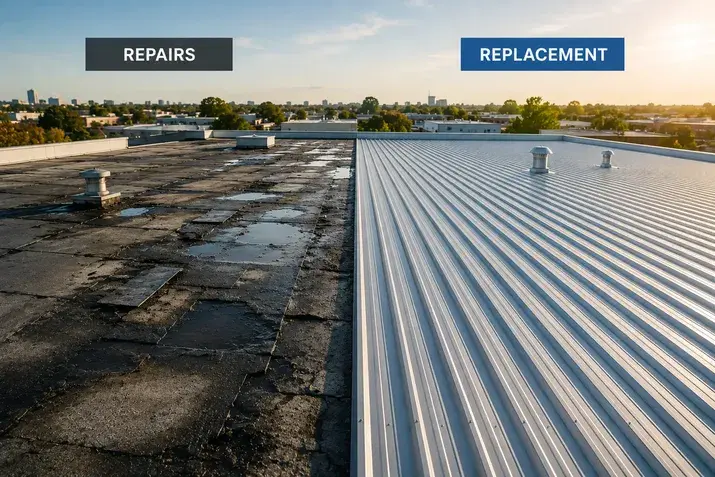
Common signs your roof requires attention
Roofing defects are not always obvious at first. Some issues develop gradually and only become visible after rainfall, internal staining, recurring leaks or repeated maintenance callouts.
Common signs that a roof may require attention include:
- recurring water ingress or internal water staining;
- failed flashings, roof penetrations or seals;
- corrosion, rust or ageing roof materials;
- damaged, loose or missing
- roof sheets, tiles or coverings;
- deteriorated roof membranes;
- blocked gutters, box gutters or drainage systems;
- water ponding after rainfall;
- storm or insurance related roof damage;
- poor previous repairs;
- repeated patch repairs to the same area;
- poor maintenance or no maintenance over time;
- visible sagging, movement or deterioration requiring further professional assessment.
When roof replacement may be the better option
Replacement may need to be considered where there are:
- recurring leaks across multiple areas;
- widespread corrosion or ageing roof materials;
- deteriorated membranes or roof coverings;
- repeated repairs that do not provide long term resolution;
- poor drainage or box gutter issues affecting performance;
- storm damage affecting larger roof areas;
- roof systems at or near the end of practical service life;
- planned building upgrades requiring roof modification;
- access or safety issues that make repeated minor repairs inefficient.
Although replacement usually involves higher upfront cost, it may provide a more practical long-term result where repeated repair expenditure is becoming uneconomical.
For strata, commercial and industrial buildings, replacement can also create an opportunity to improve roof access, drainage, waterproofing performance, maintenance planning and long-term building reliability.
Common misconceptions about roof repairs and replacement
A common misconception is that every roof leak means the roof must be replaced. This is not always correct.
Some leaks are caused by localised issues such as damaged flashings, failed penetrations, blocked drainage or isolated material deterioration.
Another common misconception is that the visible leak location is directly below the roof defect. In practice, water can track across roof spaces and appear well away from the original entry point.
Poor or no maintenance is another major factor. Blocked gutters, unmaintained drainage, deteriorated sealants and delayed minor repairs can turn a manageable issue into a larger capital works or remedial building problem.
Cost, safety and compliance considerations
Cost is important, but it should not be the only factor when comparing roof repairs and roof replacement.
Important considerations include:
- roof age, type and condition;
- history of leaks or previous repairs;
- extent of deterioration;
- access requirements;
- scaffold, EWP or safety requirements;
- stormwater and drainage performance;
- approvals or compliance requirements where applicable;
- manufacturer or system requirements;
- DBP related considerations where applicable;
- long term maintenance and asset management objectives.
For occupied buildings, staging is also important. Roofing works may need to be planned around tenants, residents, business operations, weather conditions, material lead times and safe access requirements.
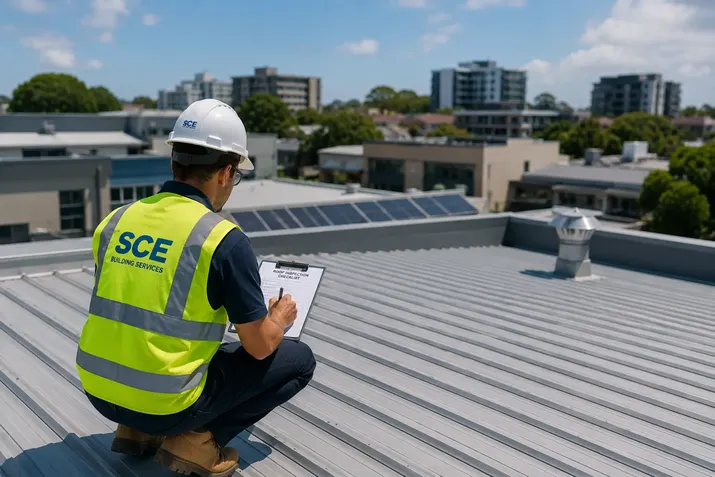
How SCE assesses roofing issues
SCE assesses roofing issues practically and in the context of the broader building.
A typical assessment may consider:
- client photos, history and previous repair attempts;
- available maintenance
- records or insurance information;
- visible roof defects and areas of deterioration;
- flashings, penetrations, gutters, box gutters and drainage;
- whether the issue appears isolated or systemic;
- safe roof access and WHS requirements;
- weather exposure and temporary protection;
- occupant, tenant or operational disruption;
- repair, replacement or staged remedial options;
- whether further consultant, engineer or specialist input is required.
SCE’s approach is not limited to patching a visible leak. Roofing issues are often connected to broader building performance, including façades, ceilings, internal finishes, drainage, waterproofing, insurance repairs, maintenance obligations and remedial works.
As a licensed builder with engineering capability, remedial building experience and practical project delivery systems, SCE can consider roof repairs and replacement as part of a wider building solution where appropriate.
Why clients choose SCE for roofing and remedial building works
Clients often choose SCE because roofing issues rarely sit in isolation.
A roof leak may be connected to drainage, façade interfaces, ageing materials, waterproofing, maintenance history, access constraints, WHS risks, insurance requirements or broader building defects.
SCE brings together:
- licensed building capability;
- engineering informed assessment;
- remedial building experience;
- strata, commercial, insurance and maintenance experience;
- documented scopes and practical staging;
- WHS-focused project planning;
- understanding of access and occupied building constraints;
- ability to coordinate broader repairs where required.
This one stop approach helps clients move from a general roofing problem to a practical scope, staged plan and approval pathway.
General examples of roofing-related work
SCE’s roofing related work may include:
- strata roof leak repairs;
- commercial metal roof replacement;
- insurance or storm related roof repairs;
- roof works linked with façade or remedial building works;
- maintenance works on occupied buildings;
- drainage and box gutter related works;
- roof repairs connected with broader building upgrades.
You may review the SCE Projects page for high-level examples, but do not name a specific client, address or project unless approved.
For general website content, project examples should remain high-level and should not imply that an illustrative image or generic scenario is a specific SCE project.
Is it better to repair or replace a roof?
It depends on the roof condition, age, maintenance history and extent of deterioration. Localised defects may be suitable for repair, while widespread or recurring issues may make replacement or staged remedial work more practical.
Does a roof leak always mean the roof needs replacing?
No. Some leaks are caused by isolated issues such as failed flashings, roof penetrations, damaged sealants, blocked gutters or localised deterioration. A proper assessment helps determine whether repair or replacement is more suitable.
Why do some roofs need repeated repairs?
Repeated repairs may indicate unresolved underlying issues such as poor drainage, ageing materials, widespread corrosion, failed membranes, poor previous repairs or lack of maintenance.
Can the visible leak location identify the roof defect?
Not always. Water can travel through roof spaces, framing, insulation and internal finishes before becoming visible. The entry point may be away from the internal stain or leak location.
When is roof replacement more practical than repair?
Replacement may be more practical when deterioration is widespread, repair costs are recurring, previous repairs have failed, or the roof system is no longer providing reliable weatherproofing performance.
What should strata and commercial property owners consider?
Important considerations include safety, access, occupant disruption, maintenance history, drainage, waterproofing performance, lifecycle cost, compliance obligations and long-term asset management.
Can roof works be completed while a building remains occupied?
In many cases, works can be staged to reduce disruption. However, this depends on site access, safety requirements, weather exposure, building operations and the scope of works.
Are roof repairs cheaper than roof replacement?
Repairs often have lower upfront cost. However, repeated repairs can become uneconomical if the underlying problem is widespread or recurring. Long-term cost should be considered as well as immediate repair cost.
Does this article provide building-specific advice?
No. This article provides general information only. Building-specific advice requires review of the actual roof condition, site constraints, access requirements and project circumstances.
Next steps
If you are considering roof repairs or roof replacement, the first step is to understand the condition of the existing roof and the practical objectives of the project.
For localised defects, early repairs may help prevent further deterioration. For ageing roofs with recurring issues, replacement or staged remedial work may provide a better long-term outcome.
Before proceeding, building owners and property managers should consider:
- the extent of deterioration;
- maintenance history;
- previous repair attempts;
- access and WHS requirements;
- occupant or business disruption;
- drainage and waterproofing performance;
- compliance obligations;
- budget and lifecycle cost;
- long term asset management objectives.
Contact SCE to discuss roof repair or replacement options.