
Can a Granny Flat Make a Property Positively Geared in NSW? Construction Variables to Check
Granny flat positive gearing NSW outcomes depend on more than rent. A secondary dwelling may improve a property's income position, but the result depends on finance, tax, rent, vacancy, services, approval pathway, construction cost, site access and long-term maintenance.
SCE reviews the construction and approval-pathway variables that can affect whether a granny flat or secondary dwelling is technically realistic before a buyer or owner commits further.
SCE does not provide financial, tax, legal, SMSF, FIRB, valuation, buyer's-agent, rent appraisal or investment advice. Positive gearing, rent, tax and finance outcomes should be assessed by qualified advisers.
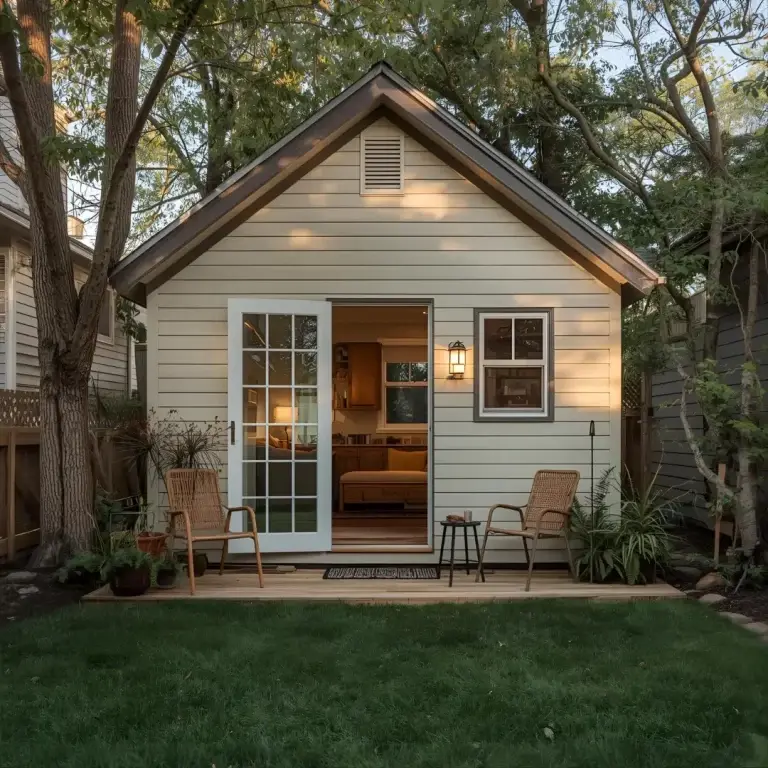
Positive gearing context
A property is commonly described as positively geared when its income exceeds its holding costs. Whether a granny flat helps reach that position is a financial and tax question, not a construction question.
The construction question is different: can the property practically support the secondary dwelling, and what construction cost drivers could affect the owner's adviser-led assessment?
For buyers and owners, this distinction matters. A rental assumption can look attractive on paper, but a difficult site, service upgrade, drainage issue, access problem or approval-pathway delay can change the feasibility picture.
NSW secondary dwelling rules
NSW Planning describes a secondary dwelling, often called a granny flat, as a self-contained dwelling located within, attached to or separate from another dwelling on the same site.
NSW Planning also notes that secondary dwellings are permitted in several residential zones and may be permitted in other zones under a council's local environmental plan. A lot with a secondary dwelling cannot be subdivided so that the secondary dwelling is separated from the principal dwelling.
Approval may be possible through consent or complying development, depending on the site and whether the proposal meets the relevant requirements. Buyers and owners should check the planning controls and obtain qualified planning or certification advice where required.
For complying development, NSW Planning notes that one requirement is a lot area of at least 450 m2, except where a secondary dwelling is located entirely within an existing dwelling house. Sites below that threshold may still need a development application pathway if otherwise suitable.
Construction variables to check
Site access
Driveway width, side access, excavation access, material delivery, crane access, work zone limitations and neighbour constraints can all affect cost and buildability.
Services and stormwater
Sewer location, water, power, drainage, stormwater discharge, easements and service upgrades can be the difference between a simple idea and a difficult project.
Site conditions
Slope, retaining walls, trees, rock, flood, bushfire, overland flow and poor soil conditions may require specialist review and change the construction pathway.
Existing dwelling constraints
Setbacks, privacy, parking, access, existing approvals, roof drainage, old services and future maintenance can affect whether the secondary dwelling is realistic.
Cost and income drivers
Before relying on a granny flat income strategy, the owner should separate adviser-led financial assumptions from construction feasibility variables.
| Driver | Why it matters |
|---|---|
| Construction cost | Access, services, drainage, slope, ground conditions and design complexity can materially change build cost. |
| Approval pathway | A straightforward complying development path can differ from a council DA pathway in timing, documentation and consultant input. |
| Rent and vacancy | These should be assessed by licensed property and financial advisers, not assumed from headline market figures. |
| Tax and finance | Interest, tax treatment, depreciation, ownership structure and cash flow must be reviewed by qualified advisers. |
| Maintenance and lifecycle cost | Extra buildings, services, drainage, landscaping and access areas can add long-term maintenance obligations. |
When to use SCE
Use SCE when you need a construction-first view of whether a granny flat or secondary dwelling is realistic on a specific site. SCE can help identify the buildability, services, stormwater, access, approval-pathway and construction cost drivers that should be considered before spending more money.
FAQs about granny flat positive gearing NSW
Can SCE confirm whether a granny flat will be positively geared?
No. SCE can review construction feasibility and cost-driver variables, but positive gearing depends on finance, tax, rent, vacancy and ownership factors that should be reviewed by qualified advisers.
Can every NSW property add a granny flat?
No. A secondary dwelling depends on zoning, site area, planning controls, services, access, stormwater, site constraints and the approval pathway. Some sites may require a development application or may not be suitable.
What construction issues often affect granny flat feasibility?
Common issues include poor side access, difficult sewer connections, stormwater discharge, slope, retaining, trees, flood or bushfire constraints, service upgrades and restricted work areas.
Is a granny flat the same as subdivision?
No. NSW Planning states that a lot with a secondary dwelling cannot be subdivided so that the secondary dwelling is separated from the principal dwelling.
When should I get SCE involved?
Involve SCE before relying on rental or positive gearing assumptions, especially where access, services, drainage, slope, approvals or construction cost drivers are uncertain.
Next step
If you are considering a granny flat or secondary dwelling as part of a property feasibility strategy, speak with SCE before relying on income or construction assumptions.