
Structural strengthening: techniques, triggers and what building owners need to know
Whether you manage a strata building, own a commercial property, or are dealing with an ageing structure, understanding structural strengthening is essential to protecting your asset, meeting your compliance obligations, and avoiding escalating building defects across NSW.
What is structural strengthening of a building?
Structural strengthening refers to increasing or restoring the load bearing capacity, stiffness, or durability of a building element compromised by defects, deterioration, damage, or changes in use. It goes beyond routine repair, targeting the structural integrity of the building as a whole.
It is commonly required when:
- A structural element can no longer safely carry its design loads due to concrete deterioration, corrosion, or physical damage
- Building defects identified through an engineering inspection reveal structural non compliance
- A change in building use increases loads beyond the original design capacity
- Ageing infrastructure requires upgrading to meet current NCC and DBP Act requirements

What are the techniques of structural strengthening?
The appropriate technique depends on the structural element, the nature of the building defects identified, and the performance outcomes required. SCE Corp assesses each structure individually to determine the most effective and least disruptive solution.
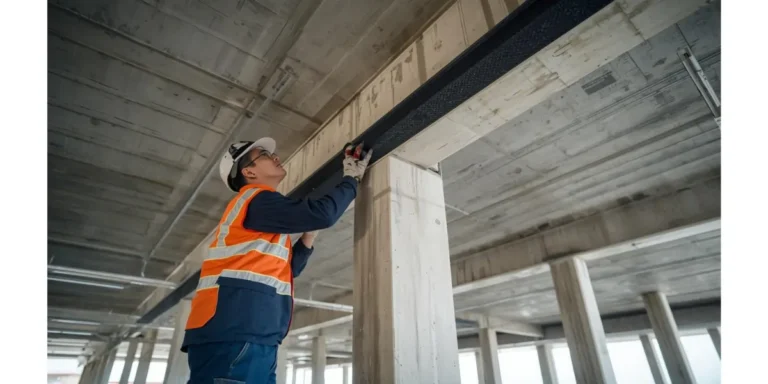
Carbon fibre reinforced polymer (CFRP) strengthening
- High strength carbon fibre strips bonded to concrete beams, columns, and slabs
- Increases flexural and shear capacity without adding significant weight
- Ideal where access is limited or additional dead load is undesirable
Steel plate bonding
- Steel plates epoxy bonded or mechanically fixed to concrete elements to increase load carrying capacity
- Cost effective for larger surface areas and commonly used for beams and slabs
Concrete jacketing
- A new layer of reinforced concrete cast around existing columns or beams to increase cross sectional area and load capacity
- Suitable for basement columns, transfer beams, and heavily deteriorated structural elements
Structural grout injection and crack repair
- Epoxy or cementitious grout injected into structural cracks to restore monolithic behaviour
- Addresses building defects caused by cracking, water ingress, and carbonation
Post tensioning and prestress upgrades
- Additional prestress tendons introduced into existing concrete elements to increase load carrying capacity
- Used for large span slabs, bridge decks, and transfer structures
FRP column wrapping
- FRP wrapping applied around concrete columns to provide confinement, increasing strength and ductility
- Particularly effective for columns subject to impact loading or seismic risk
Why is it necessary for structures to be strengthened?
Identifying the trigger for structural strengthening early is critical to managing costs, minimising disruption, and meeting compliance obligations under the DBP Act.

Ageing and deterioration
- Concrete deteriorates over time through carbonation, chloride ingress, and corrosion of reinforcement
- Sydney’s coastal environment accelerates this process, creating building defects that require urgent structural intervention
Building defects and non compliance
- Building defects identified through engineering inspections or DBP Act compliance audits may reveal structural elements that are understrength or non compliant
- Failure to address structural building defects can give rise to claims under the DBP Act duty of care for up to six years
Change of use or increased loading
- Adding storeys, converting building use, or installing heavy plant can impose loads beyond the original structural design capacity
- A registered structural engineer must assess and declare compliance under the DBP Act before works commence
Storm, flood, and impact damage
- Extreme weather events, vehicle impacts, and fire damage can compromise structural integrity, requiring immediate assessment and strengthening
- SCE Corp provides emergency structural strengthening across Sydney and NSW for urgent building defect situations
Structural strengthening is one of the most technically demanding specialist services in construction. Whether triggered by building defects, ageing infrastructure, or DBP Act compliance obligations, engaging a qualified structural engineer early is the most effective way to protect your building and manage risk. SCE Corp delivers end to end structural strengthening services across Sydney and NSW, from initial engineering assessment and DBP Act compliant design through to installation, certification, and handover.
Frequently Asked Questions
1. How do I know if my building needs structural strengthening?
Common indicators include visible concrete spalling, exposed or corroded reinforcement, structural cracking in load bearing walls, beams, or columns, deflection or sagging in floor slabs, and water ingress that has compromised structural elements over time. A formal engineering inspection by a qualified structural engineer is the most reliable way to assess whether structural strengthening is required. In NSW, building defects identified through a strata defect report or DBP Act compliance audit may also trigger a structural assessment.
2. How long does structural strengthening take?
Timeframes vary significantly depending on the extent of the building defects identified, the strengthening technique selected, and site access conditions. A localised CFRP or steel plate bonding application on a single element may take a few days, while a comprehensive structural strengthening programme across multiple elements in a strata building can take several weeks to months. SCE Corp provides detailed programme schedules at the outset of every project to minimise disruption to building occupants and operations.
3. Is structural strengthening covered under the statutory warranty in NSW?
Structural defects are classified as major defects under the NSW Home Building Act 1989, carrying a statutory warranty of six years for major defects and two years for non-major defects. Where structural building defects arise from a failure by the builder or designer to meet the required standard of care, claims can also be pursued under the DBP Act duty of care for up to six years from the date the economic loss was first sustained. Building owners and strata managers who identify structural defects within these periods should seek legal and engineering advice promptly.
4. Does structural strengthening require council approval in NSW?
In most cases, structural strengthening works require a Construction Certificate or Complying Development Certificate before works can commence, particularly where the works affect regulated structural designs under the DBP Act. A registered design practitioner must prepare and declare compliance for all regulated structural designs before installation commences. SCE Corp manages the full approvals process on behalf of clients, from design documentation and DBP Act declarations through to certifier engagement and construction certification.
5. Can structural strengthening be carried out while a building is occupied?
In many cases yes, depending on the location and extent of the works. Techniques such as CFRP bonding, steel plate bonding, and grout injection can often be carried out with minimal disruption to occupied areas. Where works are more extensive or require temporary propping and shoring, a staged programme is developed to maintain safe access for occupants throughout the construction period. SCE Corp has extensive experience delivering structural strengthening in live environments across Sydney and NSW, including occupied strata buildings and operational commercial facilities.
6. What is the difference between structural strengthening and structural repair?
Structural repair refers to restoring a damaged or deteriorated element to its original condition and capacity, for example repairing spalled concrete or treating corroded reinforcement. Structural strengthening goes further by increasing the capacity of an element beyond its original design, or restoring capacity that has been significantly reduced by deterioration or building defects. In practice, many structural strengthening programmes incorporate both repair and strengthening works, with repair addressing the underlying building defects and strengthening providing the additional capacity required for safe ongoing use.
7. How much does structural strengthening cost in NSW?
Structural strengthening costs vary widely depending on the scope of works, the technique selected, site access conditions, and the extent of building defects requiring rectification. Localised CFRP or grout injection works on a single element may cost from a few thousand dollars, while a comprehensive strengthening programme across a multi storey strata building can run into hundreds of thousands of dollars depending on the scale and complexity involved. SCE Corp provides obligation free structural assessments and detailed cost estimates for all structural strengthening projects across Sydney and NSW.
8. What qualifications should a structural strengthening contractor have in NSW?
In NSW, structural strengthening works must be carried out by a licensed builder holding the appropriate contractor licence under the Home Building Act 1989. For works involving regulated structural designs under the DBP Act, the design must be prepared and declared compliant by a registered design practitioner, typically a registered structural engineer. It is important to engage a contractor with demonstrated experience in structural strengthening specifically, as the techniques involved require specialist knowledge beyond general building or remedial works experience.
9. Can structural strengthening prevent the need for full demolition and rebuild?
In many cases yes. Structural strengthening is specifically designed to extend the service life of existing structures that would otherwise require partial or full demolition and reconstruction. By restoring or enhancing the load bearing capacity of compromised elements, strengthening can make a building safe, compliant, and fit for its intended use at a fraction of the cost and disruption of a full rebuild. This makes structural strengthening one of the most cost effective and sustainable solutions available for ageing and defective buildings across NSW.
10. How does the DBP Act affect structural strengthening works in NSW?
The DBP Act classifies structural engineering as a regulated design, meaning all structural strengthening designs must be prepared and declared compliant by a registered design practitioner before construction commences. This applies to both new strengthening works and the rectification of existing structural building defects. The DBP Act also imposes a statutory duty of care on all parties involved in construction work, meaning builders, designers, and subcontractors can be held liable for economic loss caused by defective structural works for up to six years. Engaging a DBP Act registered structural engineer and experienced specialist contractor from the outset is the most effective way to manage compliance risk on any structural strengthening project in NSW.
Thank you for your visit and welcome to the construction home.