
Insurance repairs, make safe works and structural repairs: what building owners need to know
Dealing with building damage is stressful enough without having to navigate complex insurance processes at the same time. Whether you are a homeowner, strata manager, or commercial property owner, understanding make safe works, avoiding common insurance claim mistakes, and knowing what structural repairs involve can make a significant difference to the outcome of your claim and the safety of your building. In most cases, insurance repairs, make safe works, and structural repairs happen in sequence, and getting each stage right is what determines the final outcome.
What is a make safe in insurance?
Make safe works are an immediate, short-term intervention carried out after a building has been damaged to eliminate hazards, prevent further damage, and ensure the property is safe for occupants, emergency personnel, and the general public. Make safe works are typically the first step in the insurance repairs process, carried out before any permanent structural repairs or insurance repairs are scoped or commenced.
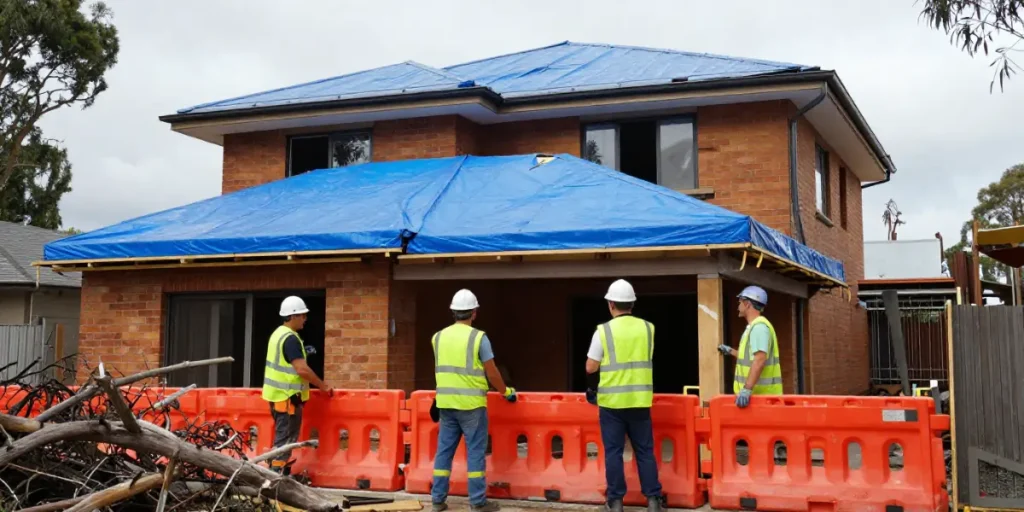
Make safe works are commonly triggered by:
- Storm and wind damage including roof failure, fallen trees, and damaged guttering
- Fire and smoke damage leaving structural elements exposed or compromised
- Flood and water damage causing immediate safety risks to floors, walls, and ceilings
- Impact damage from vehicles, falling debris, or neighbouring construction activity
- Structural failure or collapse of building elements requiring immediate propping and shoring
Common make safe works include:
- Temporary roof coverings and weatherproofing to prevent further water ingress
- Propping and shoring of compromised structural elements
- Boarding up of damaged windows, doors, and openings
- Isolation of electrical, gas, and plumbing services where safety risks exist
- Removal of dangerous debris, hanging materials, and unstable elements
- Erection of safety barriers and hoarding around affected areas
Make safe works are typically covered under most building insurance policies as an emergency measure, separate from the permanent insurance repairs that follow. Notify your insurer as soon as possible after an incident and before make safe works commence, where possible, to ensure coverage is confirmed and documentation is in place.
Once make safe works are complete and the building is secure, the focus shifts to the insurance claim itself. This is where many building owners and strata managers unknowingly make decisions that cost them significantly down the track.
What is the biggest mistake people make when dealing with an insurance claim?
The single biggest mistake building owners and strata managers make when dealing with an insurance claim is failing to document the damage thoroughly before any works commence. Without clear photographic and written evidence, insurers may dispute the extent of the loss, reduce the insurance repairs settlement, or decline coverage entirely.
Other common mistakes include:
Delaying notification to the insurer
- Most policies require prompt notification, with many specifying a reporting timeframe
- Delayed notification can give insurers grounds to reduce or deny an insurance repairs claim entirely
Proceeding with permanent repairs before approval
- Always obtain written approval from your insurer before permanent insurance repairs commence
- Make safe works are generally exempt, but should still be documented and reported promptly
Accepting the first settlement offer without review
- Insurance assessors work on behalf of the insurer, not the building owner
- Engaging an independent loss assessor is strongly recommended for larger or complex insurance repair claims
Not retaining a specialist contractor
- A specialist contractor experienced in insurance repairs, make safe works, and structural repairs will produce better outcomes and fewer disputes with insurers
Failing to keep records
- Retain all invoices, reports, and photographs throughout the insurance repairs process
- Request compliance certificates from your contractor upon completion

Once the insurance repairs claim is approved and the scope of works is confirmed, the focus moves to the permanent works themselves. For many buildings affected by significant damage or long-term deterioration, this means structural repairs.
What are structural repairs?
Structural repairs refer to works carried out to restore the load-bearing capacity, stability, and integrity of a building element that has been damaged, deteriorated, or compromised. Unlike cosmetic or finishing works, structural repairs address the fundamental performance of the building’s structure and are essential to ensuring the building remains safe for occupancy. In the context of insurance repairs, structural repairs are often the most technically complex and costly component of the works, and the quality of structural repairs carried out at this final stage directly reflects the decisions made at every stage before it.

Structural repairs are commonly required following:
- Storm, flood, or fire damage that has compromised load-bearing walls, beams, columns, or floor slabs
- Concrete deterioration, including spalling, cracking, and corrosion of reinforcement
- Impact damage to structural elements from vehicles, falling trees, or neighbouring works
- Water ingress that has caused long term deterioration of structural timber, steel, or concrete
- Building defects identified through an engineering inspection or insurance assessment
Common structural repairs works include:
- Concrete crack injection and spalling repair – restoring concrete integrity and preventing further deterioration
- Structural propping and shoring – providing temporary support while permanent structural repairs are designed and implemented
- Reinforcement treatment and protection – treating corroded steel reinforcement and applying protective coatings
- Structural timber repair and replacement – addressing rot, termite damage, or impact damage to load-bearing timber elements
- Masonry and brickwork repair – restoring cracked, displaced, or failed masonry in load-bearing walls and piers
- Steel connection repair and replacement – addressing damaged or corroded structural steel connections and members
In NSW, structural repairs involving regulated designs must be prepared and declared compliant by a registered design practitioner under the DBP Act before works commence, ensuring completed insurance repairs can be certified at handover.
Structural repairs should always be scoped and supervised by a qualified structural engineer to ensure the work addresses the underlying cause of the damage rather than its visible symptoms alone.
Make safe works, insurance claims, and structural repairs are not three separate problems. There are three stages of the same insurance repairs process, and the decisions made at each stage directly affect the outcome of the next. Acting quickly, documenting thoroughly, and engaging the right specialist contractor from the outset is the most effective way to protect your building, your occupants, and your insurance position.
SCE Corp provides specialist make safe works, insurance repairs, and structural repairs across Sydney and NSW, from initial emergency response and damage assessment through to DBP Act compliant design, construction, and certified handover.
Frequently Asked Questions
1. What is the difference between make safe works and permanent insurance repairs?
Make safe works are immediate, short-term interventions carried out directly after an incident to eliminate hazards, prevent further damage, and secure the building for occupants and the public. They are not designed to restore the building to its pre-damage condition. Permanent insurance repairs, on the other hand, are the full scope of works approved by the insurer to restore the building structurally, functionally, and aesthetically following the damage. Make safe works are typically the first stage of the insurance repair process, with permanent repairs commencing once the insurer has assessed and approved the scope of works.
2. Are make safe works covered by insurance?
In most cases yes. Make safe works are generally covered under standard building insurance policies as an emergency measure to prevent further loss. However, coverage conditions vary between policies, and most insurers require prompt notification before or immediately after make safe works commence. It is important to contact your insurer as soon as possible after an incident, document all make safe works carried out with photographs and written records, and retain all invoices and reports to support your claim. Failing to notify your insurer promptly can affect your entitlement to reimbursement for make safe works.
3. How quickly should I notify my insurer after building damage occurs?
You should notify your insurer as soon as practically possible after an incident, ideally within 24 to 48 hours. Most building insurance policies include a notification requirement, and delayed reporting can give insurers grounds to reduce or deny a claim on the basis that the delay allowed further damage to occur. If the damage is severe or poses an immediate safety risk, arrange make safe works first to protect occupants and the building, and notify your insurer simultaneously or immediately after. Document everything from the outset, including the time and nature of the incident, the immediate steps taken, and all works carried out.
4. Can I choose my own insurance repairs contractor?
In many cases yes, though this depends on your insurance policy and the insurer’s preferred supplier arrangements. Some insurers require you to use their panel of approved contractors, while others allow you to engage your own contractor provided they are appropriately licensed and their quote is approved by the insurer. If you have the option to choose your own contractor, engaging a specialist with demonstrated experience in insurance repairs, make safe works, and structural repairs is strongly recommended. A specialist contractor will produce cleaner documentation, more accurate scoping, and better outcomes than a general builder unfamiliar with the insurance repair process.
5. What should I do if my insurance claim is underpaid or disputed?
If you believe your insurance claim has been underpaid or incorrectly assessed, you have several options. First, request a detailed breakdown of the settlement offer from your insurer and compare it against the actual cost of structural repairs and make safe works. If the offer does not cover the full scope of damage, engage an independent building consultant or loss assessor to review the assessment and provide a counter report. You can also lodge a formal complaint with your insurer and escalate to the Australian Financial Complaints Authority (AFCA) if the dispute is not resolved. Retaining thorough documentation throughout the repair process is critical to supporting your position in any dispute.
6. What qualifications should an insurance repairs contractor have in NSW?
In NSW, insurance repairs contractors must hold a valid contractor licence under the Home Building Act 1989 for the relevant category of work. For structural repairs involving regulated designs, the contractor must also be able to engage a registered design practitioner to prepare and declare compliance under the DBP Act before works commence. Additional qualifications to look for include demonstrated experience with insurance repair projects, familiarity with insurer documentation and reporting requirements, the ability to carry out make safe works at short notice, and a track record of delivering certified, compliant outcomes on residential, commercial, and strata buildings across NSW.
7. How long do insurance repairs typically take in NSW?
Timeframes vary significantly depending on the nature and extent of the damage, the complexity of the structural repairs required, insurer assessment and approval timeframes, and site access conditions. Minor insurance repairs, such as roof patching or internal water damage rectification, may take a few days to a few weeks. More complex structural repairs following significant storm, fire, or flood damage can take several months from initial make safe works through to certified completion. SCE Corp provides detailed repair programmes at the outset of every project so building owners and strata managers have a clear understanding of expected timeframes from the start.
8. What documentation should I keep throughout the insurance repair process?
Thorough documentation is one of the most important things you can do to protect your insurance claim and ensure a smooth repair process. Key documents to retain include photographs of the damage in its original state before any works commence, all correspondence with your insurer including emails, letters, and claim reference numbers, make safe works invoices and reports, engineering assessments and structural repair specifications, insurer approval letters for the scope of permanent works, all contractor invoices and progress claims, and as built documentation and compliance certificates upon completion of all insurance repairs. Keeping a clear and organised record throughout the process protects your position if any aspect of the claim is disputed at a later stage.
9. Does structural repair work require council approval in NSW?
In many cases yes, particularly where the structural repairs involve regulated designs under the DBP Act or where the works affect the structural integrity of the building. Most structural repair works on class 2 buildings and above require a Construction Certificate or Complying Development Certificate before works can commence. A registered design practitioner must prepare and declare compliance for all regulated structural designs before installation begins. For minor localised repairs that do not affect regulated elements, a building approval may not be required, though this should always be confirmed with a registered certifier or building consultant before works commence. SCE Corp manages the full approvals process on behalf of clients across Sydney and NSW.
10. Can make safe works affect the structural integrity of a building?
Make safe works are designed to stabilise and protect a building following damage, not to restore its structural integrity permanently. While measures such as temporary propping, shoring, and structural bracing are commonly carried out as part of make safe works to prevent further collapse or movement, these are temporary measures only. The structural integrity of the building is restored through the permanent structural repairs that follow once the insurer has approved the scope of works. It is important that all temporary make safe measures are designed and installed by qualified tradespeople and supervised by a structural engineer where the damage involves load bearing elements, to ensure the building remains safe throughout the repair process.
Thank you for your visit and welcome to the construction home.