Water storage and supply
Storage requirements, catchment behaviour, water quality, outlets and operational needs shape the design information issued for construction.

Civil infrastructure guide
Dam projects bring together hydrology, geotechnical conditions, structural and earthworks design, environmental approvals, water-management requirements and carefully staged construction. This guide explains the investigations, delivery interfaces and owner decisions that need to be resolved before construction begins.
Integrated delivery: SCE offers construction and engineering, design and construct, and EPC services with established multidisciplinary engineering relationships. The dam package must define the required specialist design and investigation responsibilities, with independent certification and authority decisions retained by the responsible parties.
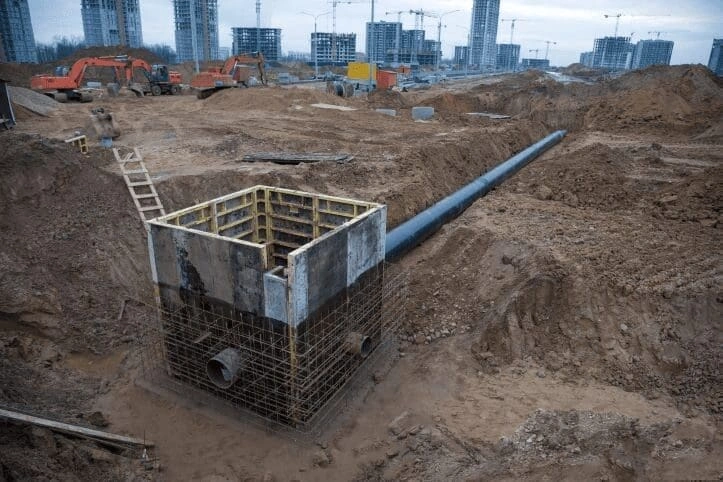
Purpose and form
A dam’s intended function, location and operating requirements influence the investigations, design inputs, materials and construction sequence. Project-specific engineering determines the appropriate solution.
Storage requirements, catchment behaviour, water quality, outlets and operational needs shape the design information issued for construction.
Spillways, overflow paths, outlet works and temporary water controls require coordinated staging against the approved hydrology and civil design.
These structures may use engineered zones of compacted earth or rock with filters, drainage layers, erosion controls and carefully specified placement requirements.
Gravity, arch and buttress forms rely on project-specific foundations, reinforcement, concrete placement, joints, embedded items and inspection controls.
Construction sequence
The sequence below is indicative only. The issued design, authority conditions, contract and site controls govern each project.
Survey, geotechnical, hydrology and environmental information establish the project constraints.
Appointed parties define design, approvals, responsibilities, hold points and acceptance requirements.
Access, temporary works, clearing, erosion controls, dewatering and working platforms are staged as approved.
Earthworks, foundations, concrete, drainage, outlet works and associated civil interfaces are delivered to documentation.
Required inspections, testing, records, reinstatement and handover information are completed.
Clear responsibilities
Dam-related work can involve multiple appointed specialists and authorities. Responsibilities should be confirmed before procurement and reflected in the accepted contract.
Materials and controls
Do not assume a small dam is automatically exempt. Check the site and proposal against the NSW water licensing and approval requirements, including any applicable harvestable-rights rules. Separately, Dams Safety NSW’s owner guidance explains that downstream consequences can warrant referral for declaration even for a small dam. Construction completion does not remove the owner’s responsibility for safe operation, inspection and maintenance.
Depending on the dam form and site, construction may involve compacted earth, selected rockfill, engineered filters and drainage layers, reinforced concrete, steel components, pipework and erosion-control materials. Source acceptance, moisture conditioning, compaction, placement, concrete quality and testing requirements must follow the project documents. Before committing to bulk haulage or placement, confirm that the proposed material source has the required acceptance evidence. Price the processing, handling, testing and possible replacement of unsuitable material, and identify hold points before subsequent layers conceal the work. A low excavation rate alone does not establish the cost of an accepted embankment.
Leadership civil-project experience
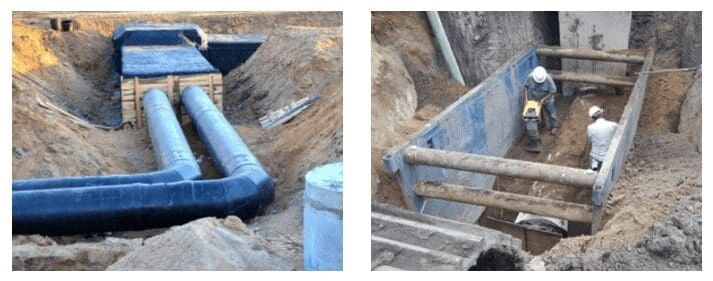
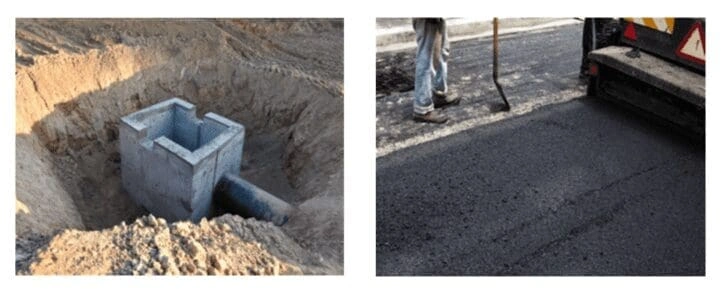
These project images record Frank MANESH’s Epping–Thornleigh and Farshid MANESH’s West Ryde career experience. They demonstrate relevant drainage, underground-services and pavement knowledge that the directors bring to SCE; they are not presented as SCE company dam projects.
Related pathways
Explore Dam Construction Services to discuss the scope and delivery requirements of a dam project.
Frequently asked questions
Dam construction is the staged delivery of earthworks, foundations, structural elements, water-control structures, access works and associated civil interfaces to issued project documentation. The exact scope varies by dam type, site conditions and the accepted contract.
Common dam forms include earthfill, rockfill, concrete gravity, arch and buttress structures. Selection depends on factors such as geology, hydrology, available materials, storage purpose, design requirements and whole-of-life operation.
A useful initial package normally includes the project location, issued drawings and specifications, survey information, geotechnical and hydrology reports supplied by the appointed parties, authority conditions, access constraints, staging requirements and the required programme.
A dam project needs appropriately qualified engineering and specialist input matched to its risks and scope. SCE can provide integrated engineering and construction delivery through its team and established multidisciplinary relationships. The contract identifies design and investigation responsibilities; independent certification, regulatory decisions and owner obligations remain with the responsible parties.
Depending on the approved design, dam works may involve compacted earth, selected rockfill, engineered filters and drainage layers, reinforced concrete, steel components, pipework and erosion-control materials. Testing and acceptance requirements come from the project documentation.
Environmental, erosion, sediment, dewatering and water-management controls are planned against the approved project documents, site conditions and authority requirements. Responsibilities, hold points and monitoring requirements should be clear before construction starts.
Request a Project Suitability Review with the location, surveys, drawings, technical reports, authority requirements, access constraints and programme. SCE can assess engineering and construction requirements, material and water-management interfaces, staging and the information needed to develop the delivery scope.
Project enquiry
Request a Project Suitability Review with the location, available surveys and technical reports, proposed works, authority requirements and access constraints. SCE can assess the engineering and construction scope, key investigations, staging and information needed for a reliable proposal.