
How NSW Combustible Cladding Laws Affect Building Owners and Recladding Work
NSW combustible-cladding controls do not operate as one universal rule requiring every building with combustible material to be fully reclad. The applicable response depends on the identified product, how it is used, the complete external-wall system, the building, current statutory requirements, any authority direction and the evidence available for the proposed work.
This guide explains how the current framework affects investigation, regulated responsibilities, approvals, procurement and delivery. It is general project information, not legal advice, a building-specific compliance decision, regulated design, fire-engineering advice or certification.
Practical starting point: establish the actual product and wall construction before deciding the scope. A generic description such as “ACP” or “combustible cladding” is not enough to determine whether a product-use ban applies or what action a building requires.
The NSW Framework Has Several Separate Controls
Building-product controls
The NSW product-use ban applies to specified aluminium composite panels with a core comprised of more than 30 per cent polyethylene by mass when used in the stated external applications and building classes, subject to the terms and exceptions of the ban.
Building-specific assessment
A product label alone does not decide the safety or compliance of an existing building. The actual product, installation, wall assembly, building context, fire strategy, condition and supporting evidence may all be relevant.
Planning and approval controls
Replacement work may require development consent, complying development or another applicable approval pathway. The project team should confirm the pathway, conditions, certifier involvement and council requirements before work starts.
DBP responsibilities
Where the Design and Building Practitioners framework applies, regulated designs, declarations and lodgements must be prepared and made by the responsible registered practitioners in the required sequence.
Orders and authority directions
A council, Building Commission NSW or another authority may issue correspondence, notices or orders relevant to an individual building. These documents should be reviewed directly rather than replaced by general online guidance.
Contract and delivery controls
The approved design, product evidence, access, temporary works, weatherproofing, inspections, variations, handover records and warranties should be translated into an executable construction scope.
What the NSW Aluminium Composite Panel Ban Actually Does
The current NSW guidance identifies a defined ban: aluminium composite panels with a core comprised of more than 30 per cent polyethylene by mass are banned for specified external uses in certain classes of buildings. The ban includes stated exceptions and should be read in its current form before a project decision is made.
That is different from saying every aluminium composite panel, every combustible material or every existing façade is automatically prohibited or must be replaced in full. Product identification and building-specific assessment remain necessary.
Use the current NSW aluminium composite panel ban as the primary government reference. Do not rely on an old article, historical register entry or supplier description as a substitute for current requirements and project-specific advice.

Do Not Treat Historical Registration as a Current Compliance Decision
NSW cladding regulation and administrative arrangements have changed over time. An earlier registration, audit or taskforce process may provide useful history, but it does not by itself establish the current condition, compliance status or required remediation scope of a building.
Owners and strata committees should preserve previous submissions, assessments, orders and correspondence, then confirm the current position with the relevant council, authority and appointed practitioners. A building not appearing in an old register should not be assumed free of façade risk, and a historical entry should not be treated as proof that full replacement is the only response.
Record control: keep a dated register of government and council correspondence, drawings, product information, inspection findings, samples, test reports, design decisions, approvals, declarations and completed-work records. The source and date of each document matter.
A Controlled Path from Concern to Defined Scope
1. Collect the building record
Gather approved drawings, specifications, fire reports, product documents, previous investigations, maintenance records, photographs, approvals and authority correspondence.
2. Confirm the existing condition
Identify façade zones, products, substrates, framing, fixings, insulation, membranes, cavities, barriers, openings, penetrations, sealants, flashings and known defects through appropriately scoped investigation.
3. Appoint the required advisers
Confirm which registered or appropriately qualified parties are responsible for fire, façade, structural, waterproofing, regulated design, certification, planning and other project-specific decisions.
4. Define the regulatory pathway
Record the applicable product controls, NCC pathway, planning approval, DBP requirements, authority directions, certifier requirements and required lodgements.
5. Convert findings into a scope
Set out inclusions, exclusions, performance requirements, interfaces, access, temporary works, hold points, sampling, testing, making good, handover evidence and responsibility allocation.
6. Control delivery and close-out
Manage approved products, substitutions, design changes, inspections, concealed work, weather exposure, defects, declarations, warranties and as-built records through completion.
Where the NSW DBP Framework Applies
For regulated remedial building work, the responsible registered design practitioner prepares the construction-issued regulated design and design compliance declaration. The building practitioner must follow the applicable lodgement and building compliance declaration requirements. Certifiers and specialist advisers retain their separate statutory and professional functions.
Application depends on the building class, the work and the current legislation. Review Building Commission NSW's current guidance on remedial building work in regulated buildings and design practitioner obligations.
SCE is a DBP-registered building practitioner with qualified building, civil and construction engineering capability. Our team leads investigation, engineering and design coordination, procurement and construction, with regulated services delivered through appropriately registered practitioners. SCE’s building-practitioner duties, including applicable building compliance declarations, are distinct from independent certification and authority decisions.
Information to Resolve Before Tender or Construction
Exact product and system
Identify manufacturer, product, core composition, thickness, finish, date, intended use and the complete wall arrangement. Record uncertainty and required sampling.
Current evidence
Check test reports, appraisals, certificates, installation instructions and warranties against the actual proposed use, substrates, joints, fixings and interfaces.
Design and approval status
Separate preliminary advice from construction-issued and approved documents. Identify required declarations, performance solutions, conditions and certifier hold points.
Occupied-building controls
Plan access, resident communication, privacy, fire precautions, falling-object protection, weatherproofing, noise, dust, services, work zones and emergency arrangements.
Commercial assumptions
State provisional items, exclusions and responsibility for investigation, design, permits, access, temporary works, latent conditions, substrate repairs and making good.
Completion evidence
Define required inspections, photographs, product and batch records, approved variations, test results, declarations, warranties, maintenance information and as-built documents.
Define how each requirement will be closed
At project planning, list each order, approval condition and design requirement that affects the façade work. Against each item, identify the work area, responsible party, required inspection or document, and the person or authority that will review it. Include due dates and unresolved items so the handover package can be assembled as work progresses.
Physical completion, contractual practical completion and an authority’s acceptance address different questions. Keep their evidence separate. Where an order applies, obtain confirmation from the issuing authority about the documents and process required to demonstrate compliance; do not assume a contractor’s invoice or a product warranty closes it.
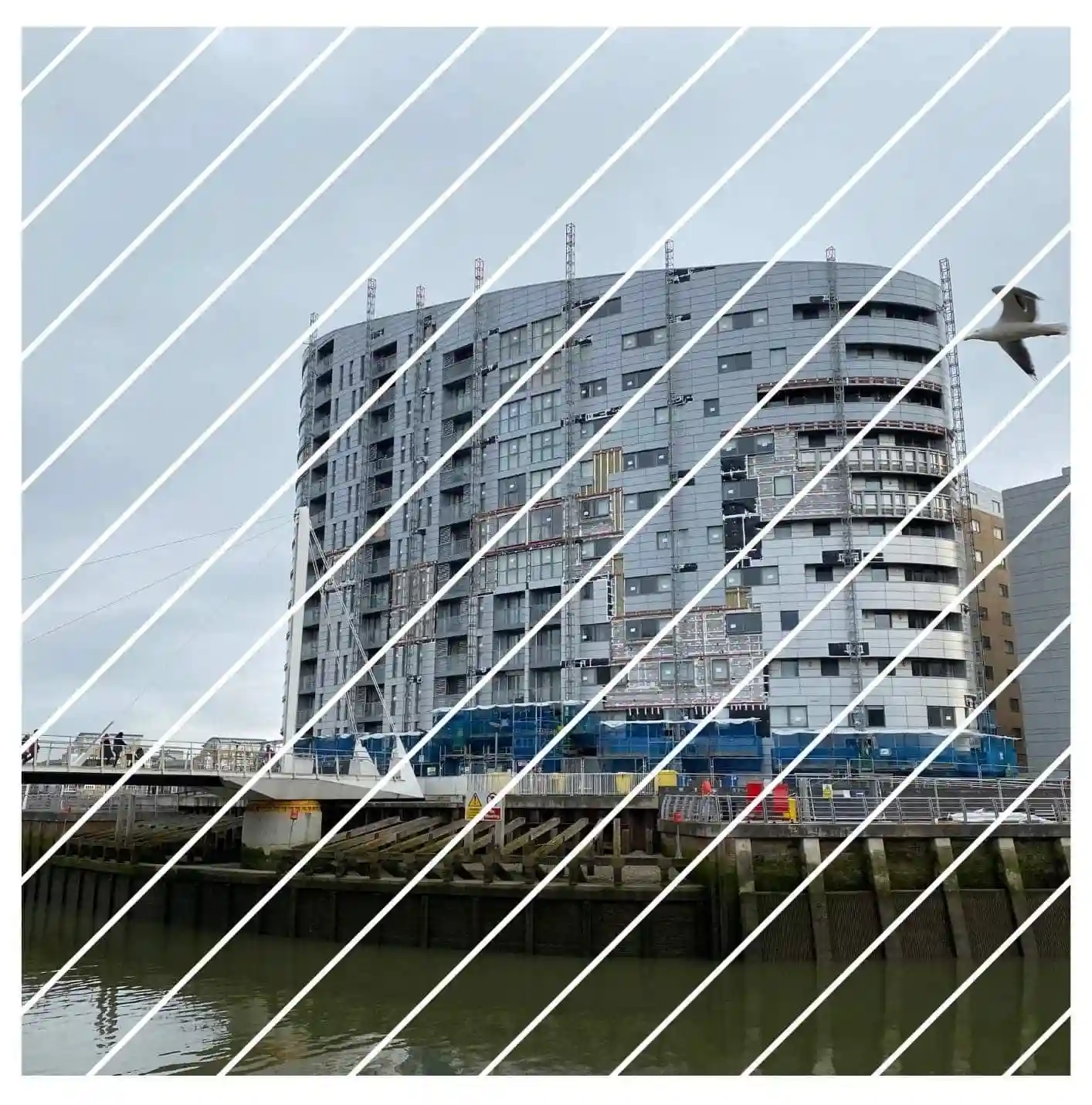
SCE’s Granville apartment project combined Fairview Vitradual installation, scaffolding and safety resources. The project record below illustrates the construction package; the specific assessment, declarations and authority closeout required for a new building must be established for that project.
Continue Through the Correct Pathway
Review the primary delivery pathway for suitable façade replacement and upgrade projects. Cladding and Recladding Fire Compliance
Review the broader fire-compliance and recladding service pathway. Non-Compliant Cladding Assessment
Start with a controlled investigation and responsibility pathway where the product or building status is unresolved. Granville Cladding Replacement Project
Review project-specific evidence relevant to façade replacement delivery. Cladding Estimator
Prepare an early planning range before investigation, design and quotation. Cladding Types and the NSW Product-Use Ban
Read the supporting guide to material categories, the defined ban and building-specific assessment.
Frequently Asked Questions
Do NSW combustible-cladding laws ban every aluminium composite panel?
No. The NSW product-use ban has a defined product, external use and building-class scope and includes stated exceptions. The exact product, core composition, use and current terms of the ban must be checked.
Does the presence of combustible cladding mean a building must be fully reclad?
No automatic conclusion should be made from a generic material description. The actual product, complete wall arrangement, building context, condition, fire strategy, evidence and any authority direction should be assessed before defining proportionate action.
Can an old NSW cladding-register result confirm a building's current status?
No. Historical registration or audit information may be useful evidence, but it does not replace current building records, investigation, applicable law, council or authority correspondence and project-specific professional advice.
Who is responsible for regulated design and compliance declarations?
Where the NSW DBP framework applies, regulated designs and design compliance declarations are prepared by appropriately registered design practitioners. The registered building practitioner has separate work, lodgement and building compliance declaration obligations.
How do SCE’s practitioner duties differ from independent certification?
SCE is a DBP-registered building practitioner with qualified building, civil and construction engineering capability. Where appointed for regulated building work, SCE has its own construction, lodgement and building compliance declaration obligations. Engineering and regulated design services are delivered through appropriately qualified and registered practitioners. Independent certification, approvals and authority decisions remain with the parties appointed to those roles.
What should an owners corporation collect before seeking prices?
Collect drawings, specifications, fire reports, product records, previous investigations, approvals, authority correspondence, photographs and maintenance history. Record gaps that require investigation rather than asking tenderers to assume them.
Can replacement cladding be ordered before the design is final?
Early ordering can create compliance, interface, warranty and variation risk. The approved product, design, evidence, finish, quantities, supplier documents, lead times and required declarations should be confirmed before commitment.
How can SCE Corp assist with a NSW recladding project?
SCE leads assessment, engineering and design coordination, procurement, façade construction and handover through its qualified team and appointed specialists. We connect the building evidence and regulatory requirements with a deliverable scope, access plan, programme and completion records.
Request an Initial Recladding Project Review
Provide the façade reports, drawings, authority correspondence and intended outcome. SCE will review the engineering and construction requirements and develop the scope, delivery plan and completion-document pathway.
Request a Project Suitability Review Call (02) 9051 9590