Water ingress
Water around façade areas, windows, balconies, joints or wall interfaces may justify investigation of the actual entry path.

Façade condition, recurring leaks and early investigation
Modern buildings rely on cladding and façade systems to help protect against weather, moisture and environmental exposure. While many façade systems perform effectively for years, cladding defects can develop over time in NSW due to building movement, weather conditions, ageing materials and maintenance issues.
Because many façade defects begin as relatively minor issues, they can be overlooked until more noticeable damage appears. Signs such as staining, cracked sealants, water ingress or panel movement may indicate that further investigation is warranted.
For strata managers, owners corporations, facility managers and commercial property owners, recognising these warning signs early can support more informed maintenance planning and help reduce the likelihood of larger building issues developing over time.
This article outlines common warning signs associated with cladding defects, façade maintenance issues and water ingress, and explains when building owners should consider arranging further investigation.
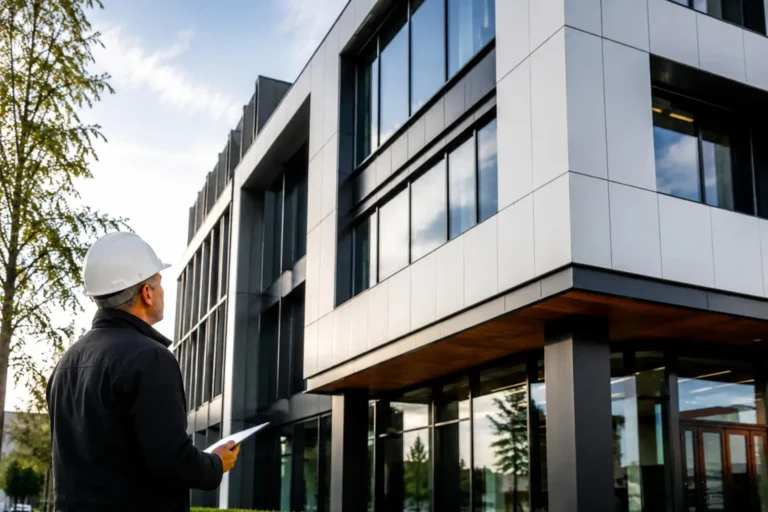
Cladding and façade systems form part of a building’s external envelope and play an important role in protecting the structure from weather and environmental exposure. When defects develop, they can allow moisture penetration, contribute to material deterioration and create maintenance challenges that become more complex over time.
Many façade-related issues begin gradually. Minor cracking, failed sealants, localised staining or isolated water ingress may initially appear cosmetic, but these symptoms can sometimes indicate underlying problems requiring further review.
Early identification allows building owners and managers to better understand the condition of the façade and determine whether maintenance, repairs or additional investigations may be appropriate. Delaying assessment can result in defects becoming more widespread and potentially more costly to address.
For this reason, regular observation and timely investigation of unusual façade conditions can form an important part of responsible building maintenance.
Cladding and façade issues can present in different ways depending on the building type, age, environmental exposure and façade system involved. While some signs may relate to routine maintenance requirements, others may indicate the need for further investigation.
Water around façade areas, windows, balconies, joints or wall interfaces may justify investigation of the actual entry path.
Failed, deteriorated or missing sealants and issues at façade junctions can affect water management.
Loose, cracked, swollen, distorted, damaged, moving or misaligned cladding panels should be reviewed.
Corrosion around fixings, framing elements, trims or façade interfaces may indicate ongoing exposure or moisture.
Staining, dampness, mould growth, bubbling paint or internal water marks near external walls may indicate an unresolved façade issue.
Blocked drainage, poor water shedding or repeated repairs at the same façade locations may indicate an underlying cause.
Water ingress is one of the more common issues that can affect building façades. Moisture can enter through a variety of pathways, including deteriorated sealants, failed flashings, façade penetrations, joints or areas where building movement has occurred over time.
Sealants and flashings play an important role in helping manage water around façade systems. As these components age, they may deteriorate, separate or lose effectiveness, potentially allowing water to enter areas that were intended to remain protected.
Building movement can also influence façade performance. Small amounts of movement may occur naturally as buildings respond to temperature changes, environmental conditions and normal structural behaviour. Over time, this movement may contribute to gaps, cracking, panel misalignment or additional stress on façade components.
Repeated leaks after rain, internal staining near external walls, visible gaps, cracking around joints or water marks near windows and balconies may indicate the need for further investigation. The key objective is to identify the source of the issue rather than assume the cause based solely on visible symptoms.
Where water ingress, visible movement or deterioration is observed, early investigation can assist building owners in understanding the condition of the façade and identifying appropriate maintenance or remedial actions.
Record the room or façade elevation, floor level and a recognisable reference point for each observation. Date photographs and note whether the symptom appeared during rain, after rain or in dry conditions. Include the weather conditions if known, without attempting unsafe access to inspect the outside.
Keep earlier repair dates, marked-up photographs and contractor reports with that location record. A recurring stain beside a recently resealed joint is useful evidence, but it does not establish that the joint is the only entry point. Water may follow concealed paths before becoming visible indoors.
A dry inspection cannot always reproduce an intermittent leak. The investigating team should decide whether targeted opening-up, moisture assessment or controlled testing is needed and explain what remains unverified. Owners should not hose-test façades or remove panels themselves.
Use the observations to direct investigation rather than commission repeated surface patches. A clear location history helps compare findings before and after a repair and keeps unresolved areas visible in the maintenance plan.
Not every visible façade issue requires major remedial works. However, there are situations where further investigation may be appropriate to better understand the condition of the building and identify any underlying causes.
Building owners and managers should consider arranging further review when they observe recurring water ingress, repeated maintenance issues affecting the same area, visible panel movement, deteriorating sealants, corrosion, internal staining or signs of ongoing moisture-related damage.
Investigation may also be beneficial where previous repairs have not resolved the issue or where the source of a problem remains unclear. In these situations, identifying the cause early can support more informed maintenance planning and help avoid unnecessary assumptions about the condition of the façade.
Prioritise immediate hazards. Loose or falling façade material, sudden panel displacement or an unsafe area below the façade calls for prompt professional assessment and controlled access. Keep people clear and notify the building manager; do not approach or disturb the affected material. Stable staining still merits investigation, but its urgency depends on the condition, location and consequences.
For a broader decision pathway covering scope, staging and owner responsibilities, review SCE’s recladding planning guide for building owners and strata.
Early review of façade issues can help building owners make more informed decisions regarding maintenance, repairs and long-term asset management. By understanding the nature and extent of an issue before it progresses, owners can better plan future works and prioritise resources where they are most needed.
In some cases, investigation may confirm that only routine maintenance is required. In others, further assessment may identify conditions that warrant more extensive repair or remediation. The key benefit of early review is that decisions can be based on evidence rather than assumptions.
For strata managers, owners corporations, facility managers and commercial property owners, early investigation can also assist with budgeting, maintenance planning and communication with stakeholders regarding building performance and ongoing maintenance requirements.
SCE delivers complex commercial, strata and institutional façade projects through its cladding and recladding fire-compliance pathway. Our engineering, construction and project-management capability connects investigation findings with scope development, design coordination, access planning and repair delivery.
SCE’s 2019 Liverpool apartment project combined replacement cladding, scaffolding, safety equipment and trade coordination. It demonstrates the access and construction planning that must accompany a façade works package. The cause and extent of defects on a different building still require their own investigation.
Watch for repeated leaks, deteriorated sealants, gaps at junctions, corrosion, panel damage or movement, and recurring staining or dampness indoors. Record their locations and timing. These symptoms justify investigation but do not establish a particular cause or prove that the whole façade requires replacement.
Water ingress can travel through façade joints, flashings, windows and internal finishes before the source is obvious. Early investigation may help identify the cause before damage spreads.
No. Some issues may be suitable for maintenance or targeted repair. Replacement or broader remediation should only be considered after the actual condition and cause are assessed.
Arrange assessment when leaks recur, deterioration spreads, previous repairs fail or the source is unclear. Loose or falling material and sudden panel displacement require prompt attention and controlled access. Keep people clear of the affected area and notify the building manager without disturbing the material.
Sometimes, but staining, cracking, movement or deterioration should not be assumed to be cosmetic without proper review.
Cladding and façade systems are an important part of a building’s long-term performance. While many issues begin as relatively minor maintenance concerns, early identification and investigation can help building owners better understand the condition of their building and make informed decisions regarding future maintenance, repairs or remediation.
For buildings where broader cladding concerns have been identified, additional planning and assessment may also be required depending on the specific circumstances.
Where warning signs such as water ingress, deteriorated sealants, panel movement, corrosion or recurring maintenance issues are observed, seeking appropriate professional advice may assist in determining the underlying cause and identifying suitable next steps.
SCE delivers cladding, façade and remedial building projects across NSW for strata managers, owners corporations, facility managers and commercial property owners. We bring engineering judgement, construction methodology and project management together to resolve complex building problems.
Send the property address, photographs, leak or defect history, available reports and drawings, previous repair records, access constraints, occupancy requirements and the outcome being sought.