Trace the scope
Show the final authorised work, drawings, specifications, approved variations and exclusions that define what was delivered.

NSW remedial works closeout guide
Physical completion is only one part of closing a remedial package. A usable closeout set connects the agreed scope, approved changes, inspections, tests, photographs, defects, warranties and final handover records to the exact work that was delivered.
Purpose and boundary
A folder of unlabelled photographs, certificates and emails is not yet a controlled closeout record. The recipient should be able to identify the final authorised scope, locate the evidence for each relevant work area, follow approved changes, see how inspection and test requirements were addressed, and distinguish accepted items from unresolved exceptions.
This guide is a project-coordination framework for NSW remedial construction. It is not a universal contractual submission list, a certificate, legal advice or a statement that any particular record is mandatory for every project. The contract, approved designs, specifications, approvals, inspection and test plans, product requirements, statutory pathway and directions of appropriately appointed parties determine the actual deliverables.
Show the final authorised work, drawings, specifications, approved variations and exclusions that define what was delivered.
Link hold-point releases, inspections, photographs and test results to an identifiable location, element, lot or work stage.
Separate submitted, reviewed, accepted, rejected and outstanding items so an upload is not mistaken for final acceptance.
Practical principle: the closeout index is a live control record. If it is first created after the site team has left, concealed-work evidence, signatures, serial numbers, test details and revision history may already be difficult to recover.
Build the record map
These families are prompts, not a standardised submission list. Mark a category “not applicable” only where the project basis and responsible reviewer support that position.
Final scope, specifications, issued drawings, approved methodologies, product selections, location schedules and the revision register used for construction.
Inspection and test plan records, requests for attendance, release or waiver evidence where permitted, sign-offs, comments and links to the work lot or activity.
Dated and labelled before, during, concealed-stage and completion photographs, with enough location context to identify the element and relevant scope item.
Actual results, acceptance criteria, equipment or method details where relevant, reviewer comments, retests and the final disposition of failed or incomplete checks.
Instructions, requests for information, approved scope changes, updated designs or details, commercial authorisation and a clear link between the change and final work.
Issue description, affected location, containment, agreed corrective action, rectification evidence, reinspection and formal close status by the responsible party.
Product data, batch or serial information where required, installation records, supplier or installer warranties, care instructions, maintenance intervals and exclusions.
Final/as-built information, practitioner documents, declarations, certificates, authority or certifier records, manuals, training records, keys or spares, and the signed transmittal.
Progressive closeout
Read the contract, approved scope, designs, specifications, approval conditions, ITPs, product requirements and project directions. Convert each deliverable into an indexed requirement with an owner and due point.
Use building, elevation, level, room, grid, asset, work lot or another stable location reference. Generic labels such as “wall repair photo” are rarely enough for later verification.
Record who prepares the evidence, who checks completeness and who has authority to review, release or accept it. Do not assign regulated or contractual functions by assumption.
Schedule inspection, test, survey and photograph points before coatings, cladding, finishes, backfill or reinstatement remove access to the relevant condition.
Link each approved variation, field instruction, updated detail and nonconformance to the affected scope item and final record. Superseded information should remain identifiable without being mistaken for the current issue.
Review the index while the delivery team, subcontractors and consultants can still address missing signatures, illegible results, unclear locations, rejected submissions or outstanding defects.
Transmit the indexed package with revision and date, state unresolved exclusions or exceptions, identify superseded files, and retain evidence of the recipient and submission status.
Do not close by folder count. Fifty uploaded files can still leave a critical hold point, concealed interface or failed test unresolved. Close against the requirement and the accepted status of the linked record.
Evidence quality
A hold point identifies a stage beyond which the relevant work process must not proceed until the authorised release process has been satisfied. The required notice, attendance, evidence and release authority come from the project documents.
Photographs may support a release, but they do not automatically replace inspection, testing, design review or written authorisation.
Record the test method, location, date, acceptance criterion, actual result, responsible party and disposition. Where a result fails, link the corrective action and retest rather than overwriting the earlier record.
For early scope definition before remedial work begins, see SCE’s visual versus intrusive investigation guide. Resolve those investigation questions before defining the repair; then track the resulting design and inspection requirements through construction and handover.
Controlled handover index
Adapt the fields to the contract and document-control system. The purpose is to make every status testable and every record retrievable.
| Index field | What to record | Why it matters |
|---|---|---|
| Requirement ID and source | Clause, drawing note, specification, ITP, approval condition, product instruction or agreed direction. | Prevents a generic checklist from replacing the actual project requirement. |
| Record description | Plain-language name of the expected inspection, photo set, test, certificate, drawing, warranty or other deliverable. | Allows the recipient to understand the item without decoding the filename. |
| Work and location reference | Building, elevation, level, room, grid, asset, lot, defect or scope-item identifier. | Connects evidence to the work it is intended to verify. |
| Issuer and due point | Responsible company/person and the stage by which the record is required. | Supports progressive collection and timely follow-up. |
| Document ID, revision and date | Controlled filename or number, current revision, issue date and link or folder path. | Distinguishes current, superseded and duplicate files. |
| Status | Planned Pending Submitted Returned Accepted | Makes clear that submission is not necessarily acceptance. |
| Reviewer or acceptance evidence | Appointed reviewer, review date, written release, comments or other contract-defined evidence. | Preserves the project’s actual authority boundary. |
| Exception or next action | Outstanding defect, missing evidence, rejected item, exclusion, agreed alternative or due date. | Prevents incomplete items from disappearing inside a final folder. |
Status discipline: “received,” “uploaded,” “reviewed” and “accepted” are different states. Use the wording defined by the project and retain the evidence that supports the final status.
Responsibility boundaries
May coordinate construction records, subcontractor submissions, photographs, ITP evidence, tests, variations, defects and the handover index within the appointed scope. Regulated declarations and lodgements require the appropriately registered and authorised practitioner.
Prepares or reviews designs, technical details, calculations, inspection outcomes or specialist certificates within their engagement and competence. Contractor records should not be presented as a substitute for that work.
Uses the authority given by the contract to direct, review or accept relevant submissions and release nominated hold points. The title and authority vary between projects.
Performs statutory assessment, inspection, certification or acceptance functions where the applicable pathway requires them. A contractor cannot confer that acceptance through its own closeout register.
Provides required product data, test records, installation evidence, serial or batch details, warranties and maintenance information, subject to the project’s review process.
Confirms operational handover needs, receives the controlled set, records unresolved exceptions and transfers maintenance, warranty and monitoring information into the asset-management system.
SCE’s Building Remedial Services page explains the delivery scope. The remedial works and DBP overview explains the wider defect-to-delivery pathway, while the defect triage guide remains focused on deciding what should enter a repair programme.
Current NSW sources
Contractual closeout and statutory compliance can overlap, but they are not interchangeable. Building class, work type, approval pathway and any exclusions or transitional provisions affect what must be designed, declared, lodged, certified or retained.
Project-specific check required: do not infer that every remedial project follows the same DBP, occupation-certificate, warranty, authority or seven-day submission pathway. Obtain advice from the appropriately appointed practitioner, certifier, authority or legal adviser for the actual work.
SCE project evidence
The image below shows completed structural steel and footing repairs from SCE’s Lane Cove school structural remedial project. On that completed project, SCE coordinated temporary support, controlled investigation, permanent structural repairs, sewer replacement, backfilling and reinstatement with the relevant project team.
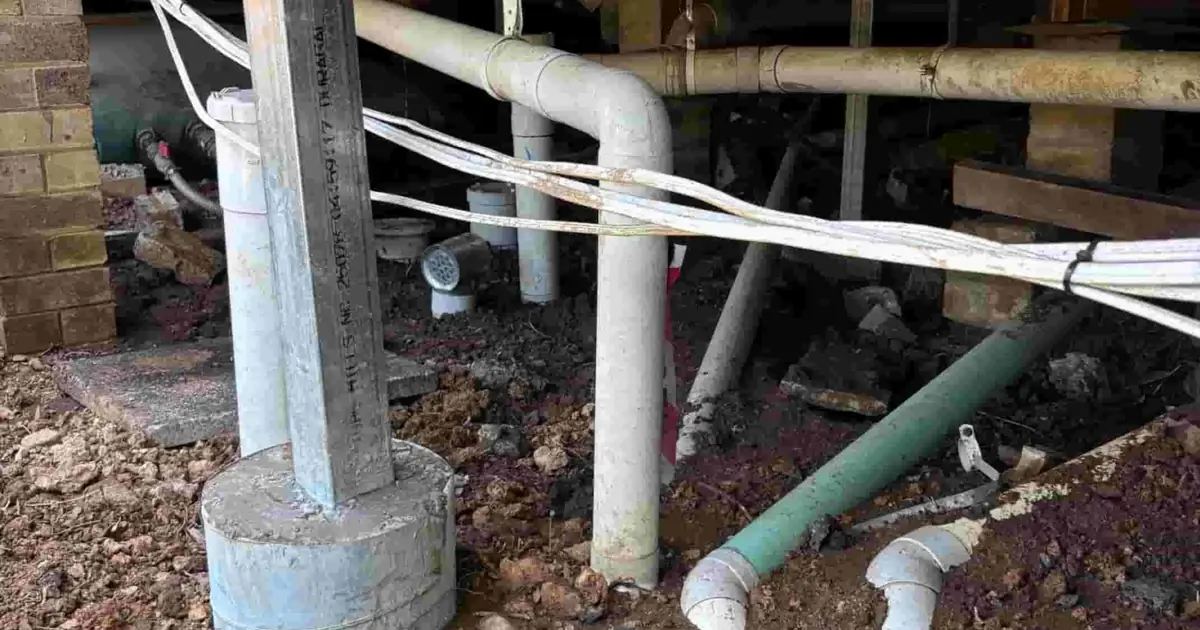
See the Lane Cove School Structural Remedial Project record for the documented delivery sequence. For civil-specific as-constructed information, the separate NSW works-as-executed drawings and civil handover guide covers those civil deliverables.
Common closeout failures
Photographs and results lack a location, scope, lot or defect reference. Rename and index them while the team can still confirm what they show.
Original documents, later instructions and variations conflict. Reconcile them into the controlled final set and keep superseded issues identifiable.
Attendance occurred, but the required release record is missing. Follow the contract-defined resolution process; do not recreate or backdate evidence.
Only the passing retest is filed. Retain the original result, corrective action, retest and final disposition as one traceable chain.
The certificate is provided, but maintenance, registration, inspection or exclusion requirements are absent. Capture the operating conditions needed to preserve the warranty.
The transmittal is labelled “final” while open defects or exclusions remain. State them explicitly with owners, due dates and the agreed route to closure.
Prepare a project review
SCE provides engineering, construction and project management capability for remedial projects, including the coordination of delivery records and closeout requirements within its appointment. Identify the engineering and building responsibilities SCE undertakes, the appropriately registered practitioners responsible for declarations, and the independent certifier or authority responsible for statutory acceptance. Contract interpretation remains with the appointed legal adviser.
Frequently asked questions
Use the actual contract, scope, designs, specifications, approvals, ITPs and product requirements. Common families include final scope documents, hold-point records, photographs, inspection and test results, approved variations, nonconformance and defect closure, warranties, maintenance information, as-built records and applicable practitioner, certifier or authority documents.
Create it before work starts and maintain it progressively. Early setup lets the team assign record owners, schedule evidence before concealment and identify missing information while subcontractors, consultants and reviewers are still available.
Usually not by themselves. Photographs can show location and visible condition, but they may not establish concealed construction, test performance, design compliance, hold-point release, defect acceptance or statutory completion. Use them as one linked part of the project-defined evidence set.
The project documents determine the authorised person and process. Depending on the project, roles may involve the principal, contract administrator, superintendent, designer, engineer, specialist, certifier or authority. A contractor should not assume or represent an acceptance power it has not been given.
No. Submitted, received, reviewed, returned and accepted are different states. Record the current status, reviewer, comments and evidence of release or acceptance using the terminology required by the project.
No. Applicability depends on the building class, work, timing, statutory pathway and any exclusions or transitional provisions. Check the current NSW requirements and obtain project-specific advice from the appropriately appointed registered practitioner, certifier, authority or legal adviser.
Project-specific review
Send SCE the authorised scope, relevant drawings and specifications, ITP or hold-point schedule, current record register and known gaps. We will review how the construction sequence, technical responsibilities and evidence requirements can be brought into a practical closeout plan.