Site and catchment conditions
Survey levels, water paths, catchment information, flood behaviour, existing drainage, ground conditions and signs of erosion or blockage provide essential context.

Culvert work connects drainage, ground conditions, access, environmental controls and civil construction. A reliable outcome starts with project-specific investigation, design inputs, approvals and a buildable delivery plan.
A culvert provides a controlled passage for water beneath a road, accessway, rail corridor or embankment. Installation planning should confirm the hydraulic and structural design basis, site and ground conditions, services, environmental requirements, construction access, temporary water management, inspections and long-term maintenance responsibilities.
Culverts form part of a wider drainage and access system. Their performance depends on more than the culvert unit itself: upstream and downstream conditions, inlet and outlet treatment, erosion and scour controls, surrounding fill, pavement interfaces and future maintenance access all matter.
For asset owners, developers and project teams, early coordination helps identify whether further survey, hydraulic, geotechnical, structural, environmental or authority input is needed before construction starts.
Important: this article is general planning guidance. Culvert size, type, alignment, capacity and approvals must be determined for the actual site by the appropriately qualified and appointed parties.
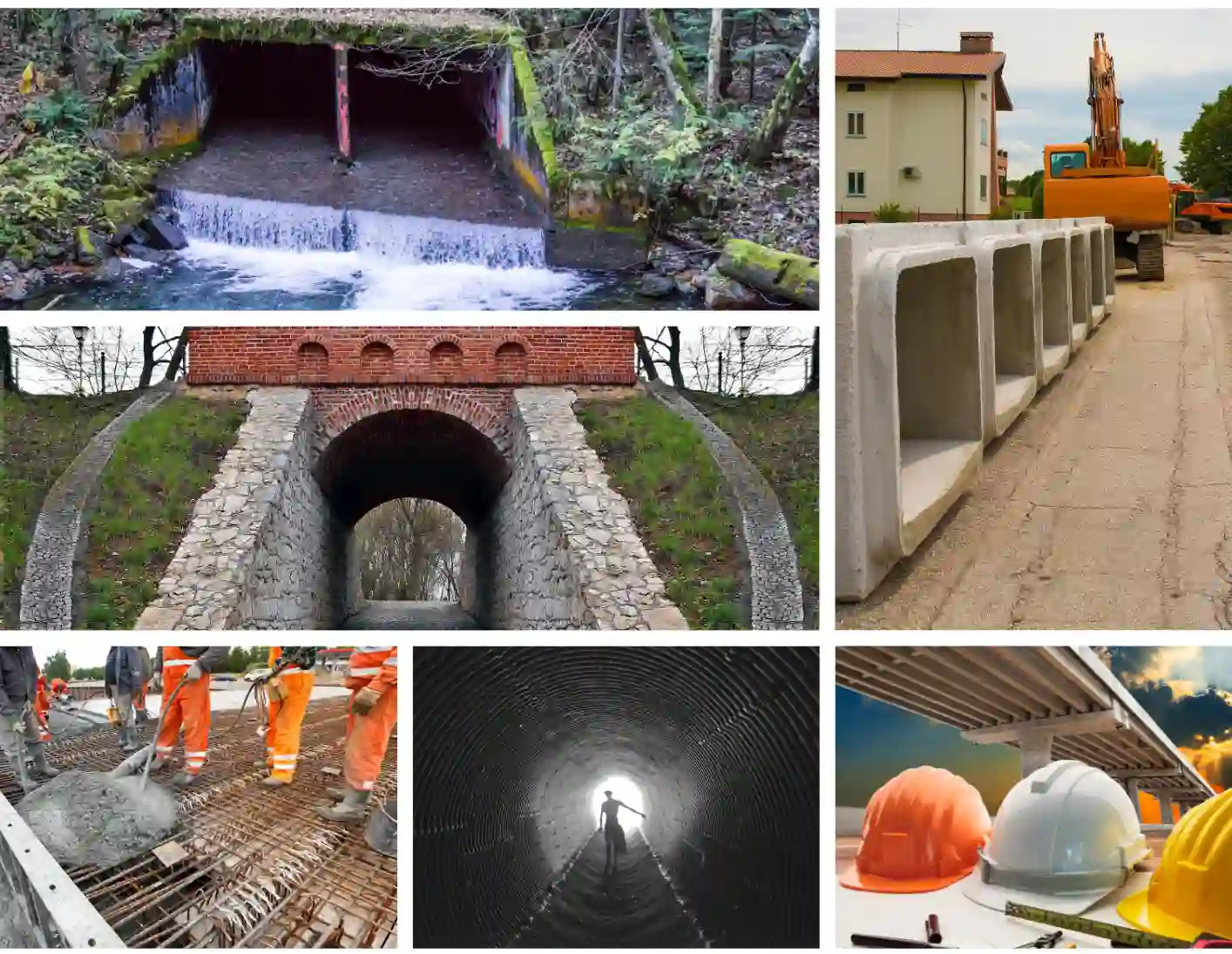
Useful early information reduces uncertainty and helps the project team define the right investigation, design and delivery pathway.
Survey levels, water paths, catchment information, flood behaviour, existing drainage, ground conditions and signs of erosion or blockage provide essential context.
Confirm who is responsible for hydraulic, structural, civil and geotechnical inputs, along with the relevant council, road, rail, environmental or asset-owner requirements.
Existing utilities, traffic and pedestrian movements, lifting access, excavation space, working hours and adjacent property constraints can materially affect the construction method.
Temporary water diversion, erosion and sediment control, dewatering, spoil handling, vegetation, aquatic habitat and weather exposure should be addressed in the project-specific controls.
Establish the culvert's purpose, location, asset owner, design responsibilities, road or access interfaces and the limits of the construction package.
Complete the required survey and investigations, resolve design inputs, locate services and obtain the approvals, permits and environmental controls applicable to the site.
Coordinate temporary water management, excavation and support, foundation or bedding preparation, lifting, installation, jointing, backfill, compaction and reinstatement.
Use the project inspection and test plan to capture hold points, materials, levels, compaction, connections, inlet and outlet works, as-built information and maintenance requirements.

A civil contractor may deliver the approved construction scope and coordinate site activities, records and interfaces. That does not replace the responsibilities of appointed designers, engineers, certifiers, authorities, asset owners or other registered practitioners where their involvement is required.
SCE Corp integrates engineering and design inputs, procurement, construction and project management through its qualified team and appointed specialists. At Emu Heights, SCE’s flood-damaged bridge reconstruction included foundations, reinforced-concrete box culverts, wing walls and backfill. The work connects culvert construction with the surrounding bridge and access system. Each package is planned around its site conditions, design responsibilities, approvals, temporary works and construction sequence.
A culvert is a structure that provides a controlled passage for water beneath a road, accessway, rail corridor or embankment. The appropriate culvert type and arrangement depend on the site, catchment, design requirements, asset-owner standards and approvals.
Typical inputs may include survey levels, catchment and hydraulic information, ground conditions, existing services, access constraints, environmental requirements, authority standards, design documentation and the required construction and maintenance interfaces.
Design and approval responsibilities must be allocated to the appropriately qualified and appointed parties for the project. Depending on the site, this may involve civil, hydraulic, structural, geotechnical or environmental specialists and the relevant council, road, rail or asset authority. A contractor delivers the agreed construction scope and does not replace those responsibilities.
Planning may need to address temporary water management, excavation support, dewatering, bedding or foundations, lifting, services, traffic and pedestrian access, erosion and sediment control, backfill, compaction, pavement or landscape reinstatement, inspections and as-built records.
The asset owner should establish a maintenance approach suited to the site. This may include inspections after significant weather, clearing debris, monitoring blockage, scour, erosion, settlement, joints and inlet or outlet condition, and arranging timely investigation or repair where deterioration is identified.
No. Performance depends on the design basis, catchment behaviour, event severity, capacity, condition, blockage risk and the wider upstream and downstream drainage system. Project-specific investigation and design should address the applicable risks, but residual flood risk can remain.
Provide the site location, available drawings or reports, photographs, known constraints, approval status and required programme so the appropriate next steps can be considered.