What has changed?
Record the location, extent, timing and progression of visible movement, cracking, moisture, settlement, corrosion, damaged finishes or service failure. Include any earlier inspection or repair information.

Lane Cove structural remediation and construction
SCE delivers structural remedial and building works in Lane Cove, coordinating investigation, engineering, temporary support and permanent construction. Our completed local school project demonstrates structural repair, sewer replacement and reinstatement within a constrained holiday programme.
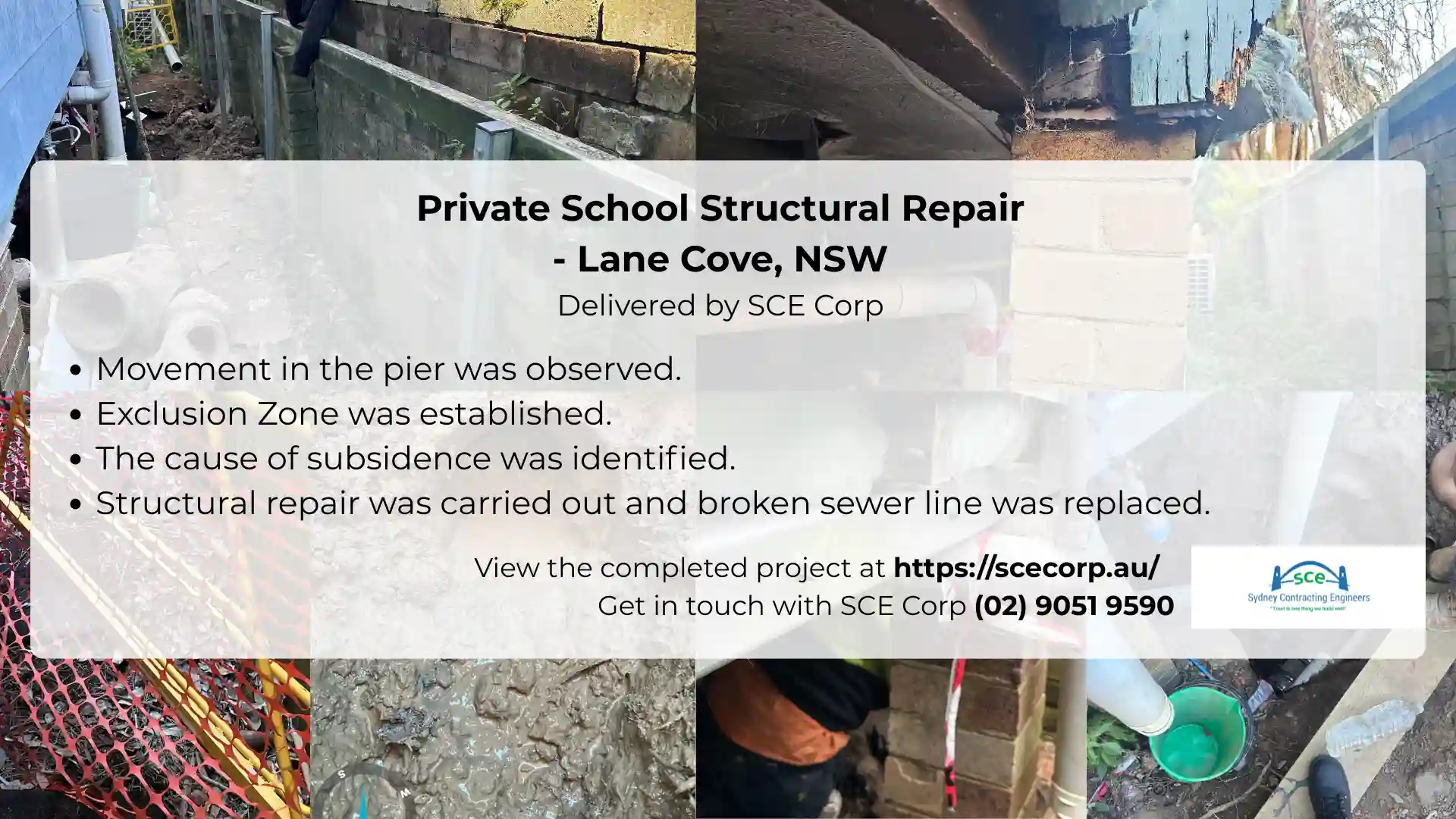
A useful structural-remedial enquiry begins with what has actually been observed: movement, cracking, deterioration, water, loss of support, service damage or another defined condition. Photographs, dates, drawings, previous reports and changes in the condition help separate an immediate safety or access concern from the investigation and permanent-work stages.
SCE Corp's published Lane Cove school structural remedial project demonstrates this evidence-led sequence on one completed site. The record describes movement at a masonry pier, an exclusion zone, structural-engineer input, temporary support, controlled excavation, a permanent structural repair, replacement of a broken sewer line and reinstatement. The sequence shows why structural movement, ground conditions and connected services must be investigated together before the permanent repair is completed.
SCE uses the condition, exposure and operational requirements to establish the investigation and construction sequence. These decisions also determine what can be priced confidently and what needs further investigation.
Record the location, extent, timing and progression of visible movement, cracking, moisture, settlement, corrosion, damaged finishes or service failure. Include any earlier inspection or repair information.
Identify occupied rooms, school or workplace operations, pedestrian routes, neighbouring property, stored assets and services. An exclusion or make-safe decision must respond to the actual risk and responsible professional advice.
Confirm whether access, opening-up, survey, drainage review, service locating, material testing or structural input is needed before the repair boundary can be defined.
Separate construction coordination from engineering, design, certification, approval and registered-practitioner duties. The required roles and documents depend on the exact scope.
Plan around occupancy, access windows, utilities, weather exposure, noise, dust, deliveries and safe handback. Staging may be as important as the physical repair.
Define inspection points, photographs, test results, as-built information, warranties, maintenance information and the party responsible for accepting each closeout item.
The Lane Cove project record included a broken sewer connection alongside the structural condition. That is a useful reminder to coordinate footings, excavation, drainage, utilities and reinstatement where the evidence shows they interact.
SCE brings Building Remedial Services and Civil Services together where the repair spans structural elements, drainage, excavation and external reinstatement.
Scope boundary: SCE is NSW DBP registered. Project-specific design, declaration, certification and approval responsibilities must still be allocated to the appropriately appointed parties; DBP registration is not certification or accreditation of every service or outcome.
Provide the address, asset type, affected area, photographs, timing, progression and any existing drawings or reports.
Identify occupied areas, access routes, loose or unstable elements, water or service hazards, and any current exclusion or professional instruction.
Define safe access, opening-up, locating, testing, survey and inspection requirements before assuming the cause or repair extent.
Confirm the client, contractor, engineer, designer, certifier, registered practitioner and approval roles that apply to the actual work.
Sequence temporary support, demolition or excavation, structural repair, service work, protection, inspection and reinstatement against the approved scope.
Complete required inspections, evidence, test results, as-built information, warranties, maintenance guidance and safe handback.
Planning and site controls cannot be inferred from the suburb name. Check the Lane Cove Council planning-controls page and the current Lane Cove Local Environmental Plan record for the exact address and proposed work.
The Council page explains that its Development Control Plan supports the Local Environmental Plan with detailed controls including building scale, landscaped area and parking. Those controls may or may not affect a particular repair, alteration or access arrangement. Confirm the applicable requirements before programme, procurement or methodology is fixed. The Lower North Shore service hub covers related services across the region.
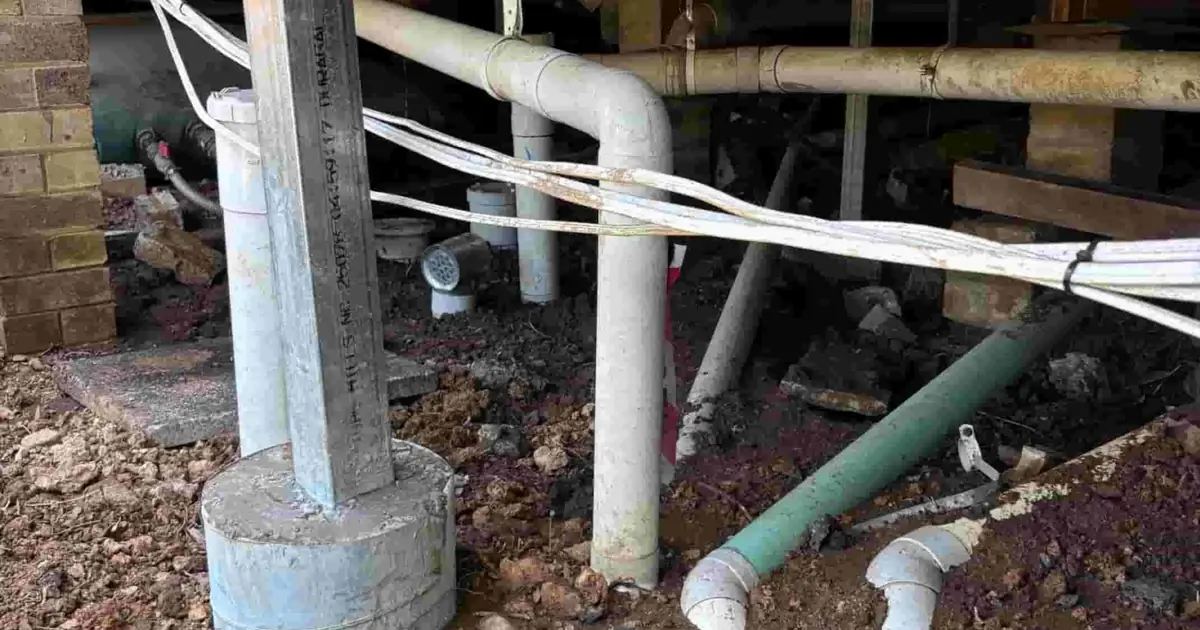
The published record describes delivery during the school holidays following evidence of movement at a masonry pier. It records exclusion, structural-engineer input, temporary support, controlled excavation and investigation, permanent repair, replacement of a damaged sewer connection and reinstatement.
Read the complete Lane Cove project record
The constrained site required staged material handling and coordinated structural and sewer works. Scheduling during the school holidays separated the repair from normal school operations. For another occupied site, the available closure window, access and investigation findings need to be resolved together before the construction programme is fixed.
Practical questions about structural investigation, connected services and SCE’s construction delivery.
Provide the exact address, asset type, affected area, clear photographs, when the condition was first noticed, whether it is changing, occupancy or access constraints, and any drawings, reports, approvals or previous repair records.
SCE established an exclusion zone, coordinated structural-engineer input and temporary support, and undertook controlled excavation, permanent structural repair, replacement of a broken sewer line and reinstatement. The December 2025 works were delivered during the school holidays.
Where a condition may expose people or assets, follow current emergency and professional advice and describe the concern when contacting SCE. The need, extent and duration of an exclusion zone must be determined for the actual condition.
Yes. At SCE’s Lane Cove school project, investigation revealed a broken sewer line associated with the movement, so the structural and service repairs were coordinated before reinstatement. Investigation determines which connected systems need to be included at each property.
SCE coordinates construction and the required engineering input within the agreed scope. The appointed engineer, designer, certifier and registered practitioners retain their respective design, inspection, declaration and certification responsibilities for the project.
Yes. SCE delivers construction, alterations, refurbishment and repair work, including complex projects with connected structural, service and site constraints. Our Building Services page explains the wider capability; this page focuses on Lane Cove structural remediation and its construction requirements.
Send the Lane Cove address, condition photographs, reports and access or operating constraints. SCE will identify the investigation and construction requirements for your structural remedial or building project.