
NSW project handover guide
Post-Construction Deep Cleaning for Safer Project Handover
Construction cleaning is a controlled close-out activity, not ordinary office cleaning. A useful scope accounts for residual dust and debris, finished surfaces, access, staging, waste handling and the standard required for handover.
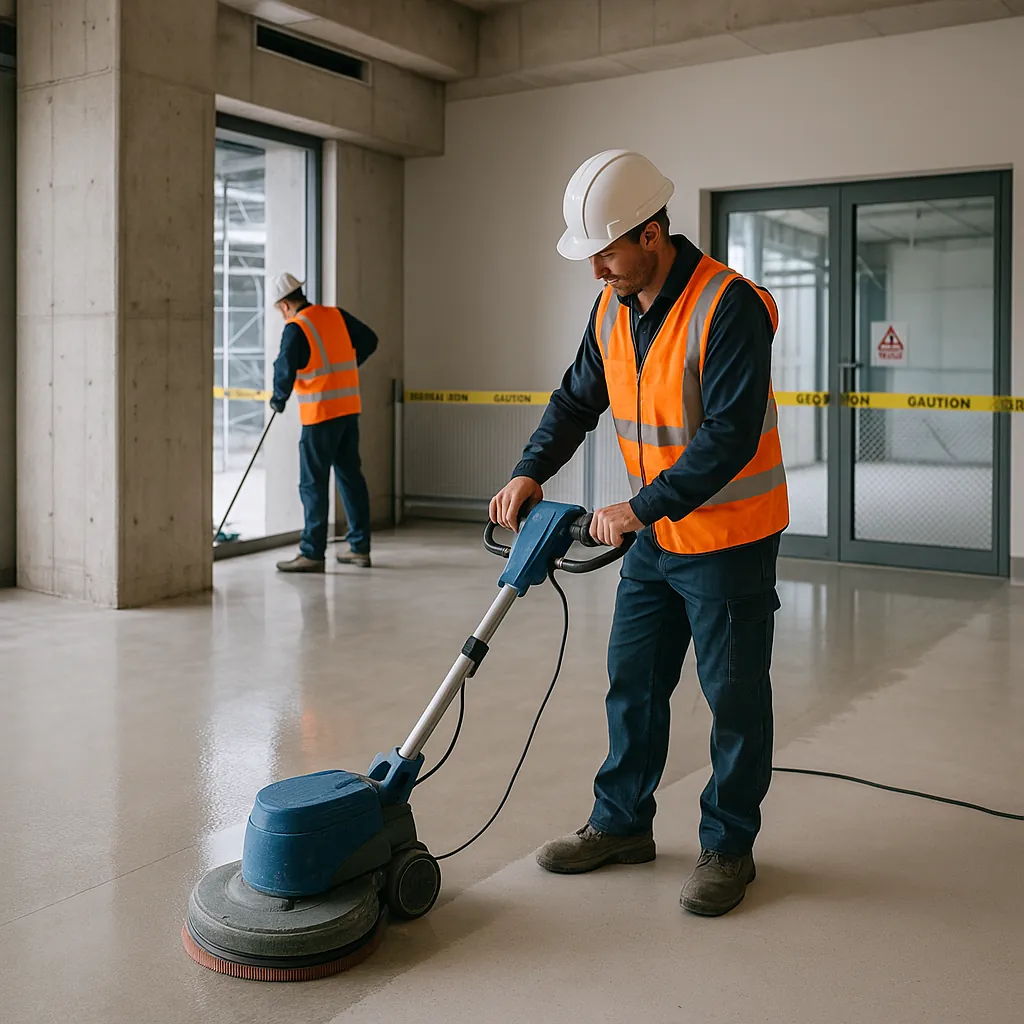
Why post-construction cleaning needs a defined scope
The condition at the end of building, civil or remedial work differs from a routine occupied-space clean. Fine dust may settle repeatedly, waste streams may need separation, newly finished materials can require product-specific care, and several trades may still be completing defects or commissioning.
The cleaning plan should identify the work area, interfaces and acceptance criteria before labour and equipment are scheduled. This reduces the risk of cleaning too early, damaging a surface, overlooking a restricted area or handing over without an agreed inspection record.
Residual material
Identify dust, packaging, offcuts, labels, protective films and other project residue to be removed or retained.
Surface requirements
Confirm finishes, manufacturer instructions, sensitive equipment and any product or method restrictions.
Access and staging
Coordinate work zones, trade completion, services, exclusion areas, occupancy and safe access.
Acceptance evidence
Set the inspection standard, responsible reviewers, exceptions process and required close-out records.
A practical four-stage handover sequence
Confirm the requirement
Review the agreed scope, drawings or specifications, finished materials, known hazards, access constraints and required completion date.
Release the area
Confirm relevant construction work is complete enough to clean, isolate active interfaces and protect completed items that remain vulnerable.
Clean methodically
Use a planned sequence that controls recontamination and treats each surface in accordance with the project-specific method.
Inspect and record
Check the area against the agreed standard, record exclusions or defects and provide the close-out information required for handover.
Where construction-led cleaning can fit
The post supports project planning rather than replacing a defined service scope. Suitability depends on the site, work package, access, programme, safety requirements and commercial fit.
Building and refurbishment
Cleaning may support suitable building, remedial, fitout and refurbishment close-out. Review the Building Services pathway.
Civil and infrastructure work
Defined cleaning or site-remediation support may form part of a suitable civil package. Review the Civil Services pathway.
Project-specific assessment
Provide the actual site and scope information so SCE can assess the appropriate delivery pathway. Contact SCE Corp.
Information to include in an enquiry
- project address, site type and current construction stage;
- areas, approximate quantities and required handover date;
- known dust, debris, residue, waste or contamination concerns;
- surface schedules, manufacturer requirements or sensitive finishes;
- occupation, access, working-hour and live-service constraints;
- available scope documents, photographs and acceptance criteria;
- responsibilities for waste, water, power, protection and final inspection.
Responsibility boundary
Cleaning does not replace defect rectification, hazardous-material assessment, specialist remediation, commissioning, regulated design, certification or statutory approval. Those requirements remain with the appropriately appointed parties unless expressly included and legally permitted.
Post-construction cleaning FAQs
When should post-construction cleaning start?
Final cleaning is usually most effective after the relevant construction activities and defect work that would recreate dust or debris are complete. Staged cleans may still be useful where zones are progressively released. The programme should define who releases each area and what work may continue nearby.
Is post-construction cleaning the same as commercial cleaning?
No. A construction close-out clean must account for project residue, unfinished interfaces, newly installed materials, trade sequencing, restricted access and an agreed handover condition. Routine commercial cleaning normally addresses an occupied space under established operating conditions.
How is the cleaning scope determined?
The scope should be based on the actual areas and quantities, surface types, known residue or hazards, access and occupancy constraints, waste responsibilities, programme and acceptance criteria. Available drawings, specifications, photographs and manufacturer requirements help define the method.
Can cleaning be completed in an occupied or operational site?
A suitable occupied-site scope may be reviewed, but it requires project-specific planning for segregation, access, noise, dust control, working hours, communication and operational continuity. Availability and method depend on the actual site conditions and accepted scope.
What should be provided for an initial review?
Provide the project address, current stage, areas to be cleaned, photographs, known residue or material concerns, access and occupation constraints, required completion date, available documents and the standard expected at handover.
Prepare the site for a controlled handover
Send the available scope, photographs, programme and access information so SCE can review project suitability and identify any information gaps.