
Concrete reuse and circular construction
Reused Concrete in Construction: What Re:Crete Proves
The Re:Crete footbridge shows a different future for demolished concrete: carefully selected structural elements can sometimes be recovered, tested and designed into a new load-bearing structure instead of being crushed or sent to landfill.
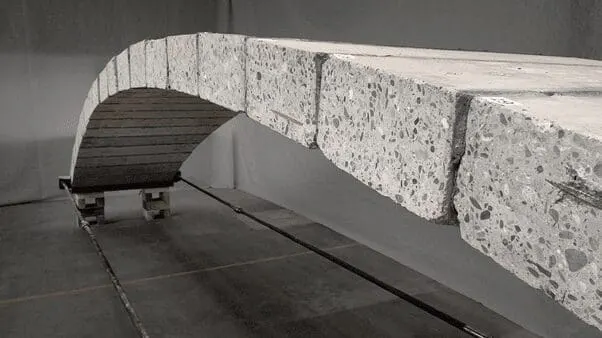
Concrete was cut from walls of an existing building and assembled into a prototype arch.
The research footbridge tested direct structural reuse at a meaningful scale.
Every reuse proposal still needs project-specific investigation, engineering and approval.
Concrete recycling commonly means crushing demolished concrete into recycled aggregate. Re:Crete explores a more ambitious pathway: retaining whole sections of reinforced concrete and giving them a second structural use. The idea can avoid some of the energy and new cement associated with making replacement elements, but it also creates new questions about condition, geometry, traceability and design responsibility.
Important: Re:Crete is a research project led by EPFL’s Structural Xploration Lab in Switzerland, not an SCE Corp project. This article explains the concept and the practical checks an Australian project team should consider before proposing concrete reuse.
How the Re:Crete Footbridge Was Made
Researchers recovered reinforced-concrete wall sections from a building undergoing renovation. The material was cut into individual blocks on site, then reassembled as a prestressed arch. Mortar joints helped accommodate the dimensional variation that comes with salvaged components.
The result was a proof-of-concept footbridge rather than a standard commercial construction detail. Its value is in demonstrating that an existing concrete element does not always have to become waste or low-value crushed material when a structure is altered or demolished.
EPFL reports that the team load-tested the prototype and used 25 reclaimed blocks to form the 10-metre-long structure. The project also highlights a major shift in design thinking: instead of manufacturing components to match a finished design, the design must respond to the geometry and verified capacity of the components available.
Research reference: EPFL Structural Xploration Lab — reuse of cut concrete.
Reuse Is Different From Conventional Concrete Recycling
Both approaches can reduce disposal, but they retain different amounts of the original material’s value. Direct reuse keeps a component substantially intact. Recycling usually processes the concrete into another material stream.
| Pathway | What happens to the concrete | Potential value | Typical project questions |
|---|---|---|---|
| Direct element reuse | Whole slabs, beams, wall sections or cut blocks are recovered and redesigned into a new use. | Retains more of the embodied material and may reduce demand for newly manufactured elements. | Condition, reinforcement, geometry, capacity, lifting, connections, certification and transport. |
| Recycled aggregate | Concrete is crushed, screened and processed for an approved aggregate application. | Diverts waste and can reduce demand for virgin quarried material. | Source quality, contamination, grading, specification, testing and intended use. |
| Site reuse or recovery | Suitable material is reused in an authorised project application such as fill or pavement layers. | May reduce haulage, disposal and imported material when the specification permits. | Waste classification, environmental controls, compaction, geotechnical suitability and approvals. |
What Must Be Verified Before Concrete Is Reused?
A successful reuse strategy starts before demolition. The team needs enough reliable information to decide whether recovery is technically, commercially and legally realistic.
Existing condition
Inspect deterioration, cracking, spalling, corrosion, fire exposure, previous repairs and any damage that could affect performance.
Material properties
Confirm concrete strength and reinforcement details through available records, scanning, sampling and testing appropriate to the proposal.
Safe recovery
Plan saw-cutting, temporary support, lifting points, transport, storage and sequencing so elements are not damaged or workers exposed to uncontrolled risk.
New structural role
Design for the recovered geometry and verified properties, including connections, tolerances, durability and the loads in the new structure.
Environmental controls
Assess contamination, waste classification, dust, water, noise, haulage and lawful handling of material that cannot be directly reused.
Approvals and records
Confirm the applicable planning, building, engineering, certification and procurement requirements, then document the evidence trail.
Where Concrete Reuse Can Add Project Value
The best opportunity is often found during early feasibility, while a project can still adapt its design, programme and procurement approach. Potential benefits may include reduced disposal, fewer new materials, shorter transport routes and a stronger circular-economy outcome.
Those benefits are not automatic. Selective dismantling and testing can cost more than conventional demolition. Recovered elements may need careful storage, custom connections or design changes. A credible assessment should compare the whole delivery pathway, not only the cost of the material itself.
For NSW projects involving earthworks and concreting, the practical pathway may range from approved recycled aggregate to a more specialised element-reuse study. SCE Corp can deliver the engineering, design, procurement and construction approach through its qualified team and appointed specialists. The scope assigns investigation, material testing and design responsibilities explicitly; required independent certification and statutory approvals remain with the relevant appointed parties and authorities.
Early questions for a project team
- Which concrete elements are scheduled for removal?
- Are drawings, specifications and construction records available?
- Can the elements be separated without unacceptable damage?
- Is there a defined new use, recipient project or compliant material pathway?
- Who owns the investigation, design, certification and environmental decisions?
- Does the programme allow time for testing and design development?
A Practical Planning Sequence
Define the intended outcome
Decide whether the objective is direct structural reuse, recycled aggregate, lawful site reuse or simply better recovery from the waste stream.
Match the evidence to that chosen route. Acceptance for a recycled road-base material does not establish the capacity of a recovered beam or wall section. Conversely, a structural test does not resolve contamination or lawful waste-handling requirements. Identify the specification, evidence and acceptance decision for the intended use before ordering recovery or demolition work.
Investigate the source structure
Bring together records, inspections, surveys, testing and hazardous-material information before demolition methodology is fixed.
Test feasibility against the new use
Review geometry, structural demand, durability, handling, transport, connections, approvals, cost and programme as one coordinated decision.
Document responsibilities
Set clear scopes for the builder, engineer, demolition contractor, testing provider, waste adviser, certifier and client representatives.
Control recovery and traceability
Use identification, inspection hold points, storage requirements and quality records so recovered materials remain linked to the evidence supporting their use.
SCE Corp’s engineering and design services and civil services can support project-specific planning and delivery. For evidence of relevant delivery sectors, see our civil infrastructure projects.
Frequently Asked Questions
What is Re:Crete?
Re:Crete is an EPFL research project that used concrete blocks cut from an existing building to create a prestressed arch footbridge. It demonstrates direct reuse of structural concrete elements rather than crushing them into aggregate.
Is reused concrete the same as recycled concrete?
No. Direct reuse keeps an existing element or cut section largely intact. Conventional recycling generally crushes concrete and processes it for an approved aggregate application.
Can concrete from any demolished building be reused?
No. Suitability depends on condition, strength, reinforcement, contamination, geometry, recoverability, durability and the requirements of the new use. Project-specific investigation and engineering are essential.
Does SCE Corp own the Re:Crete technology?
No. Re:Crete is a research project led by EPFL’s Structural Xploration Lab. SCE Corp discusses it as an example of circular construction and can assess practical NSW project pathways within an agreed scope.
What should be assessed before demolition?
The team should review available drawings, inspect the structure, identify hazardous materials, investigate concrete and reinforcement properties, define safe recovery methods and confirm a realistic new use or compliant recycling pathway.
Can reused concrete lower a project’s environmental impact?
It can, particularly when it avoids new material production, landfill and long-distance transport. The actual result depends on cutting, testing, handling, storage, transport and replacement-material impacts, so the full pathway should be assessed.
Who approves structural concrete reuse in NSW?
The required pathway depends on the building or infrastructure work. Appropriately qualified practitioners, the relevant consent and certification authorities, and the project’s technical specifications must be identified for the specific proposal.
How can SCE Corp help?
SCE Corp can investigate the practical reuse pathway and deliver engineering, design, procurement and construction through its qualified team and appointed specialists. The appointment identifies the evidence, design, testing and delivery responsibilities, with statutory approvals and required independent certification retained by the appropriate authorised parties.
Planning a Concrete Recovery or Civil Works Package?
Speak with SCE Corp about the site constraints, proposed use, investigation needs and delivery responsibilities before the demolition or procurement strategy is locked in.