
By Sydney Contracting Engineers (SCE Corp) · Information checked 6 November 2026
Temporary roof tarping is an emergency protection measure, not automatically a completed roof repair. After storm damage, the owner needs a clear record of what the covering protects, what remains vulnerable and who is responsible for the next assessment and permanent work.
Do not climb onto a damaged roof or adjust a covering yourself. Damaged structures, loose materials and electrical hazards require competent assessment. For an immediate threat to life call 000; NSW SES provides flood and storm emergency assistance on 132 500.
Distinguish the emergency response from completion
NSW SES guidance explains that its emergency measures are temporary and that owners need to arrange permanent repairs through their insurer or a private contractor. The same distinction should be clear in a contractor’s make-safe handover.
Record the damaged area, temporary work completed, areas not covered and any access or occupation restrictions. Avoid describing the entire roof as safe or weatherproof where the assessment and scope do not establish that outcome.
What should a temporary roof protection handover include?
The handover should identify the covering and the conditions under which it needs review. State the responsible contact, inspection arrangements and what occupants should do if leakage or damage is observed. Those details must be set for the actual installation and building.
- Location and extent of the temporary covering.
- Known damage and unresolved conditions.
- Inspection and maintenance responsibilities.
- Weather or condition changes requiring reassessment.
- Restrictions affecting roof access, services or occupation.
- The next step toward the permanent repair.
Keep occupants informed without asking them to inspect the roof from an unsafe position.
Develop the permanent scope from evidence
Arrange the required roof, structural, service and internal-damage assessments. Determine what can be repaired, what requires replacement and what connected work is necessary. Flashings, drainage, supports, insulation, ceilings and services may need coordinated review.
The temporary installation is not a diagnosis of every defect. Do not assume the damage is limited to the visible missing sheet or tile. Equally, do not infer that a full replacement is required without the supporting assessment.
Coordinate insurance and authority decisions
Keep photographs, reports and invoices for the work actually performed. SCE’s insurance repair documentation checklist sets out the records to carry from emergency work through permanent repairs. Clarify who can authorise the permanent scope and whether an insurer, owner, building manager or other party must review it. Insurance cover and claim acceptance depend on the policy and circumstances.
Confirm the relevant design, approval, licensing and certification requirements for the permanent work. Urgent temporary action and the later reconstruction may have different documentation and decision needs.
Plan the transition before removing protection
Agree when materials, access, workers and replacement details will be ready. The construction team should determine the sequence for removing temporary protection and closing the permanent roof, including weather response and daily exposure limits.
SCE’s roof-remediation planning guide covers the broader programme. Record who accepts the permanent work and how completion changes the temporary inspection or access arrangements.
SCE’s emergency roof protection at Ryde
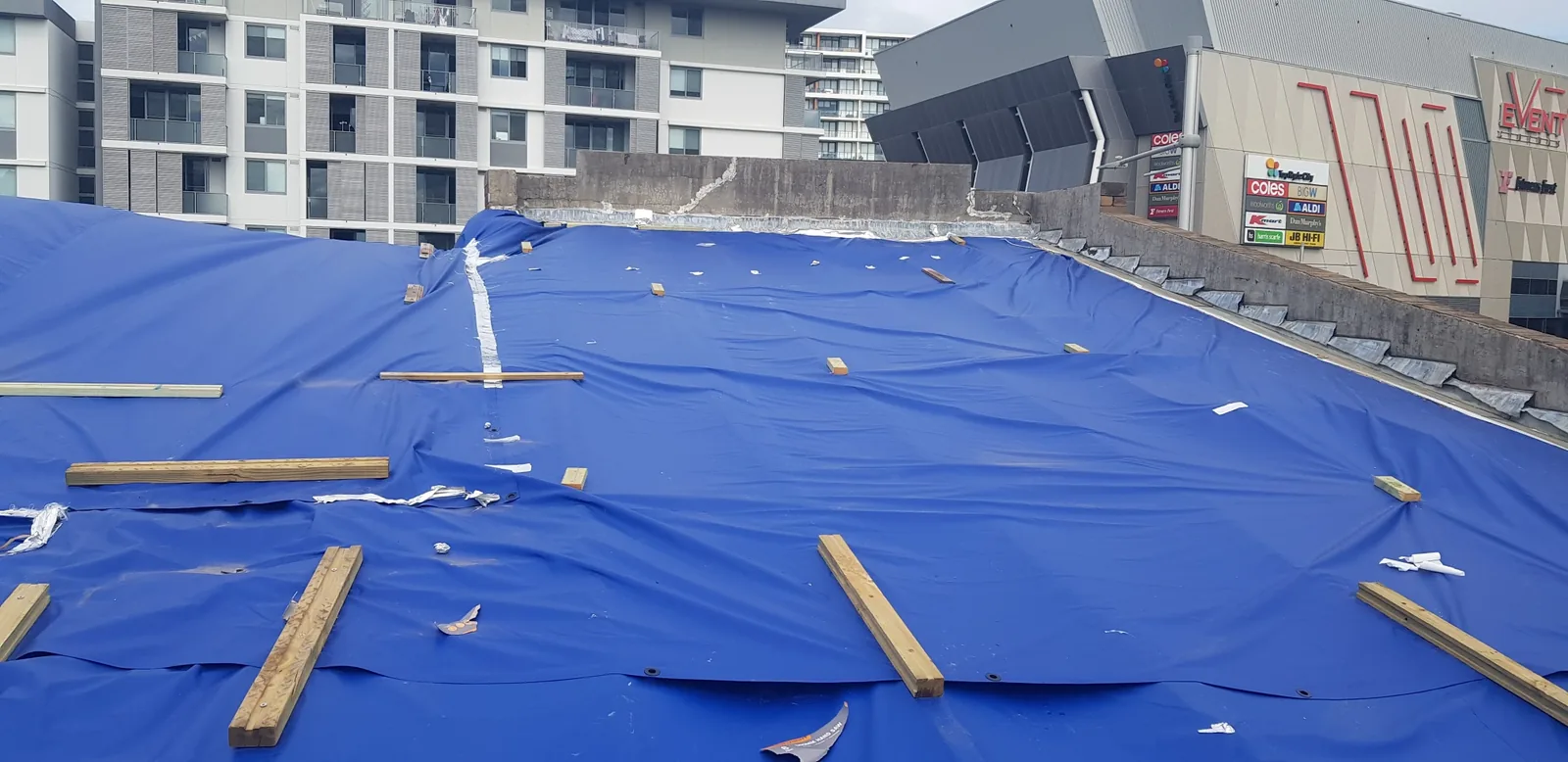
At the Ryde commercial roof project, a major storm tore metal sheeting from the building. SCE’s emergency team installed heavy-duty tarpaulin across the affected exposed structure. The published photographs document that emergency protection stage.
SCE installed temporary protection across the storm-damaged structure at Ryde. For the subsequent repair stage, our team delivers engineering and design, procurement, construction, testing and handover to the agreed scope. Our qualifications and registrations support this coordinated service.
For project review, provide the location, damage summary, safe photographs, emergency-work record and available assessment information through Request a Roof Assessment.
For the next steps after emergency protection, see our roof repair and replacement questions.
Frequently asked questions
Is a tarp a permanent roof repair?
No. An emergency roof tarp provides temporary weather protection while the damage is assessed and permanent repairs are arranged. Its limits, inspection arrangements and follow-up requirements should be recorded for the actual building. The permanent roof needs its own agreed repair scope and completion checks.
Should I adjust a loose roof tarp myself?
Do not access a damaged roof or alter the installation without competent assistance. Report the condition to the responsible emergency or repair team.
Does make-safe work guarantee an insurance claim?
No. Claim acceptance depends on the policy and circumstances. Keep the records and confirm authorisation through the relevant insurer or adviser.
What did SCE complete at Ryde?
SCE installed heavy-duty temporary tarpaulin over a storm-damaged commercial roof after metal sheeting was dislodged. The published project records emergency protection.