
By Sydney Contracting Engineers (SCE Corp) · Information checked 6 October 2026
Vehicle impact building repairs need a controlled transition from the immediate incident to permanent reinstatement. The visible hole or cracked wall may be only part of the damage. Supports, services, openings and adjoining building elements may require assessment before anyone assumes the area can be used again.
If people are in immediate danger, call 000 and keep clear of the affected area. Do not remove damaged masonry, shift a vehicle or alter temporary supports where doing so could change the building’s stability. Emergency responders and competent practitioners must direct the immediate response.
Establish the initial control of the site
Identify the owner or responsible building representative and the parties managing access, services and immediate protection. Record safe observations and preserve relevant photographs and incident information. Privacy-sensitive addresses and personal details should remain in the appropriate project and insurance records.
The initial assessment should establish what needs urgent control and which areas require further investigation. Do not treat a quick visual attendance as a complete permanent-repair design unless that is what the appointment and evidence actually provide.
Define temporary support as an engineered stage
Where temporary support is required, its design, installation, inspection and continued use must be assigned to competent parties. Record any restrictions on access, loading or work near it. The support remains part of the controlled site arrangement until the authorised team releases or changes it.
Temporary support and permanent reconstruction can have different design and inspection requirements. Keep those stages connected in the programme so an assumed handover between teams does not leave a responsibility gap.
Investigate the permanent repair boundary
Review the damaged and adjoining construction, services and finishes. Ask what information is needed to establish the repair design and whether opening-up, measurement or specialist assessment is required. SCE’s investigation guide explains the broader evidence pathway.
The scope should identify retained components, removals, new structural work and reinstatement. Where damage crosses a building or property interface, define who reviews and authorises the connected work before it is priced as a complete solution.
Coordinate access and authority requirements
Footpaths, roads, neighbouring property or public areas may be affected by protection, scaffolding, delivery or reconstruction. Confirm the applicable authority and access arrangements for the actual site. Do not assume that an emergency response authorises every later construction activity.
Keep insurance authorisation separate from technical and statutory decisions. The insurer or owner may approve a cost scope while engineering, access or certification matters still require resolution.
Sequence reconstruction and support release
The approved construction method should state how the permanent work is built, inspected and brought into service. Identify the hold points and the person authorised to confirm when temporary supports can be altered or removed.
- Confirm the current design and site conditions before removal.
- Inspect required stages before work is concealed.
- Record departures and obtain the appropriate design response.
- Coordinate services, openings and finishes with the structural repair.
- Complete the required acceptance before reopening affected areas.
Learn from the recorded Villawood scope
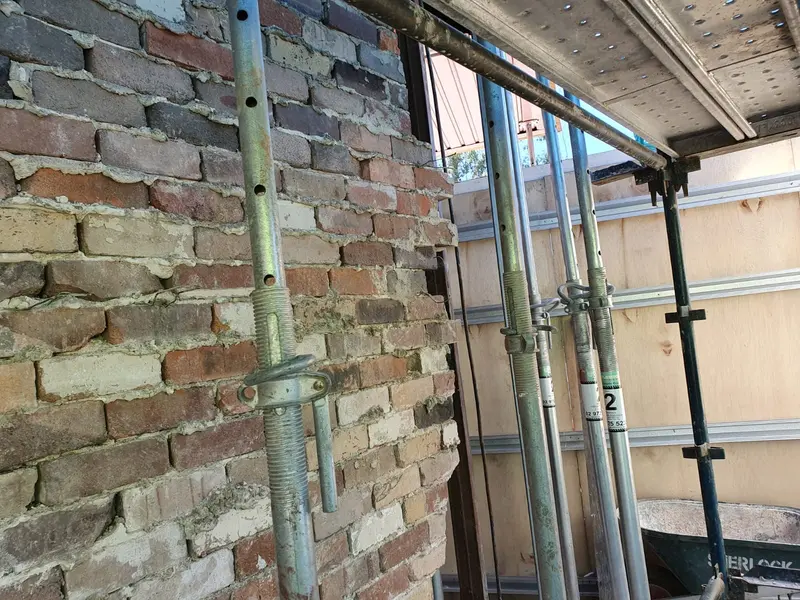
At Villawood, SCE assessed vehicle-impact damage, undertook engineering design, installed temporary structural support, liaised with authorities concerning Road Occupancy Licence requirements and carried out brickwork. The published record states that reconstruction remains underway.
This is direct evidence of SCE’s combined engineering and construction role. It does not establish the support method or approval pathway appropriate for another impact-damaged building.
For permanent repair review, send the location, incident summary, available reports, safe photographs and existing controls through Request a Project Suitability Review. SCE can develop the agreed engineering, design, procurement and construction scope with the required independent and statutory appointments.
Frequently asked questions
Does temporary support mean an impact-damaged building is fully repaired?
No. Temporary support is a controlled stage with its own limitations. Permanent repair and acceptance still need the required design, construction and inspection evidence.
Who can authorise removal of temporary supports?
The project must identify the competent authority for that decision through the temporary and permanent works requirements. Supports should not be removed based on appearance alone.
Does insurer approval replace engineering approval?
No. Insurance authorisation, technical design and statutory requirements are separate decisions that need coordination.
Has SCE’s Villawood reconstruction finished?
The published project information reviewed for this article states that engineering design, support, authority liaison and brickwork have been undertaken, with overall reconstruction still in progress.