
By Sydney Contracting Engineers (SCE Corp) · Information checked 8 November 2026
Stormwater pipe repair should begin by identifying the problem that needs correction. A blockage, broken connection, damaged pipe, inadequate inlet or downstream constraint can produce similar surface flooding. Clearing an obstruction may restore flow without resolving a damaged asset; replacing a short reach may not address a wider network issue.
Define the affected area, observed conditions and investigation objective before excavating. This helps the civil team choose a repair that fits the evidence and avoids disturbing unrelated services or structures.
Record how the problem behaves
Note where water appears, when it occurs, the rainfall conditions and how long it remains. Keep previous cleaning, camera inspection and repair records. Identify whether the problem recurs in the same location or affects several connected areas.
Observe safely from accessible areas. Do not enter pits, open hazardous structures or work near floodwater to collect evidence. The appropriate contractor should plan any inspection requiring specialised access or controls.
Identify the drainage route and its owner
Gather available plans and identify inlets, pits, pipe reaches and the lawful discharge point. Ask which parts of the route are verified and which are inferred. A pipe visible at one pit does not establish its entire alignment, condition or receiving-system capacity.
Confirm ownership, maintenance responsibilities and any authority or property interface. SCE’s civil stormwater planning guide covers the wider catchment, design and approval questions.
Can CCTV identify the problem before excavation?
A camera inspection can reveal visible obstructions, cracks and damaged joints inside an accessible stormwater pipe. It can help identify which reach needs attention before excavation is planned. Access, debris and water can limit the view, so the inspection report should explain what was seen and what still needs investigation.
Where camera inspection, cleaning, survey or other investigation is proposed, state the purpose and limitations. A useful record identifies the inspected reach, access points, location of observations and any section that could not be assessed.
Ask whether cleaning is needed to obtain a meaningful inspection and how waste or water will be managed. The investigation should distinguish an observed obstruction from evidence of damage, displaced connections or other conditions requiring design review.
How do you compare stormwater drain repair quotes?
Compare the same investigation and repair scope. Confirm whether each price includes clearing, camera footage and a report, locating the affected reach, design input, excavation or relining, temporary flow controls, disposal, reinstatement and completion records. Ask which findings could change the price before authorising further work. SCE explains those inclusions so a low clearing fee is not mistaken for a complete permanent repair.
A local repair, replacement reach or wider drainage alteration can have different purposes. Ask the appointed team to explain the selected option, the retained assets and the interfaces at each end of the work.
- What defect or constraint has been established?
- What part of the system will the work change?
- Are alignment, levels and discharge arrangements confirmed?
- What access or ground conditions affect the method?
- How will completed work be inspected and recorded?
Do not assume a generic repair method is suitable for every pipe material, geometry or loading condition.
Verify services before excavation
SafeWork NSW excavation guidance requires relevant essential-services information before excavation. The construction team must also establish the practical service-location and protection measures for the site; a plan should not be treated as proof of exact position.
Coordinate excavation support, traffic and pedestrian routes, spoil handling, live flows, weather response and reinstatement. Adjacent buildings, boundaries or public assets may add requirements that are not apparent from a photograph of the blocked inlet.
Keep the acceptance and maintenance information
Agree the required inspection, testing, survey or camera records before backfill or closure. Identify changed pipe reaches, connections and maintenance access. Record any upstream or downstream limitation outside the completed scope.
A successful local repair should not be described as proof that the entire drainage network will handle every storm. The design criteria and assessed limits should remain clear in the handover.
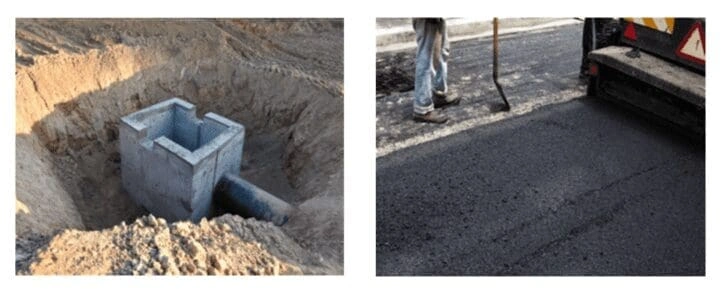
How SCE brings civil experience to drainage repairs
Farshid MANESH’s West Ryde stormwater project experience included drainage lines up to 1,300 mm in diameter, pit works, utility coordination and pavement reinstatement. Quality checks included survey set-outs, hold points, density testing, CCTV inspection and closeout records.
SCE brings that experience to drainage investigation, engineering design, procurement, construction, testing and documented handover. Our team coordinates the required specialists, approvals and certification, with responsibilities clear from the outset. Explore the civil project portfolio for related experience.
Request a Project Suitability Review with the drainage records, flooding history, inspection reports and access information.
Where drainage defects affect the building, our water-ingress investigation and repair questions explain how to connect the water source with the affected building interfaces.
For the wider risks to the property, read drainage warning signs and building-damage pathways. You can also explore SCE’s complete building and civil capability, our service locations and certifications and credentials.
Frequently asked questions
What affects the cost of investigating and repairing a blocked stormwater drain?
Access, pipe depth and length, the obstruction or damage, cleaning requirements, inspection limits, ground conditions and reinstatement affect the price. A clearing-only quote is different from CCTV investigation, a local pipe repair or a redesigned drainage connection. Ask for these stages and their records to be itemised. SCE uses the findings to define the engineering and construction scope before pricing the permanent repair.
Does a recurring blockage prove the pipe is broken?
No. Inspection should distinguish an obstruction, pipe defect and wider system constraint before a repair is selected.
Does clearing a drain prove the whole network is adequate?
No. Clearing can restore a local flow path without establishing the condition or capacity of the complete system.
What should a camera inspection record identify?
Ask for the date, access points, inspected pipe reach, defect locations and any uninspected sections or visibility limits. Agree whether the price includes video, photographs, a marked plan and a written report, and how you will receive them. Keep these records with the repair quotation and completion documents.
What must be checked before excavation?
Confirm the repair design, relevant services information, site location and protection measures, access, support, live flows and applicable authority requirements.
Can a camera inspect a completely blocked stormwater drain?
The obstruction may stop the camera or hide the pipe surface. Clearing or another access point may be needed before a useful inspection can continue. The contractor should record the inspection limit and agree the next step with you, rather than treating unseen pipework as confirmed damage.