
All SCE questions and answers · SCE homepage
Water visible inside a building may have entered somewhere else. These answers explain how to investigate leaks, compare repair options and coordinate the surrounding building work. SCE provides waterproofing remediation with engineering, access, drainage and finishes considered as one repair scope.
Choose a topic below, then open a question for the answer. For advice on your building, send SCE your project details.
Finding the source
How do you find the source of water ingress?
Begin with the leak history, weather conditions, affected locations and existing construction details. The inspection may lead to targeted testing or opening up to distinguish possible paths. SCE records what the evidence establishes and what remains uncertain before selecting a repair. Our Woolloomooloo water ingress project shows why testing and the surrounding building interfaces matter.
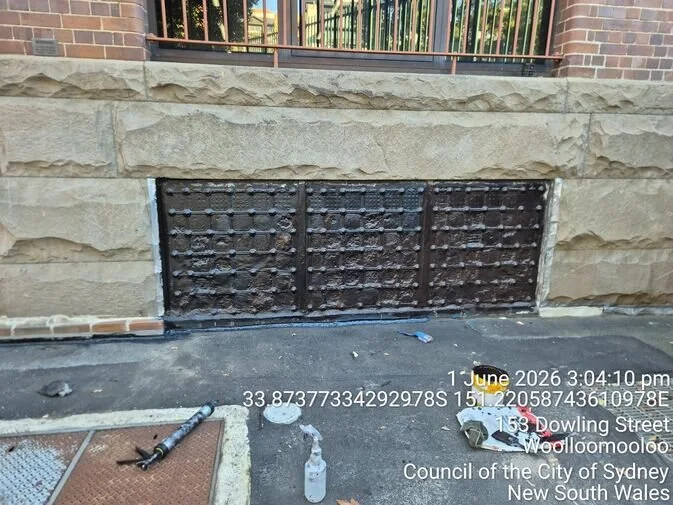
SCE prioritises the likely causes and proportionate, lower-cost checks where the building condition and risk allow. We explain what the first stage can establish, then extend testing or opening up if the findings leave a material question unresolved. The purpose is to reach a sound diagnosis without committing the owner to unnecessarily extensive repairs.
Can a ceiling stain identify the exact leak location?
Not reliably. Water can travel along framing, slabs, cavities or services before becoming visible. A stain may also relate to plumbing, condensation or an older event. SCE compares the timing and location with the building’s construction and uses appropriate investigation to narrow the cause. Photograph the affected area and note when it changes, rather than assuming the roof directly above is necessarily responsible.
What should I do when waterproofing fails?
Limit access to any unsafe area, protect possessions where safe and notify the responsible building representative. Record the symptoms, rainfall or use conditions and previous repair history. SCE can assess the defect and plan the permanent scope. Avoid covering the evidence with repeated surface repairs before the cause is understood. For a strata building, our waterproofing failure service coordinates the assessment and repair interfaces.
Why does a leak appear only during wind driven rain?
Wind can push rain through details that remain dry in lighter weather, including joints, windows, penetrations and façade transitions. Pressure, exposure and drainage paths all affect the investigation. SCE uses the reported conditions to plan relevant checks rather than treating every leak as a failed floor membrane. Our façade sealing guide explains how joints and waterproofing work together.
Can drainage problems look like waterproofing failure?
Yes. Blocked outlets, inadequate falls or water collecting at a threshold can place pressure on details that were not intended to remain submerged. The membrane may also have its own defects. SCE checks drainage and waterproofing together so the repair does not simply coat over a ponding problem. Include photographs of outlets and water accumulation where they can be obtained safely.
Testing and diagnosis
Does every leak need a flood test?
No. The test should answer a specific question and suit the structure, occupied areas and risk of further water damage. Other investigations may be more appropriate. SCE coordinates the test method, controls and acceptance criteria with the relevant specialists. A test result describes the tested conditions; it should not be represented as proof that every part of the building is free from leaks.
Can waterproofing be assessed without removing tiles?
Some information can be gathered from inspection and testing, but concealed membrane condition and junction details may remain uncertain. Local opening up may be needed where the findings affect the proposed repair. SCE explains the limits of each investigation and agrees the extent of disturbance. A non destructive inspection should not be sold as certainty about every concealed layer.
Can thermal imaging prove where a leak starts?
Thermal imaging can help identify temperature patterns that warrant investigation, but it does not by itself prove the water entry point or the reason for the defect. Results need interpretation alongside the building details, conditions and other evidence. SCE selects investigation methods for the problem and records their limitations so the repair decision is based on a coherent assessment.
Repair or replacement
Can waterproofing be patched?
A local repair may be suitable when the defect is limited and the existing system can accept a durable, compatible connection. Widespread deterioration, poor falls or inaccessible junctions can make replacement more appropriate. SCE checks the repair boundary and the surrounding construction before recommending a patch. The proposal should explain what is repaired, what remains and how the repaired area will be verified.
Will new grout or silicone fix a leaking shower?
It may address a local joint or surface defect, but it cannot be assumed to restore a failed concealed waterproofing system. The water path, substrate and junctions must be assessed. SCE distinguishes a limited maintenance repair from a bathroom waterproofing reconstruction and explains the likely disruption. The selected scope should match the diagnosis rather than the quickest visible treatment.
Can a balcony be waterproofed over existing tiles?
Only where the selected system and project assessment support that approach. Existing adhesion, moisture, falls, thresholds, drains and balustrade interfaces need review. Adding a layer can change finished levels and leave concealed defects in place. SCE compares an overlay with removal and reconstruction, including the practical consequences for residents and future maintenance, before recommending the scope.
What determines which membrane should be used?
The substrate, movement, exposure, moisture conditions, intended finish and required performance determine the appropriate system. Installation thickness, curing and junction details must follow the selected specification. SCE compares suitable systems and coordinates the surrounding construction. Our waterproofing remediation page explains why a product label alone is not enough to choose the repair.
How many coats of waterproofing are needed?
Follow the specified system’s required coverage, thickness and application method. Counting coats alone does not establish that the membrane has the necessary thickness or continuity, particularly at corners and penetrations. SCE records the relevant installation and inspection requirements for the selected product. Different systems have different application methods, so a generic number should not be substituted for the specification.
Why are drains, thresholds and penetrations critical?
They are transitions where the waterproofing must connect to other components while managing water and movement. A sound membrane across the main area can still fail at an unresolved junction. SCE reviews these interfaces before installation, including falls and finished levels. The window and balcony junction guide provides related examples of why detail coordination matters.
Can waterproofing repairs include concrete and façade repairs?
Yes. SCE can combine the associated concrete repairs, façade work, drainage and reinstatement into a coordinated package. Clear responsibility for the complete interface helps avoid one contractor attributing the remaining leak to another contractor’s scope. The design and inspection plan should show how the repaired elements connect and what evidence is required before they are concealed.
Costs, access and responsibility
What affects the cost of waterproofing remediation?
The cause, affected area, access, removal of finishes, substrate repairs, drainage changes, selected system and reinstatement all affect cost. Testing and design may be required before quantities can be confirmed. SCE separates investigation from the defined repair scope where appropriate. Our remedial planning tool helps organise the known defects and information needed for a meaningful quotation.
Who pays for waterproofing repairs in strata?
Responsibility depends on the strata plan, by laws, the affected element and the circumstances of the work or defect. Establish responsibility and authority separately from the technical diagnosis. SCE can document the condition and repair scope to assist that process. Our NSW strata waterproofing responsibility guide explains the information to gather before assuming that either an individual owner or the owners corporation must pay.
Do waterproofing repairs need DBP registration?
The building class and exact work determine the applicable NSW requirements and exemptions. Waterproofing has specific treatment under the DBP scheme, so an exempt planning pathway does not automatically resolve the registration question. SCE coordinates the appropriate registered roles and documentation. Review our waterproofing and DBP guide and confirm the current project requirements before work begins.
Can residents remain while a balcony or bathroom is repaired?
Often, with agreed restrictions and a safe plan. A bathroom may be unavailable during removal, installation and curing; a balcony may require temporary closure. SCE discusses alternative access, noise, dust and cleaning arrangements before the works. The occupied building works planner helps record household or building needs so the programme reflects them.
How long must waterproofing cure before use or testing?
Use the selected system’s requirements and the actual installation conditions. Temperature, humidity, substrate moisture and subsequent finishes can affect the sequence. SCE allows for the necessary curing and protection in the programme and records inspection points. A surface that feels dry is not, by itself, proof that the system is ready for testing, covering or normal use.
Verification and maintenance
How do you confirm that a waterproofing repair worked?
Agree the inspection, testing and acceptance criteria for the specific repair before work begins. SCE records preparation, installation and the required checks, then documents any limitations or follow up. The Woolloomooloo project record provides a practical example of testing evidence within a remediation project. Verification should describe the actual checks rather than imply a guarantee about untested parts of the building.
At Woolloomooloo, SCE returned at the client’s request after a separate pipe burst inside the building. The team reinspected the earlier remediation and found no water ingress through the repaired area at that visit. The findings distinguished the new plumbing issue from the earlier water-entry problem.
What does a waterproofing warranty cover?
Coverage depends on the product, installation contract and applicable legal obligations. Check the warrantor, covered work, duration, exclusions, maintenance conditions and claim process. SCE provides the documents applicable to the installed system and records the work performed. A long warranty headline should not replace a sound scope, competent installation and evidence of the required inspections.
What maintenance helps protect a repaired balcony or roof membrane?
Keep drainage paths clear, inspect accessible joints and finishes, and avoid unapproved penetrations or changes to the repaired assembly. Follow the specific maintenance instructions supplied for the system. SCE includes relevant information in the handover and can explain which areas require specialist access. New fixtures, tiles or balustrade work should be checked for their effect on the waterproofing before installation.
What information helps SCE assess a recurring leak?
Provide the address, affected rooms or elevations, photographs, timing, weather or use conditions, earlier reports and details of attempted repairs. Include any access restrictions and whether neighbouring properties are affected. Submit these through SCE’s enquiry form. Our engineering and construction management experience helps translate the investigation into a practical scope and programme.
Discuss your project with SCE
Send the address, photographs, available reports, desired outcome and timing through our website enquiry form. Our team can review the information and plan the next step. Learn about SCE’s building and civil capability, review our certifications, registrations and insurance evidence, explore our service locations, or return to the FAQ hub.
Information reviewed 1 November 2026. Project requirements depend on the site, scope and applicable approvals.