Propping requirements
Temporary props may be used where an affected element requires short-term support under suitable design or technical direction.

Emergency remedial building works
SCE Corp delivers engineered temporary support, propping and shoring for urgent building conditions across Sydney and NSW. We bring engineering, construction sequencing and site controls together to stabilise the affected structure and prepare for permanent rectification.
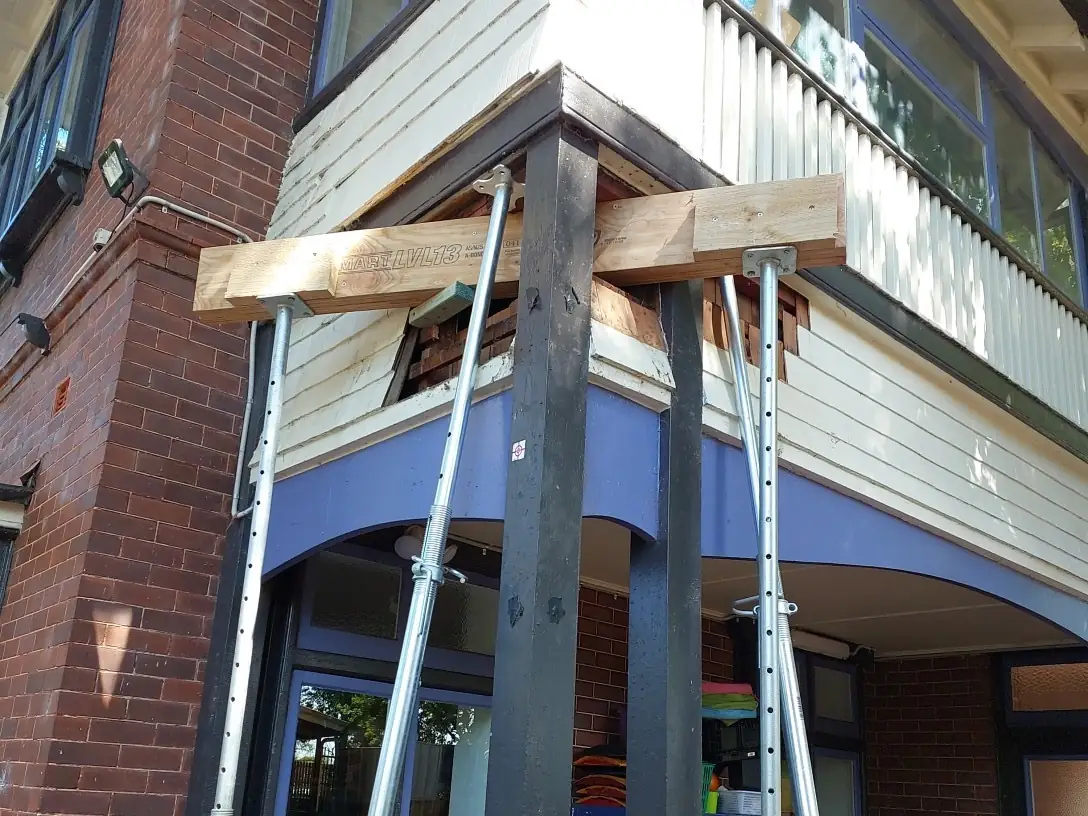
A defined temporary measure
Managing Director Frank MANESH brings civil and construction engineering experience in structural repairs, temporary support and existing-building alterations. Operations Director Farshid MANESH brings procurement and site-sequencing experience so temporary measures can be coordinated with investigation and subsequent construction.
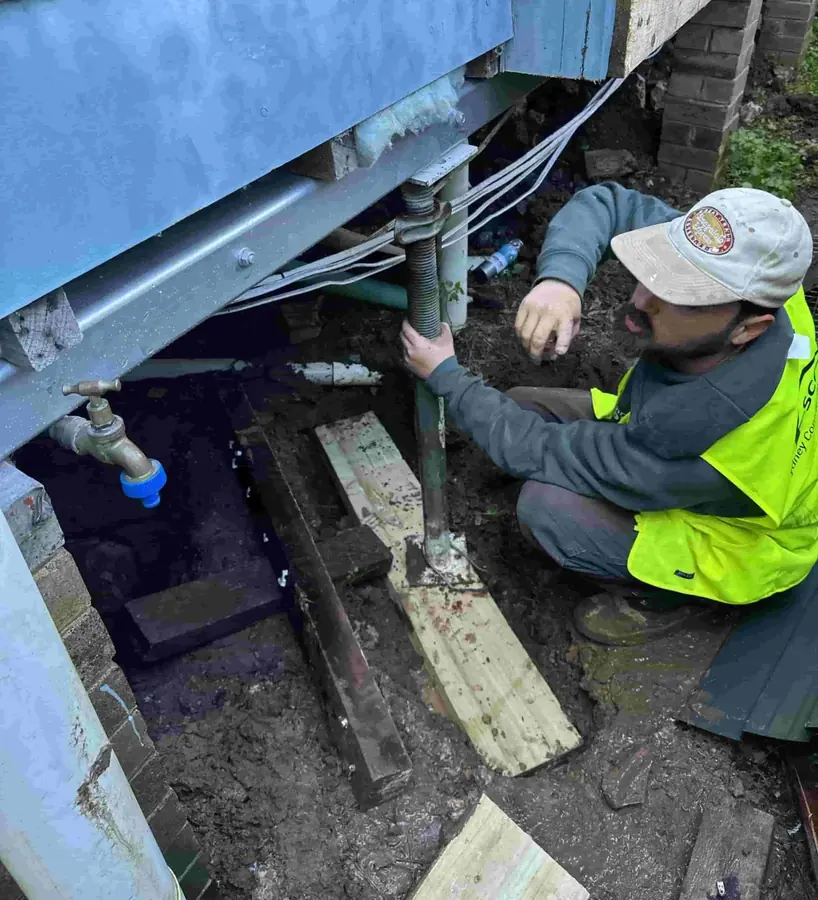
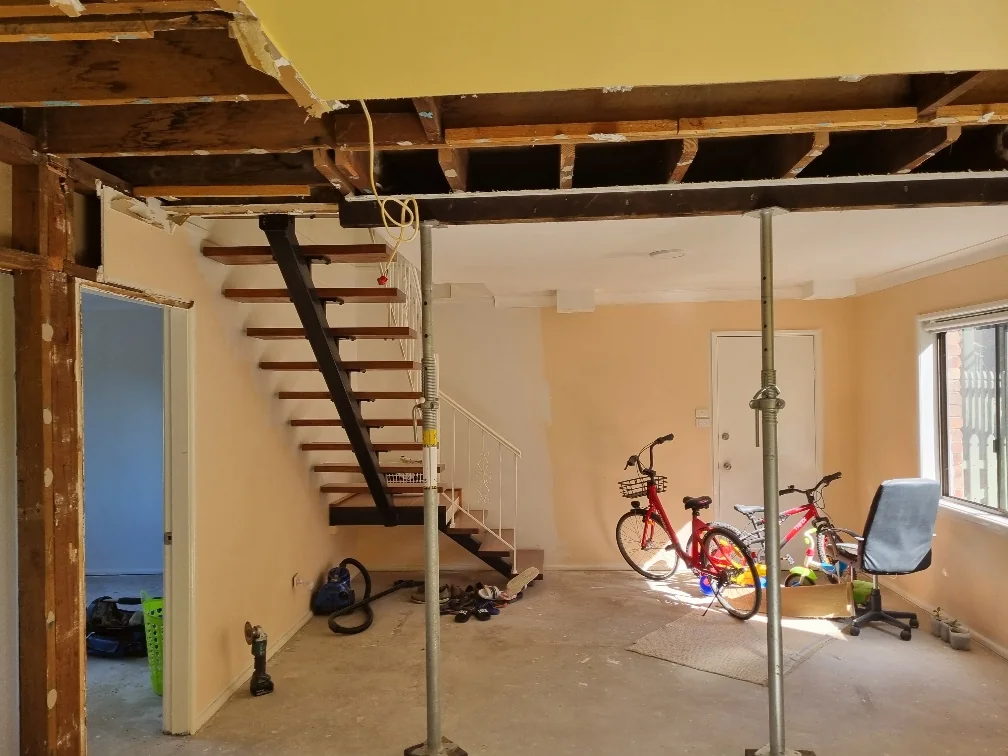
At Lane Cove, SCE installed temporary support before investigating a moving masonry pier, exposing the broken sewer line and completing permanent footing and structural repairs. At Berowra Heights, temporary support enabled a planned internal structural alteration. These completed projects demonstrate how support, investigation and permanent construction must work together.
Where a damaged or unstable structural element needs support, barriers or weather protection alone do not resolve the structural risk. The engineering assessment establishes what must be supported, where the loads will transfer and how the arrangement interacts with access, services and the permanent repair.
Temporary props may be used where an affected element requires short-term support under suitable design or technical direction.
A project-specific shoring arrangement may be needed where the verified condition and approved scope require lateral or excavation support.
Support work may need staged access, exclusions, protection and coordination with occupants, asset representatives or other authorised parties.
Information before installation
Before a temporary-support scope is confirmed, SCE needs enough reliable information to understand the site condition, access limits and the parties responsible for technical and commercial decisions.
Documented coordination
Confirm the site, observed condition, known hazards, current controls and authorised contacts.
Coordinate the engineering assessment and design, including the support locations, bearing conditions, loads and interfaces with the permanent repair.
Agree the installation sequence, access and exclusions, anticipated duration, inspection responsibilities and requirements for later removal.
Install to the issued design and construction sequence, with the required checks before the affected element is opened, altered or removed.
Hand over the installed arrangement, access or loading restrictions, inspection requirements and the contact responsible for reviewing a change in condition.
Coordinate the permanent repair and its verification before temporary supports are removed in the specified sequence. Removal is a planned work stage, not a decision based only on elapsed time.
Scope and responsibility boundaries
The arrangement is limited to the verified condition, accepted technical inputs and authorised temporary scope. It does not establish the final repair design or remove the need for further investigation and approval.
SCE brings engineering capability, specialist engineering relationships and construction delivery together for the temporary-support scope.
Appointed consultants, designers, certifiers and registered practitioners retain their respective responsibilities.
Owners, strata representatives, insurers and authorised parties retain approval, coverage and claim decisions.
Verified SCE project media
These genuine project photographs show temporary support used during SCE remedial and structural-alteration work. Each arrangement was specific to its own verified condition and project requirements.
Related pathways
Frequently asked questions
Emergency temporary support is a project-specific propping, shoring or support arrangement used to control a verified urgent building condition for a limited period. The arrangement depends on the structure, loads, access, technical information, authority and agreed scope.
Emergency make-safe work covers limited measures intended to control an immediate hazard or reduce further deterioration. Temporary support is the separate pathway where a structural element requires a defined propping, shoring or support arrangement under suitable technical direction.
Yes. SCE provides temporary-support engineering and construction through our engineering capability and specialist engineering relationships. We coordinate the design, installation and construction sequence as one project scope. Structural design and any regulated design or certification are undertaken by the appropriately qualified and registered practitioners appointed for that work.
Provide the site location, affected area, observed condition, safe-to-obtain photographs, available reports or drawings, access constraints, current controls and the authorised owner, strata, property, insurer or loss-adjusting contacts.
Temporary support is not permanent rectification. Its permitted duration, inspection or monitoring requirements and removal pathway must follow the applicable technical information, agreed scope and site responsibilities.
Yes. An authorised representative can provide the condition, access, project records and decision-maker details for review. Insurers and their authorised representatives retain coverage and claim decisions.
Timing is project-specific and depends on the verified condition, safe access, technical inputs, materials, authority and agreed construction scope. SCE confirms the practical delivery pathway after reviewing the available information.
The completed work, limitations and any agreed inspection or monitoring requirements should be recorded at handover. Permanent investigation, design, approvals and repair work remain a separate authorised stage.
Start with verified information
Send the site location, observed condition, current controls, access constraints and available technical records. SCE will identify the engineering inputs and construction steps required to progress the work.