Site and incident
Provide the site address, when and how the issue occurred, the affected areas and any known change in condition.

Emergency remedial building works
SCE Corp delivers and coordinates emergency make-safe and site stabilisation works across Sydney and NSW, backed by more than 1,700 make-safe assignments delivered for insurance and strata clients. Our experienced team applies controlled access, temporary construction measures, documented site information, qualified trade and specialist partners, and a clear pathway to investigation and permanent repairs where required.
Our make-safe crews are second to none at arranging temporary protection after building damage. When a storm tore metal sheeting from a Ryde commercial roof, SCE installed heavy-duty tarpaulin across the exposed structure. We record what we secured, what access restrictions remain and what the owner needs for the permanent repair.
After-hours calls are answered by an on-call SCE team member. We will discuss the reported condition and the appropriate next step; site attendance and timing depend on the location, access and circumstances.
A controlled first response
Managing Director Frank MANESH brings experience in temporary structural support, roof protection, building assessment and insurance reinstatement. Operations Director Farshid MANESH contributes operational coordination, procurement and construction programming across make-safe and repair assignments.
This experience helps SCE connect the immediate authorised work with the next investigation and repair stage. The completed make-safe programme below records practical delivery experience without treating temporary protection as permanent rectification.
Emergency make-safe work addresses a verified immediate building condition through limited, agreed construction and site-control measures. Its purpose is to protect people or property, reduce further deterioration and create a controlled handover for the next stage.
The appropriate response is site-specific. It depends on the observed condition, access, hazards, available information, authority to proceed and whether advice from engineers, designers, certifiers, utilities or other appointed practitioners is required.
Where appropriate to the verified condition and authorised scope, works may include:
SCE delivers emergency roof make-safe work for commercial and strata buildings where storm damage, displaced coverings or exposed roof areas require temporary protection. The first step is to establish the damaged condition, safe access and the measures needed to protect the affected area.
At a storm-damaged commercial building in Ryde, metal sheeting had been torn from the roof. SCE installed heavy-duty tarpaulin over the exposed structure. That completed assignment demonstrates temporary roof protection under difficult damaged-building conditions.
Tell us whether water is entering occupied areas, which parts of the building are affected and what access restrictions are in place. Share photographs only from a safe location; do not climb onto a damaged roof. Temporary protection and permanent roof repairs are separate stages. Once the immediate condition is controlled, the roof repair and maintenance pathway can address investigation, drainage and the lasting repair scope.
Useful initial evidence
Good information helps establish the risk, the decision-makers and the safe next step. Do not enter a damaged or restricted area to obtain it.
Provide the site address, when and how the issue occurred, the affected areas and any known change in condition.
Identify known hazards, exclusion zones, services, access restrictions, occupants and current controls already in place.
Share safe-to-obtain photographs, available reports or drawings, stakeholder contacts and evidence of authority to discuss or approve work.
Documented coordination
Confirm the location, incident, affected area, known hazards and authorised contacts.
Review access constraints and the information needed from relevant appointed parties.
Define the limited construction or site-control measures, exclusions and responsibilities.
Document completed actions, photographs, limitations and observations within the agreed scope.
Identify separately authorised investigation, design, approval or repair steps where required.
Scope boundaries
Temporary measures address the immediate verified condition. Permanent building repairs may require further investigation, monitoring, design, approvals, procurement and construction under a separate authorised scope.
Where the condition requires engineered propping or another specialist arrangement, follow the separate emergency temporary support pathway. SCE combines engineering, design coordination, procurement, construction, testing and documented handover, with the required specialist disciplines appointed for the actual work. Appointed parties retain their regulated responsibilities, while insurers and authorised representatives retain coverage and claim decisions.
SCE project evidence
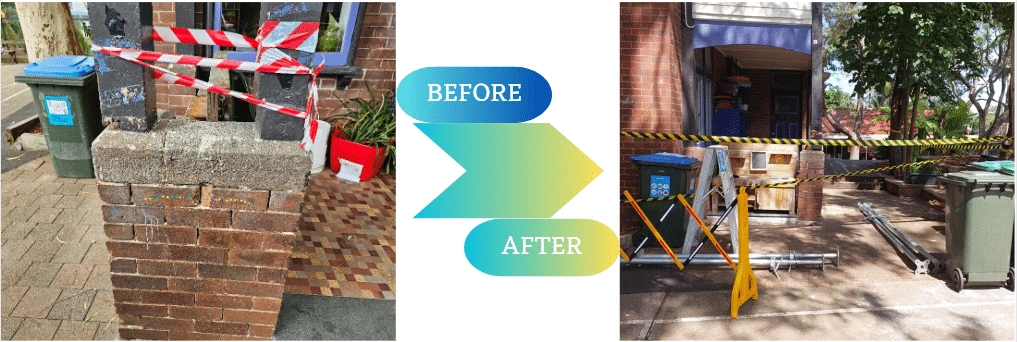
This Freshwater photograph records commercial make-safe work delivered by SCE Corp. Together with SCE’s Greater Sydney programme of more than 1,700 make-safe assignments for insurance and strata clients, it demonstrates substantial, genuine emergency-response experience while each site still receives a condition-specific scope and method.
Related pathways
 Emergency Remedial Building WorksReturn to the parent service pathway for broader emergency and remedial needs.
 Emergency Temporary SupportReview the separate pathway for temporary support or propping requirements.
Insurance Make-Safe ResponseUse the insurance-specific pathway for authorised claim and response coordination.
 Building Repairs and Remedial WorksExplore separately scoped permanent repair and remedial construction work.
 Make-Safe Planning ChecklistReview supporting information about planning a controlled make-safe response.
 Remedial Planning ToolOrganise initial project information before discussing the next stage.
For company and registration evidence, review SCE Corp's certifications, credentials and verifications.
Frequently asked questions
See our insurance repair planning questions for scope records, emergency work, quotations and clear repair responsibilities.
Emergency make-safe works are agreed temporary construction and site-control measures used to address an immediate building risk, protect people or property and reduce further deterioration. The exact actions depend on the verified condition, safe access, authority and agreed scope.
Provide the site address, incident summary, known hazards, photographs, affected areas, access restrictions, available reports or drawings, stakeholder details and evidence of authority to proceed. Do not enter an unsafe area to collect information.
Depending on the verified condition and authorised scope, work may include access controls, barriers, temporary weather protection, securing loose components, temporary protection and other limited construction measures. The suitable response must be confirmed for the actual site.
Call SCE to explain the damage, location, safe access and who can authorise the work. An on-call SCE team member answers after-hours calls and arranges the appropriate next step. We confirm the available team, access arrangements, immediate scope and pricing basis before attendance. If there is an immediate threat to life or public safety, contact emergency services on 000 and the relevant authority or utility.
Not unless permanent rectification is expressly investigated, designed where required, scoped and authorised. Make-safe work addresses the immediate verified condition; permanent repairs may require further assessment, approvals, design, procurement and construction.
Temporary support or propping is a separate pathway when the verified condition requires a designed or specialist support arrangement. Engineering advice, design, inspection and certification remain with appropriately appointed practitioners where required.
SCE brings engineering, make-safe construction, procurement and site supervision together in one coordinated response. We identify the required technical disciplines and arrange design, inspection and certification through appropriately qualified and appointed practitioners. We document the authorised scope and communicate the repair pathway to the client and insurer; policy coverage and claim decisions remain with the insurer and authorised representatives.
SCE records the affected location, initial condition, authorised actions, work completed and remaining restrictions. Photographs and marked plans or sketches identify the actual building area so the insurer, owner and repair team are working from the same information. The handover identifies monitoring, inspection and permanent-repair actions, with scope or material changes confirmed in writing before the next stage.
Provide the available site, incident, hazard and authority information. SCE Corp will review the condition, confirm the appropriate emergency make-safe pathway and identify the construction, specialist and authority inputs required for a controlled response.