Review
Establish a baseline register of assets, observed conditions, available documents, access limits, responsible stakeholders and information gaps.

Multi-year building works planning
SCE Corp develops and coordinates long-term building works programmes across Sydney and selected NSW locations. We combine engineering assessment, repair planning, procurement and construction management to turn property condition and maintenance records into prioritised repairs, renewals and upgrades.
Owners and asset representatives gain a practical programme that links urgent actions, annual work packages and future renewals to access, operations and budget decisions. The agreed appointment defines the planning and delivery services and the responsibilities of the property team and specialist professionals.
Scope qualification
Managing Director Frank MANESH brings experience assessing building defects and developing remedial solutions. Operations Director Farshid MANESH contributes repair-programming, procurement and delivery experience, helping SCE connect condition priorities with feasible work packages and access windows.
Accounts and Design Manager Sahar MANESH supports controlled drawings, variation records and commercial documentation. Those records give the owner a stronger basis for reviewing completed work and preparing subsequent stages of an agreed building programme.
This service gives owners, asset managers, strata representatives and facilities teams a reliable view of what work is known, what needs investigation, what is urgent and what can be planned over future review periods.
Choose the correct pathway
The decision is based on time horizon and scope. Use this page for an evolving portfolio of building-work needs; use the maintenance or project pathways when a discrete task or bounded construction package is ready to define and deliver.
Compare construction-led coordination options for repairs, maintenance and property upgrades.
Explore building management supportUse this pathway for a defined construction, repair, remedial or upgrade project with a bounded scope, programme and handover.
Review defined-project supportReview maintenance services where the immediate requirement is to assess and deliver defined building-maintenance work.
Review maintenance servicesControlled delivery
A long-term programme should be capable of review as buildings age, priorities change and new evidence emerges. Each cycle records what is known, what must be investigated and what work is accepted.
Establish a baseline register of assets, observed conditions, available documents, access limits, responsible stakeholders and information gaps.
Rank items by consequence, urgency, dependency, service life, operational impact and the further technical input needed before scope decisions.
Arrange accepted items into near-term actions, annual work packages and longer-horizon renewals that can be reviewed against operations and budget timing.
Update the register with approvals, variations, completion evidence, outstanding risks and a clear date for the next programme review.
Responsibility boundary
SCE delivers the construction and project-coordination services defined in its appointment. SCE is a DBP-registered building practitioner with qualified building, civil and construction engineering capability.
The property owner, operator, strata body or appointed manager retains its governance, operational, financial and statutory responsibilities. Required inspections, engineering advice, regulated designs, declarations, approvals and certification remain with the appropriately appointed consultants, registered practitioners, authorities and certifiers.
Use the NSW DBP Applicability CheckerGenuine SCE project evidence
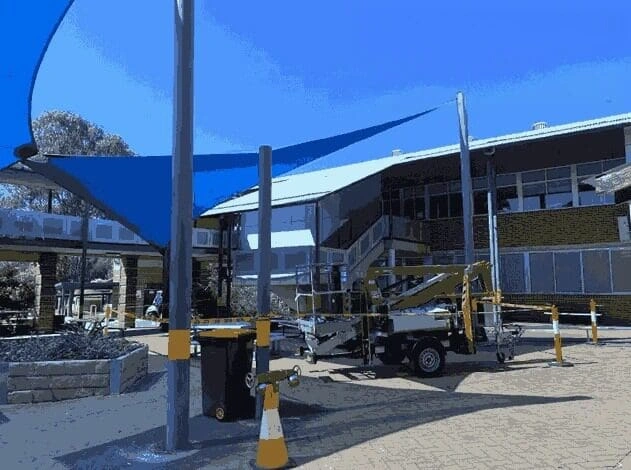
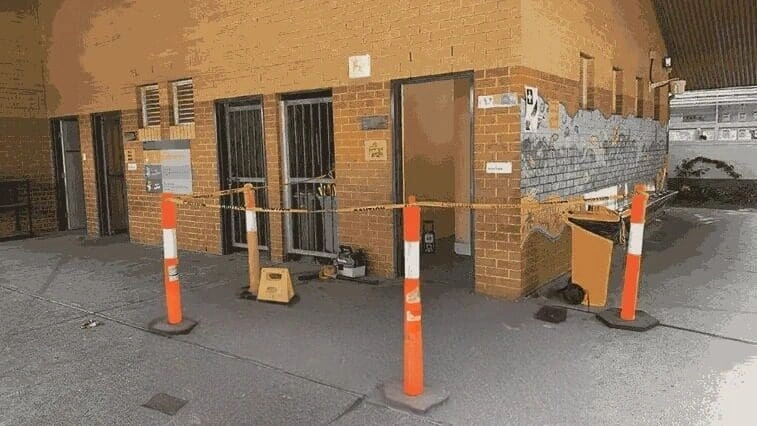
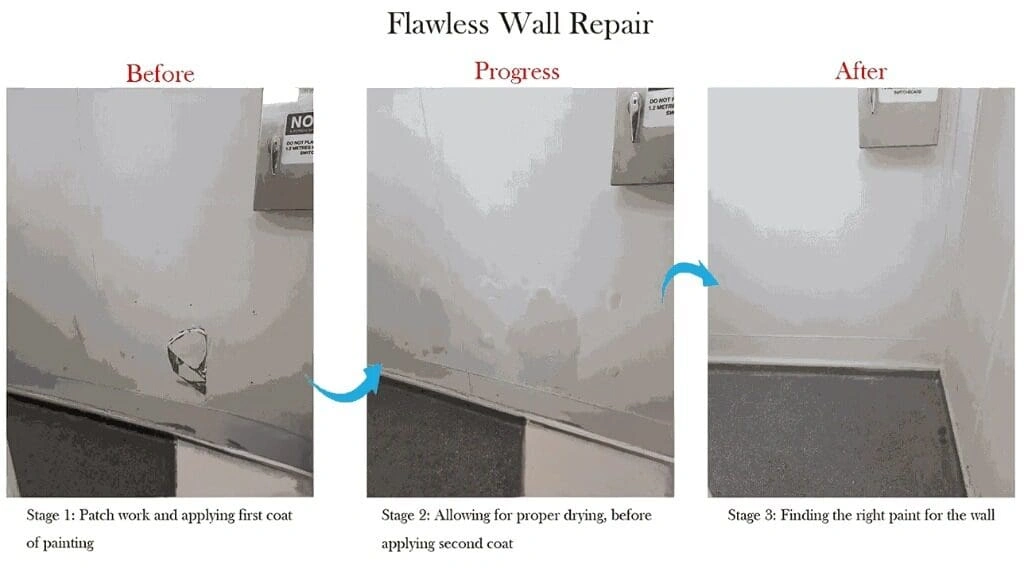
These images are from SCE's Western Sydney school reactive-maintenance project. They demonstrate why consistent site records, repair progression and completion information matter when a future works programme spans multiple locations or recurring needs.
Prepare the next step
A useful enquiry identifies the authorised decision-maker, the buildings or assets in scope, current priorities, known defects, available records and any fixed operational or budget milestones. SCE can then separate planning support from maintenance tasks and defined projects before a delivery scope is proposed.
Long-term support questions
It can organise accepted repairs, renewals and upgrades into a staged register with priorities, dependencies, delivery packages and review dates. The exact scope, responsibilities and technical inputs are confirmed in writing.
A long-term programme tracks an evolving group of asset needs over repeated review periods. Building project management applies when one defined construction, repair, remedial or upgrade package has a bounded scope, programme and handover.
No. SCE undertakes construction and project coordination only within its accepted written scope. The owner, operator, strata body or appointed manager retains its governance, operational, financial and statutory responsibilities.
Yes, when the available evidence allows them to be prioritised and separated into sensible delivery packages. Urgent conditions, specialist investigations and defined standalone projects may still require separate pathways.
It may be suitable where access, work-area separation, communication, staging and operational constraints can be planned safely. The property use, occupants, proposed work and stakeholder requirements must be reviewed before delivery is confirmed.
Provide the property address, building use, authorised contact, asset or component list if available, known issues, photographs, inspection or consultant reports, drawings, warranties, maintenance history, access constraints and current priorities. Do not enter an unsafe or restricted area to obtain information.
Required inspections, engineering advice, regulated designs, declarations, approvals and certification remain with the appropriately appointed consultants, registered practitioners, authorities and certifiers. SCE coordinates only the responsibilities accepted in its written construction scope.
SCE reviews suitable opportunities across Sydney and suitable NSW locations. Acceptance depends on the verified scope, location, access, evidence, safety requirements, programme, approvals and commercial fit.
Send the properties or assets in scope, authorised stakeholder details, known priorities, available condition or maintenance records, operational constraints and the timing of the next planning decision so SCE can define the programme and next actions with you.