
Powered plant increased the volume of material that projects could excavate, move and place within a working shift.
Civil plant planning guide
Choosing Construction Machinery for Civil Works in NSW
The right machine is not simply the largest one available. Productive civil work depends on matching plant capacity, attachments, access, ground conditions, worker separation and the construction sequence to the actual task.
Task and capacityAccess and groundPeople and plant separation
History informs modern planning
Mechanisation
Hydraulic control
Planned integration
From mechanisation to task-specific plant selection
Construction machinery developed from manual and animal-powered methods through steam power, internal-combustion engines and hydraulic systems. Modern equipment can move, lift, grade and compact material efficiently, but its value still depends on a clear work method and site controls.
Hydraulic systems and purpose-designed attachments made excavators and loaders more adaptable to varied civil tasks.
Today, productivity depends on combining suitable plant with competent operators, exclusion zones, access planning and coordinated sequencing.
Match the machine to the work
Common machinery roles in a civil package
Plant selection must be confirmed against the design, work method, manufacturer information and site-specific risk assessment. The examples below are planning prompts, not operating instructions.
| Plant type | Typical role | Questions to resolve |
|---|---|---|
| Excavator | Excavation, trenching, loading and approved attachment work. | Required reach and depth, material type, ground bearing conditions, slew clearance, services and load-handling limits. |
| Compact excavator | Constrained access, local excavation and work near existing assets. | Gate and path width, overhead clearance, surface protection, spoil handling and safe separation. |
| Loader or skid-steer | Material handling, stockpile management, trimming and clean-up. | Travel paths, visibility, attachment suitability, interaction with trucks and pedestrian controls. |
| Dozer or grader | Bulk shaping, spreading and formation trimming. | Site scale, slope, traction, survey controls, final tolerance and interfaces with drainage or services. |
| Roller or compactor | Compaction of prepared layers and pavement materials. | Material specification, lift thickness, target verification, edges, vibration sensitivity and access. |
| Crane, telehandler or forklift | Planned lifting and positioning of materials or components. | Load, radius, rated capacity, attachment, ground support, licences, exclusion zones and lift coordination. |
Seven checks before mobilisation
Select for the whole work method, not one isolated task
Define the output
Confirm the excavation, lift, grade, compaction or handling result and the governing drawings or specification.
Verify access
Check delivery routes, width, height, turning space, setup area, traffic interfaces and emergency access.
Understand the ground
Consider bearing capacity, slope, soft edges, excavations, voids, water and any need for engineered support.
Locate services
Resolve known and potential underground or overhead services before excavation, lifting or plant travel begins.
Separate people and plant
Plan barriers, exclusion zones, controlled crossings, communication and supervision around moving plant.
Confirm capacity and attachment
Use plant and attachments only within their design and rated limits, with the required competent people and information.
Plan the sequence
Coordinate trucks, spoil, materials, inspections and follow-on trades so plant movements do not create avoidable rework or risk.
Project evidence
Plant choice is inseparable from access and placement
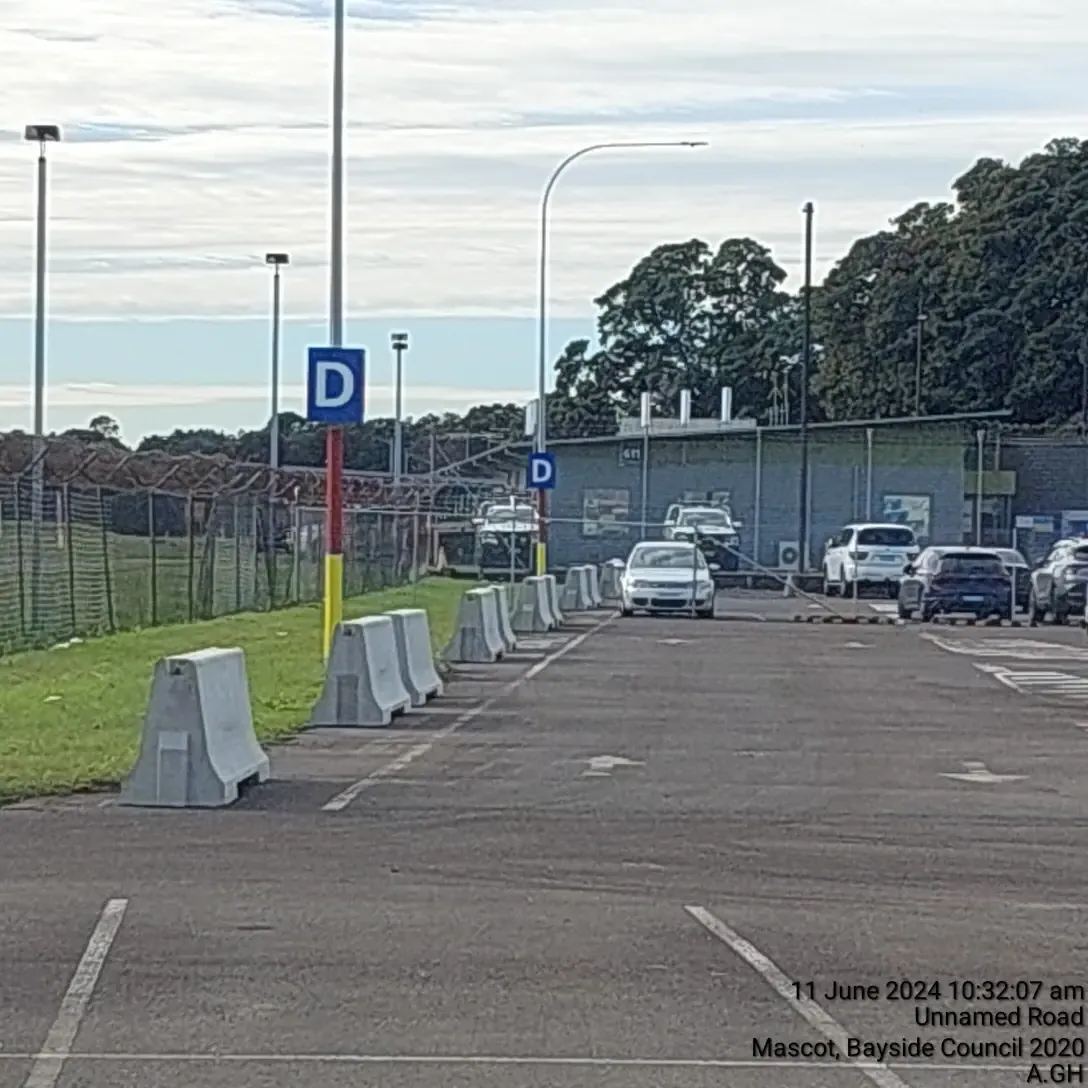
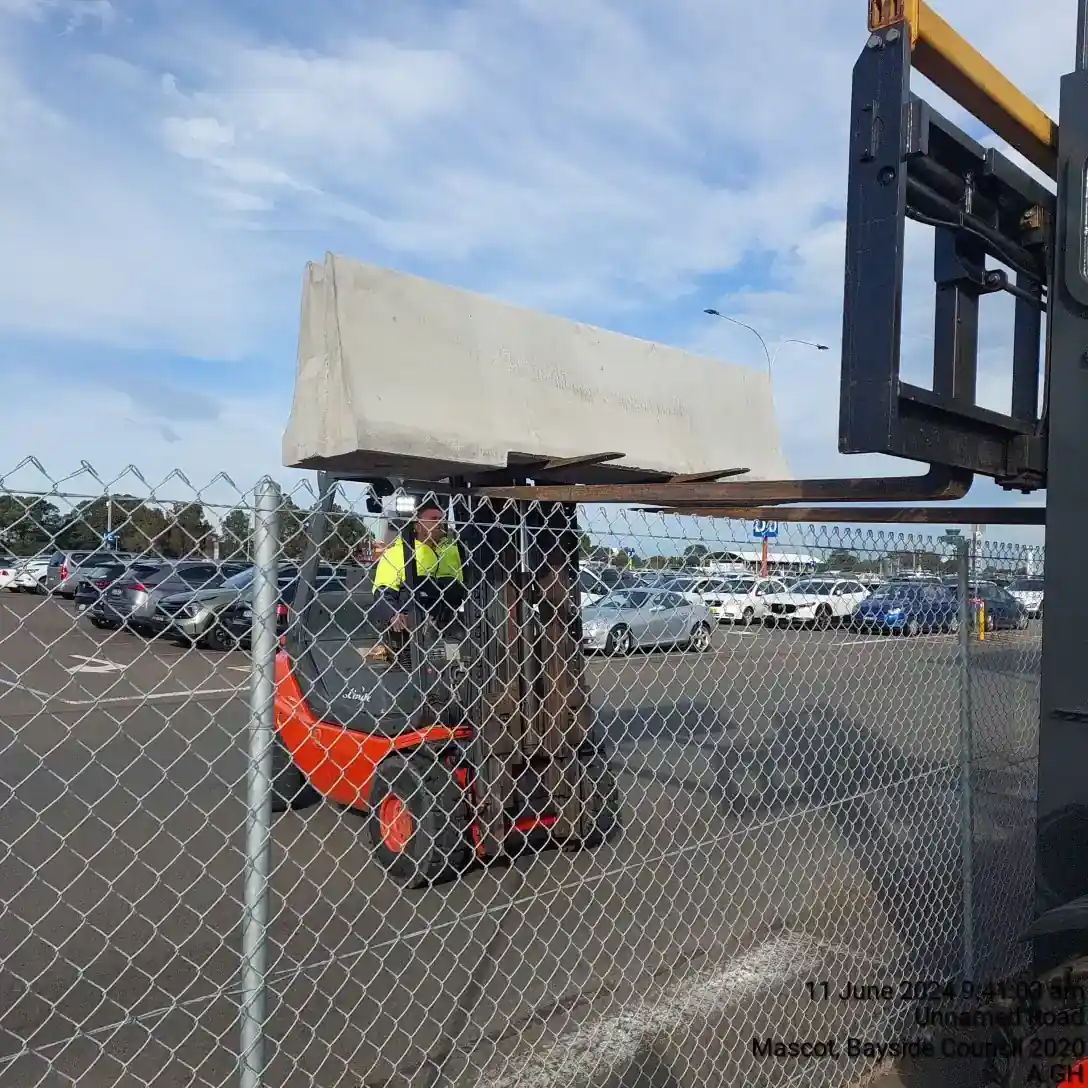
The Sydney Airport Blue Emu Car Park project required concrete barriers to be delivered, staged and positioned in an operating car-park environment. The equipment decision had to account for the barrier load, lifting arrangement, vehicle movement, fence interface and final set-out.
This is the practical purpose of plant planning: connect the machine to the load, the route, the work area and the required outcome.
Review the verified Blue Emu Car Park barrier-placement project, or view the broader Civil Services hub.
Safety and neighbourhood controls
Machinery planning must include the people and environment around it
Moving plant and excavation
SafeWork NSW identifies collision, overturning, falling objects and mechanical failure among the main powered-mobile-plant risks. Site controls may include physical barriers, traffic management, exclusion zones, competent operators and plant used within its design purpose.
Read SafeWork NSW guidance on excavations and earthmoving plant.
Noise and operating impacts
Plant selection and work methods should consider nearby receivers, approved work hours, maintenance, idling, travel paths and feasible quieter methods or equipment. Dust, runoff, spills and exhaust also need project-specific controls.
Scope information
Information that improves plant planning and pricing
| Provide | Why it matters |
|---|---|
| Drawings and scope | Defines the required outcome, quantities, levels, tolerances and interfaces. |
| Site address and access photos | Supports delivery-route, width, height, setup and neighbourhood review. |
| Known services and investigations | Helps identify excavation, lifting and movement constraints requiring further verification. |
| Material and disposal information | Influences bucket or attachment selection, loading, stockpiling and truck movements. |
| Programme and working hours | Allows plant, deliveries, inspections and community impacts to be sequenced realistically. |
Construction machinery questions
Frequently asked questions
What determines which plant is suitable for civil work?
The task, required capacity, ground conditions, access, services, attachments, site interfaces and work sequence all matter. Selection must also align with manufacturer information and the project-specific risk controls.
Is larger machinery always more productive?
No. Oversized plant may create access, ground-pressure, visibility, transport or manoeuvring problems. A smaller machine with the right attachment and logistics can be more effective on a constrained site.
What should be checked before excavation starts?
Confirm the scope and levels, available service information, ground and water conditions, excavation stability, access, spoil handling, plant separation and any high-risk-construction-work requirements.
How should people be separated from mobile plant?
Controls are site-specific, but may include physical barriers, defined travel paths, exclusion zones, controlled crossings, communication systems, spotters where required and effective supervision.
Can an excavator be used to lift a load?
Only where the plant is designed and rated for the task, the load and radius are within limits, suitable attachments and lifting points are used, and the lift is planned and controlled by competent people.
How can construction machinery noise be reduced?
Consider quieter methods or plant where feasible, maintain equipment, avoid unnecessary idling, locate equipment thoughtfully, plan approved working hours and apply project-specific noise controls.
What information should be sent to SCE for an initial review?
Send the site address, scope, available drawings, quantities, access photos, known services, required programme and any operating or neighbourhood constraints. SCE can then identify the next information needed for the civil package.
Plan before plant arrives
Resolve the machinery interfaces early
Provide the task, access, drawings and constraints so the civil work method can be reviewed as one coordinated package.