Footings and Local Formations
Controlled excavation to nominated lines and levels for suitable footings, slabs, pits, aprons and localised structural interfaces.

Civil excavation support
SCE Corp delivers detailed excavation across Sydney and NSW for complex civil works, constrained sites, service corridors, footings and formation preparation. We coordinate excavation with access, ground conditions and follow-on construction so the work supports the required lines, levels and interfaces.
Detailed excavation is used where the work area, design geometry or nearby infrastructure requires closer control than broad earthmoving. The scope may support service corridors, structural footings, drainage interfaces, localised reductions, pits and formation preparation.
SCE combines building, civil and construction engineering capability with practical construction delivery. We use the drawings, surveys, service information and site constraints to plan the work and coordinate the necessary specialist inputs. Surveying, utility locating, geotechnical advice, design acceptance and statutory certification are undertaken by the appropriately appointed and qualified parties.
Where the required work is broader in area or volume, review our bulk excavation services. The Bulk Earthworks hub explains the wider service pathway.
The final inclusions depend on the issued information, verified site conditions and agreed construction responsibilities.
Controlled excavation to nominated lines and levels for suitable footings, slabs, pits, aprons and localised structural interfaces.
Excavation around verified service interfaces and for nominated utility or drainage corridors, coordinated with the relevant service and design information.
Staged work in constrained zones where plant access, nearby structures, occupied operations or temporary works influence methodology.
Segregation, stockpiling, loading or removal pathways where included, based on available classification information and lawful disposal requirements.
Preparation for nominated follow-on civil works, subject to design levels, testing requirements and acceptance by the responsible parties.
Practical progress records, hold-point coordination and communication with the client team for the agreed construction scope.
Accurate early information helps determine whether detailed excavation is feasible and how the work should be staged. Depending on the site, this can include:
For adjoining service installation work, see SCE's underground services pathway. Clients can also use the SCE Project Tools to organise early project information before an enquiry.
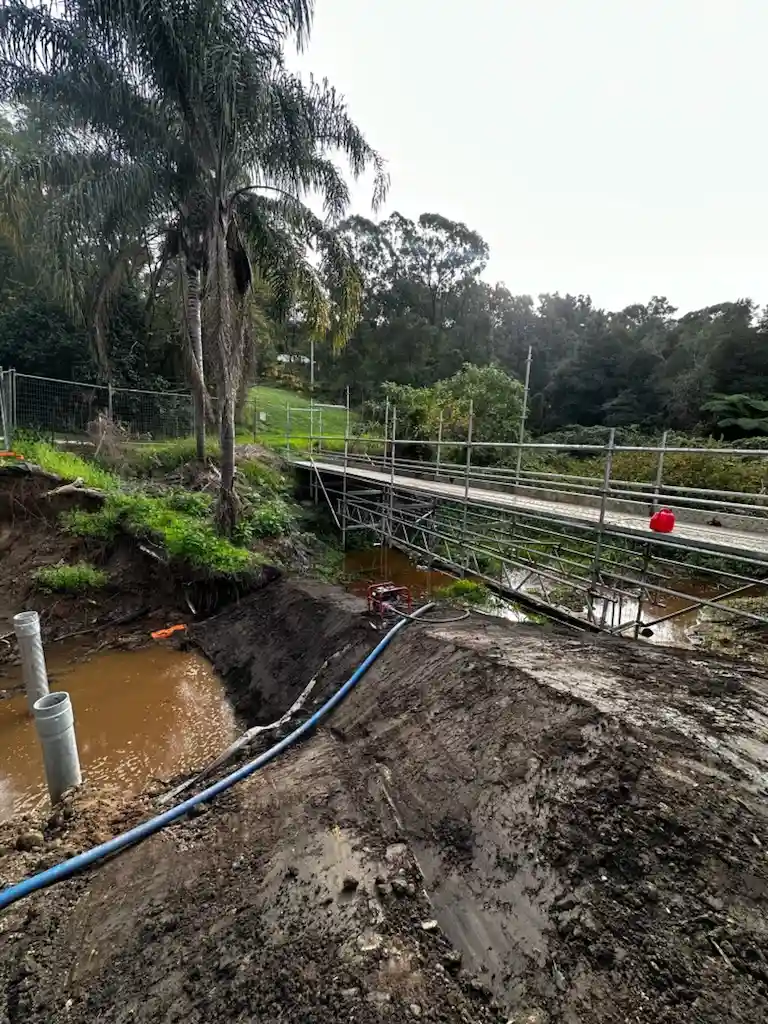
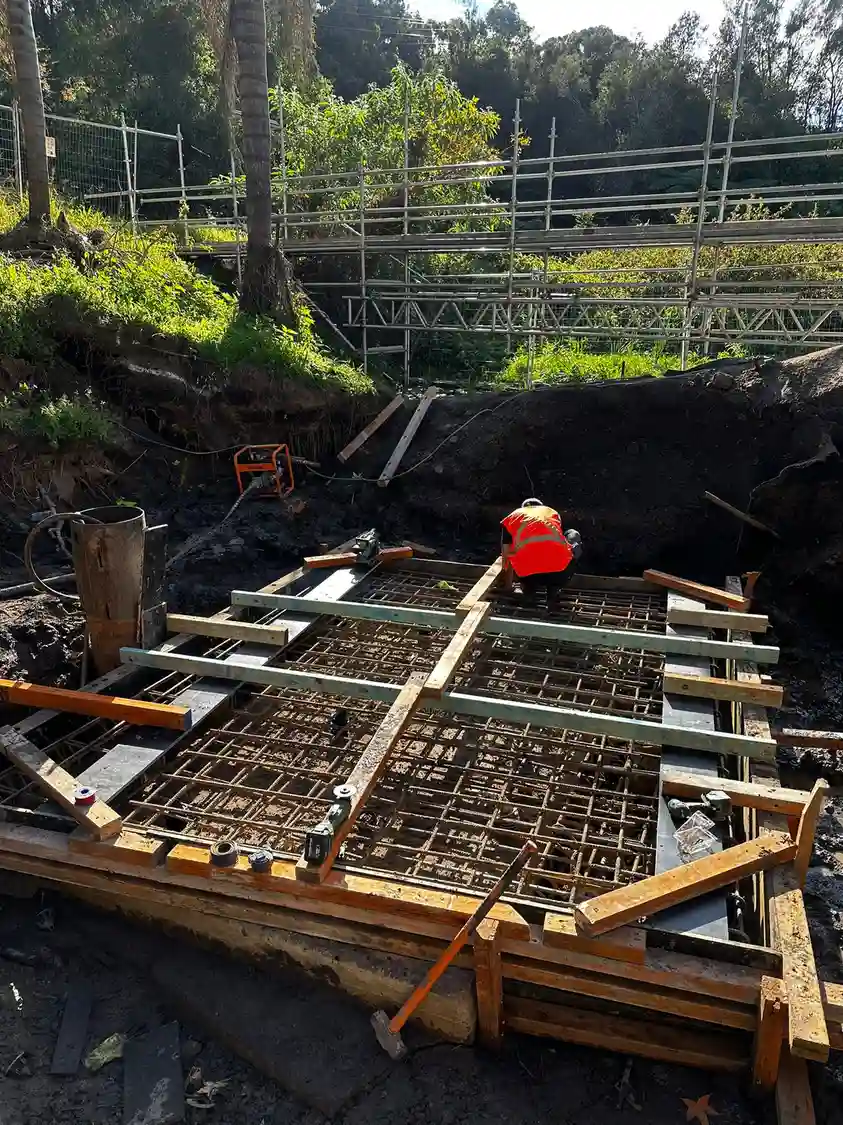
At SCE’s Emu Heights bridge reconstruction, groundwater management and temporary access supported excavation and foundation preparation before the reinforced-concrete base and culvert works. That sequence illustrates why excavation cannot be planned solely around the volume of material to remove: the working area also has to accommodate the next construction stage.
For detailed excavation, confirm the required formation and inspection points alongside the access needed for formwork, reinforcement, drainage or service installation. If exposed ground, water or an obstruction differs from the project information, resolve its effect with the responsible project team before dependent work proceeds. A formation that has been excavated still needs the specified inspection or acceptance before it is covered or built upon.
Review the location, drawings, site information, access and intended construction outcome.
Confirm available service, survey, engineering, temporary works and material information with the appointed project team.
Sequence agreed excavation, spoil handling and formation activities around verified constraints and work fronts.
Provide the agreed construction records and coordinate completion requirements with the responsible parties.
SCE provides construction delivery and practical coordination for the agreed excavation scope. Unless specifically appointed under a separate agreement, SCE does not replace the project designer, surveyor, utility locator, geotechnical consultant, environmental consultant, certifier or other registered practitioner.
The client and project team remain responsible for ensuring that the required design information, approvals, service investigations, classifications, inspections and certifications are in place. SCE's project delivery system supports clear scope, communication and records, while current company credentials can be checked on the certifications and verifications page.
Detailed excavation is controlled excavation used for localised areas, nominated lines and levels, service interfaces, footings, pits, trenches or other constrained civil work. The exact scope depends on the design information, verified site conditions, access and agreed construction responsibilities.
Bulk excavation generally addresses larger volumes and broader formations. Detailed excavation focuses on more localised or constrained work where geometry, nearby structures, existing services or follow-on interfaces require closer control. Some projects require both services.
SCE can assess suitable excavation scopes near service interfaces after the relevant utility information, locating, design and access constraints are available. Service identification, specialist locating, engineering advice and authority requirements remain with the appropriately appointed parties.
Provide the site address, current drawings, survey levels, available service-location and geotechnical information, photographs, access constraints, programme requirements and the intended follow-on works. SCE will review whether the scope fits its delivery capability.
Suitable spoil segregation, stockpiling, loading, lawful removal and reinstatement activities may be included when clearly defined. Material testing, classification, disposal acceptance and verification requirements must be confirmed for the project.
These responsibilities remain with the appropriately appointed surveyor, designer, consultant, certifier, service locator or registered practitioner. SCE performs and coordinates the agreed construction work using the approved information supplied for the project.
Yes. SCE can review suitable civil scopes across NSW, subject to location, project scale, access, programme, approvals, safety requirements and commercial fit. Provide the project information so the team can confirm the next step.
Send the site address, drawings, survey and service information, photographs and programme requirements. SCE will review the scope, identify missing inputs and confirm whether it is suitable for further discussion.