
By Sydney Contracting Engineers (SCE Corp) · Last reviewed 7 November 2026
Bathroom renovation cost is affected by what the team cannot yet see as well as the products the owner selects. Damaged substrates, deteriorated framing, unexpected services or unsuitable previous work can change the repair scope after demolition. A useful quotation explains how those uncertainties will be investigated and managed.
The objective is not to assume every bathroom contains major defects. It is to distinguish a defined construction price from an allowance that depends on concealed conditions, and to agree what evidence will support any change.
Can a bathroom be renovated for $5,000 or $10,000?
A budget figure does not define the work. First decide whether you need a limited update or a full strip-out with new waterproofing, services and finishes. Ask for a written scope showing what the proposed budget includes, what stays in place, and whether GST, disposal, licensed trades and any concealed repairs are allowed for.
If the necessary work exceeds the budget, discuss reducing optional finishes or changing the timing. Do not remove required waterproofing, service work or repairs simply to reach a headline price. SCE assesses the room, explains the practical options and develops an itemised scope around the client’s priorities, including suitable material and finish choices.
What should a bathroom renovation quote make clear?
A tile or tapware allowance concerns a product that has not been finally selected. Record the specified product, quantity and allowance so the client can compare suitable options and approve the selection in writing. An allowance for repairing an unknown substrate concerns work whose extent is not yet established. Those are different uncertainties and should be described separately.
Ask the contractor to identify the known scope, assumptions, exclusions and any provisional work. Check whether quoted demolition includes disposal, whether preparation includes identified repairs and whether service changes include testing and reinstatement. Use the same scope when comparing proposals.
Investigate the conditions that can change the pathway
Provide leak history, previous repair information, available plans and photographs of affected adjoining rooms. The team should decide which conditions can be checked before the main work and which require controlled opening-up. SCE’s bathroom reconstruction guide explains the technical planning decisions.
Investigation has a cost and purpose. Ask what uncertainty it will reduce and whether the result could change the layout, repair method or programme. Do not pay for an undefined investigation that produces no decision the project can use.
Agree what happens when damage is exposed
Define a clear process before demolition. The affected work should be documented, assessed by the appropriate person and translated into a proposed repair scope. New linings or finishes should not conceal an unresolved condition.
- Identify the location and photograph the exposed condition.
- Record the technical review or further investigation required.
- Describe the proposed repair and connected work.
- Explain the price and programme effect, including affected orders.
- Obtain the required written instruction before proceeding.
NSW Government contract guidance is a useful reference for residential building agreements and variations. Obtain advice on the actual contract rather than assuming a verbal discussion settles the change.
Check the full consequence of a repair
A repair can affect more than the damaged component. A changed floor build-up may influence the doorway, shower screen, drainage and adjacent finishes. A service relocation may need additional access and reinstatement. Ask the team to explain those interfaces in one coordinated proposal.
Keep quantities and assumptions visible. If the repair extent cannot be fixed immediately, agree the evidence and measurement basis for the next decision. Avoid counting the same uncertainty in a specific allowance and a general contingency without explanation.
Compare the revised scope fairly
Review the original included work before assessing an additional amount. Identify what has changed, what is omitted or replaced and whether any original allowance is being credited. A variation record should allow another reviewer to understand the calculation and its basis.
Keep optional owner upgrades separate from necessary defect repairs. Choosing a different vanity during the work is not the same event as discovering damaged framing. Separating them helps the owner understand why the budget changed and which decisions remain discretionary.
Use the construction quote comparison tool to record differences in scope, allowances and exclusions before choosing a proposal.
How SCE coordinates bathroom and structural repairs
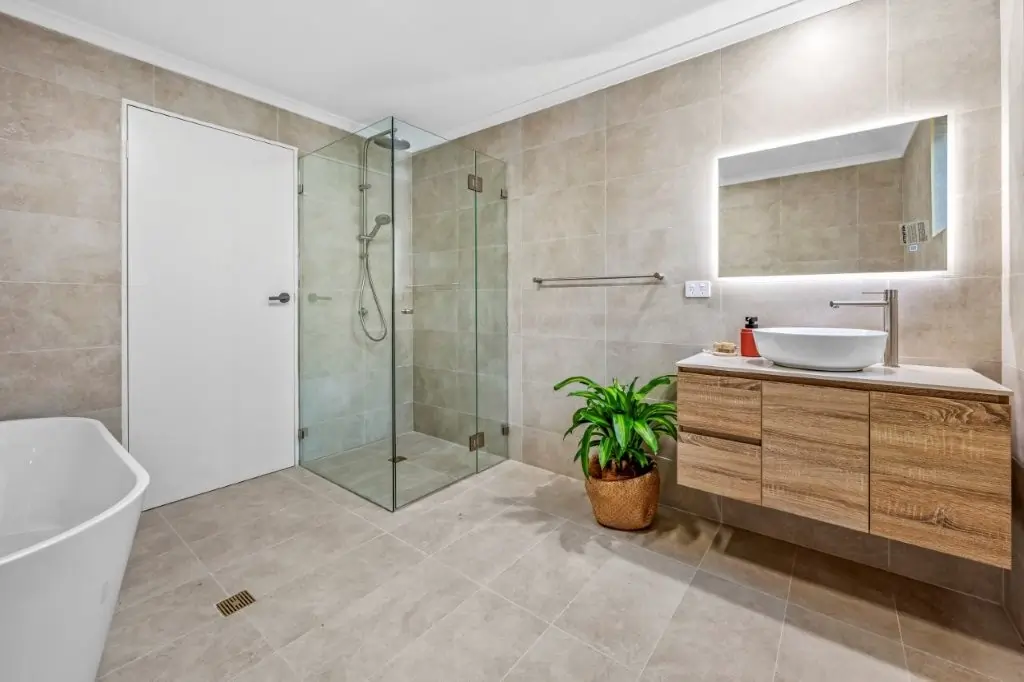
SCE’s Toronto renovation combined renewed bathrooms with structural alterations, roof work and concrete-cancer rectification across the property, as described in the documented project example. The bathroom scope formed part of a coordinated building and structural repair programme, with the affected elements designed, inspected and signed off by an engineer.
SCE delivers a complete bathroom package combining engineering and design, material procurement, construction, testing, required certification and handover. We resolve structural, service and waterproofing interfaces together, explain material options and record the client’s selections before orders are placed. Our verified qualifications and credentials support the proposed project team and scope.
Request an Itemised Bathroom Proposal with the room information, known defects, desired layout and available budget. A better cost plan begins by making the unknowns explicit.
Our renovation scope and cost questions help connect bathroom allowances with design, approvals, construction sequencing and documented changes.
Frequently asked questions
Can a bathroom renovation be priced before demolition?
A defined scope can be priced, but concealed conditions may remain assumptions or allowances. The quotation should state those limits and the process for resolving them.
Is every hidden defect automatically an extra charge?
The answer depends on the contract and included scope. Review the original documents, evidence and proposed change, and obtain advice where necessary.
What should support a defect-related variation?
The location and condition evidence, technical response, changed work, quantities or pricing basis, programme effect and required written instruction should be traceable.
Can another completed bathroom establish my renovation price?
No. Its size, condition, services, access, selections and repair scope may differ. Use project examples to discuss delivery capability, then price the actual property.
Can I renovate a bathroom for $5,000 or $10,000?
What the budget can achieve depends on the room and the work required. A limited refresh and a complete wet-area rebuild need different allowances. SCE helps identify what can be retained, the repairs and trades needed, and suitable finish options. An itemised proposal covering waterproofing, disposal, GST and any concealed-condition allowances shows whether the proposed scope fits the budget.