1. Document status
Record the accepted revisions and intended use of each document. Superseded, preliminary or incomplete information should not be treated as construction-ready without the required confirmation.

NSW construction coordination guide
Construction teams need accepted design information, clear responsibilities and controlled revisions before work proceeds. This guide explains how civil engineering documents can be coordinated with site constraints, sequencing and delivery interfaces without confusing construction coordination with professional design or certification roles.
Information before activity
Civil construction may rely on drawings, specifications, reports, schedules, authority requirements, survey information and written directions. The project team should identify which documents are accepted for the relevant activity and how later revisions will be issued.
For service enquiries, SCE's Engineering Services team can integrate design development with procurement and construction planning. This guide explains how to control the information passed into site delivery.
Six coordination checkpoints
Record the accepted revisions and intended use of each document. Superseded, preliminary or incomplete information should not be treated as construction-ready without the required confirmation.
Compare available information with access, levels, existing conditions, services, neighbouring assets and environmental controls that may affect how work is staged.
Keep client, consultant, designer, reviewer, certifier, registered-practitioner and contractor responsibilities explicit. Coordination does not transfer a separately appointed professional duty.
Review how earthworks, concrete, drainage, structures, services, access and temporary controls interact. For relevant delivery pathways, see SCE's earthworks, concreting and underground services.
Use a controlled process for requests for information, responses, design changes and site discoveries. The site team should be able to identify what changed, who accepted it and which activities are affected.
Plan required inspections and records before work is covered or becomes inaccessible. The exact evidence depends on the design, consent, authority and project requirements.
A response to a site query does not necessarily update every document or authorise the next activity. Record the affected location, drawing references, decision and responsible issuer. Check whether the response requires a revised drawing, calculation, specification, approval or inspection before it can be implemented.
SCE delivers integrated engineering and construction through its team and established multidisciplinary engineering relationships. Design-and-construct and EPC appointments can bring design development, procurement, site methodology and delivery together. Independent certification and statutory approvals remain with the authorised parties. SCE is a DBP-registered building practitioner with qualified building, civil and construction engineering capability; applicable DBP duties are determined for the project.
Project-specific pathways
Bridge, road and drainage interfaces differ from subdivision or underground-service works. Use the relevant service pathway to understand the construction context: road, highway, bridge and dam construction or subdivision services.
Clients planning subdivision-related work can also use the Subdivision Cost Estimator and the NSW land subdivision guide for early orientation. These resources do not replace project-specific investigations, design or advice.
If the immediate question is how to assess a prospective provider, read the separate guide to choosing a civil engineering design company. It covers the appointment and proposal comparison before the construction information process begins.
Genuine SCE delivery evidence
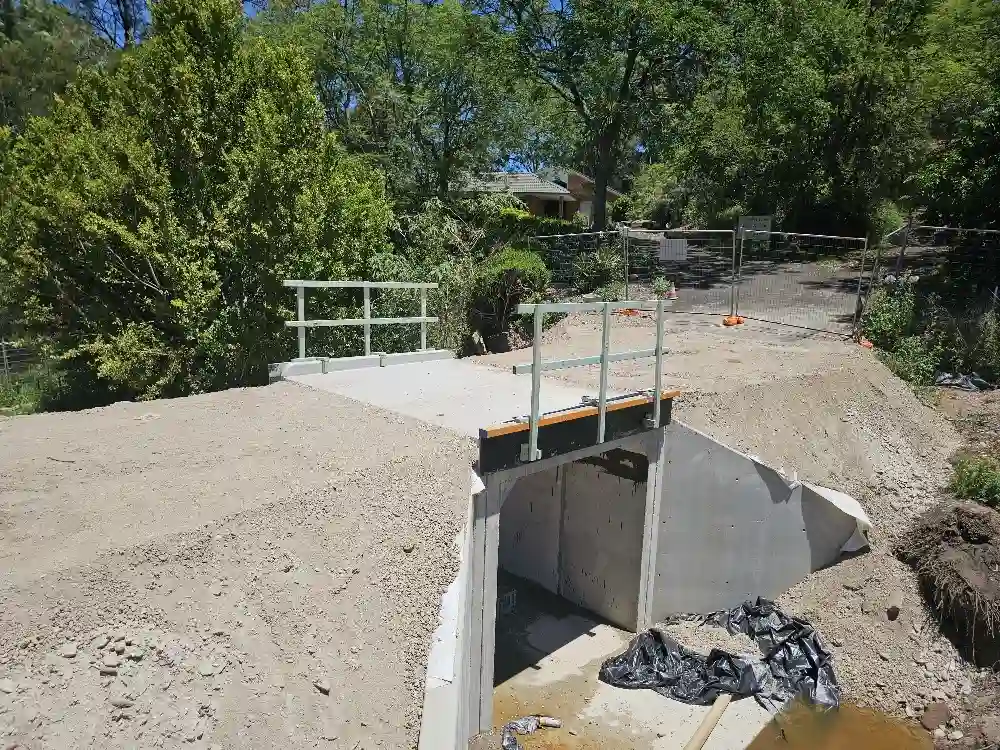
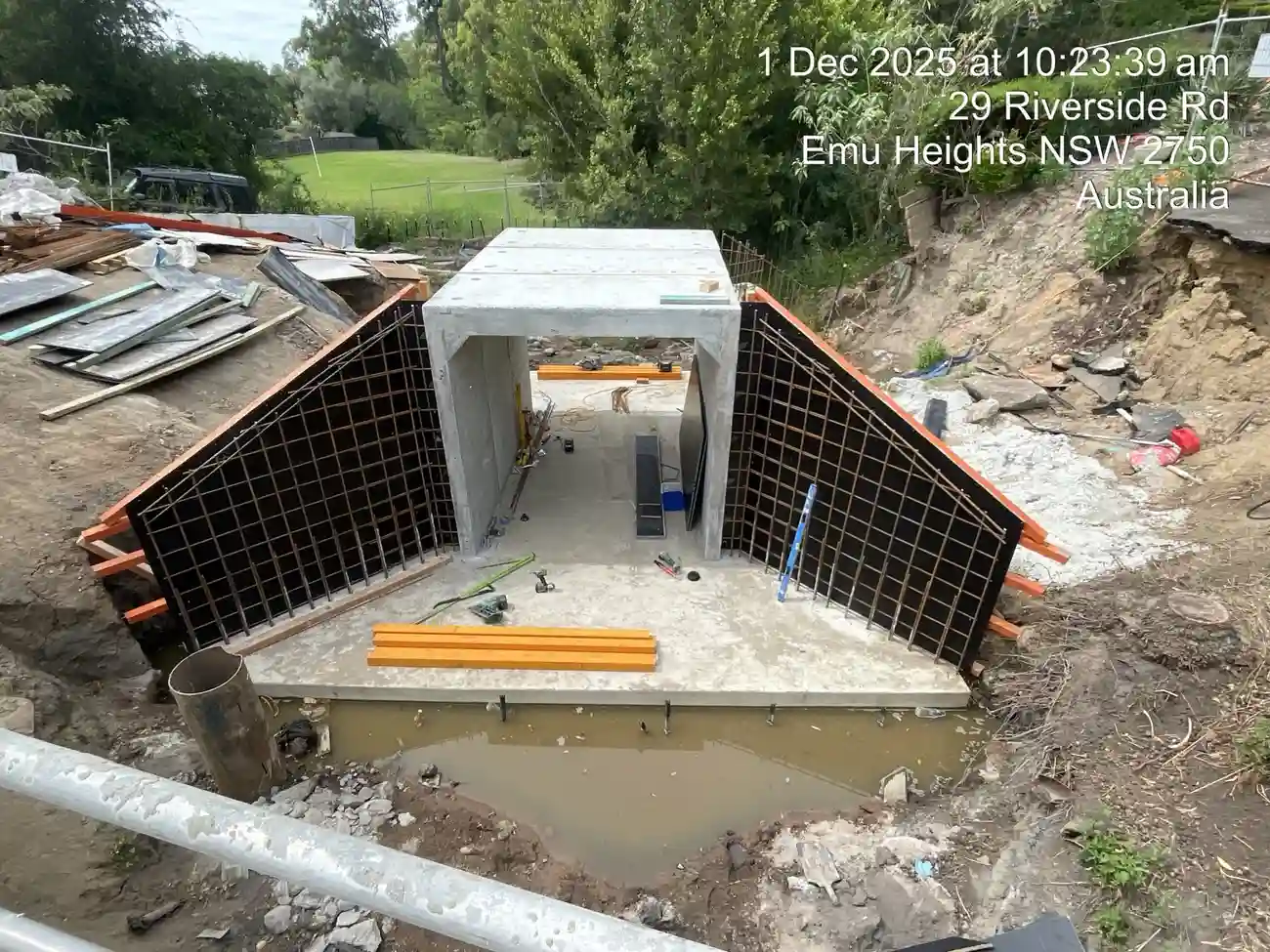
SCE’s Emu Heights reconstruction combined screw piles, a reinforced-concrete base, twin precast culverts, wing walls and backfill, with groundwater and temporary access affecting delivery. The completed scope shows why foundations, precast dimensions, adjoining concrete and site levels must work together. For a comparable project, a change to one component should be checked against the other issued packages before fabrication or construction proceeds.
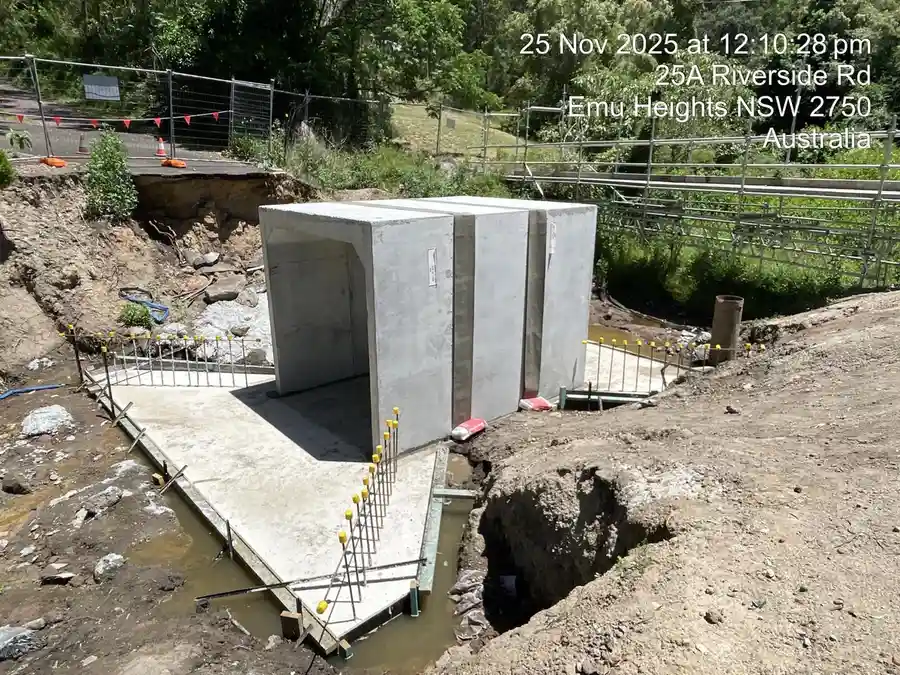
See the Emu Heights bridge reconstruction project and the broader civil infrastructure project collection.
The project sits within SCE's Parramatta and Greater West regional service pathway. Location relevance does not replace a project-specific scope or site assessment.
Frequently asked questions
It is the controlled exchange and review of design information across the parties involved in planning and construction. It helps the team identify current documents, interfaces, responsibilities, queries and required approvals before affected work proceeds.
The required set depends on the project, but it may include drawings, specifications, reports, schedules, surveys, authority requirements, inspection plans and written design responses. Their status and intended use should be confirmed for the relevant activity.
No. Construction coordination does not transfer consultant, designer, certifier or registered-practitioner responsibilities. Those duties remain with the parties formally appointed for the relevant work.
Record the query, decision, responsible issuer and affected work, then confirm which drawings, specifications, approvals or inspections must change. Check procurement and shop drawings, withdraw superseded instructions and brief affected crews. Close the information gap and complete the required release process before the affected work proceeds.
Access, existing services, levels, neighbouring assets, staging and temporary controls can affect how accepted information is implemented. Reviewing these interfaces early can expose missing information or sequencing conflicts before work is committed.
SCE provides integrated engineering, procurement and construction capability through its team and established multidisciplinary engineering relationships. Design-and-construct or EPC scopes can align design development, procurement, methodology and site delivery while keeping independent certification and statutory approvals with the authorised parties.
For more construction and project-planning guidance, visit the SCE Blog.
Define the next step
Send the current drawings, unresolved interfaces, procurement dates and site constraints. SCE will review the engineering and construction requirements and identify the decisions needed to progress a coordinated work package.