Unclear cause or condition
Investigate reported defects, failures and unexpected site conditions so the construction response addresses the evidence and likely causes.

SCE Corp investigates construction problems and develops practical responses across Sydney and selected NSW locations, connecting site evidence, engineering expertise and construction experience.
We help owners and project teams understand defects, resolve conflicting information and work through difficult site conditions. Our team brings the required investigations and professional inputs together, then plans how the agreed response can be built, inspected and documented.
We start with the observed condition, project records and the decision that needs to be made. This establishes which investigations, technical advice and construction planning are needed for the actual site.
Investigate reported defects, failures and unexpected site conditions so the construction response addresses the evidence and likely causes.
Bring drawings, reports, specifications, photographs, site observations and stakeholder requirements together so discrepancies and missing information can be recorded.
Coordinate accepted technical inputs with access, temporary conditions, services, sequencing, safety, environmental controls, procurement and live-site requirements.
Define the technical question, responsible decision-maker, evidence required, release point and records needed before affected work proceeds.
The required investigations and appointments vary. Each stage should preserve the source, status and responsibility for the evidence relied upon.
Describe the observed condition, location, timing, operational impact, safety concerns, known triggers, affected work and the decision that is currently blocked.
Collect photographs, surveys, reports, drawings, specifications, test results, approvals, correspondence, site records and relevant construction history without treating assumptions as confirmed facts.
Identify which questions, investigations, designs, declarations, approvals and inspections belong to the owner, appointed professionals, authorities, registered practitioners and construction team.
Bring accepted technical advice into buildability, access, temporary works, services, staging, procurement, quality, safety and environmental interfaces for the actual scope.
Track decisions, revisions, hold points, inspections, testing, as-built information, completion evidence and outstanding responsibilities against the accepted response.
Investigation findings need to lead to clear decisions and practical work instructions. SCE brings its qualified team and appointed specialists together around the issue, with regulated design and certification responsibilities allocated to the appropriate practitioners.
Record each issue, evidence source, author, date, status, limitation, assumption and unresolved information so the working brief remains current and auditable.
Define the responsible party, required technical or statutory input, affected disciplines, decision date, hold point and downstream construction consequence.
Maintain accepted revisions, construction instructions, inspections, tests, non-conformances, as-built evidence, completion documents and residual actions relevant to the scope.
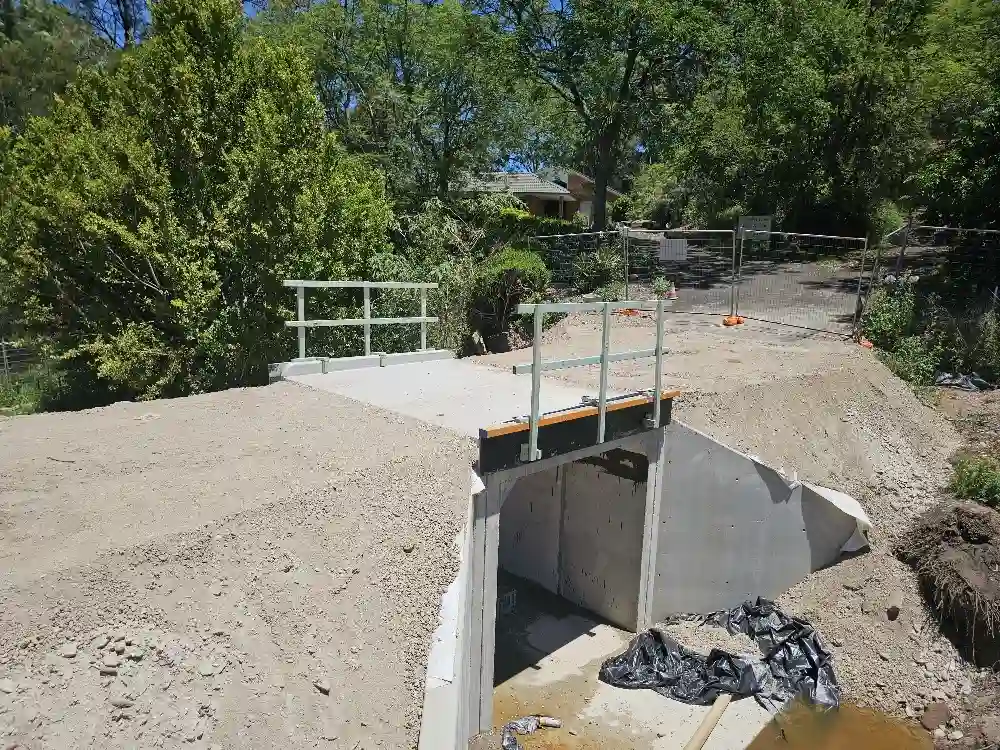
At Emu Heights, SCE reconstructed a flood-damaged creek crossing with temporary access, groundwater management, screw-pile foundations, excavation, reinforced-concrete slabs and aprons, twin box culverts, wing walls and backfilled approaches. The work required water, ground, access and structural interfaces to be resolved in the construction sequence.
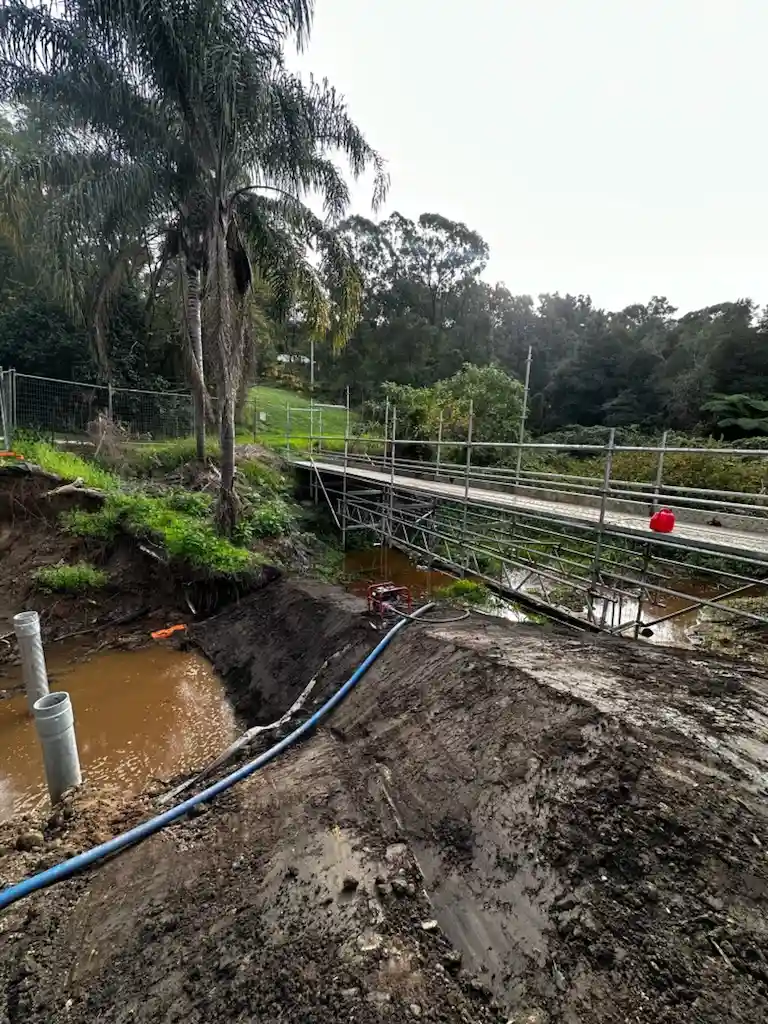
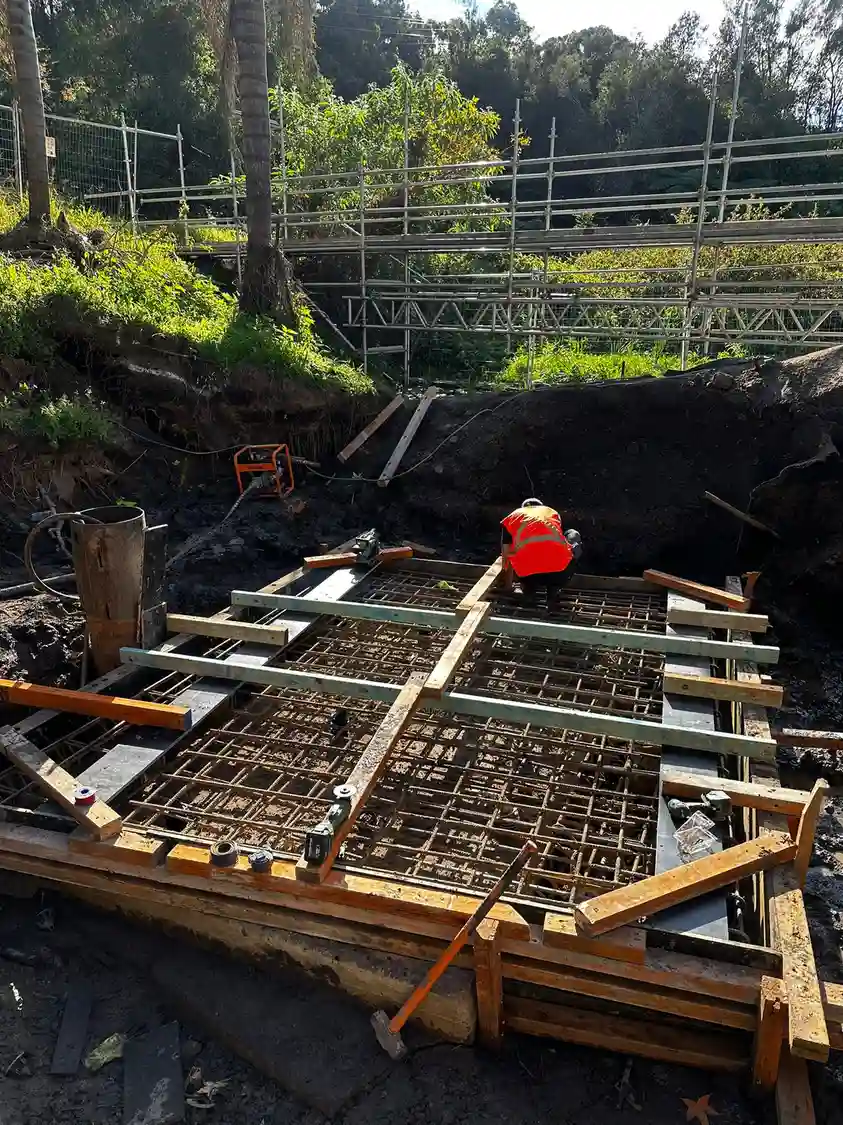
Project video: SCE-owned footage from the Emu Heights flood-damaged bridge reconstruction. Review the documented project.
At Woolloomooloo, moisture had affected two basement levels for more than four years. SCE investigated likely water-entry pathways, using moisture mapping, drainage review and flood or dye testing where required to inform the repair scope.
Excavation, substrate preparation, drainage upgrades, waterproofing around vents and service penetrations, and protective coatings addressed the observed conditions. The project demonstrates how investigation guides targeted remediation.
Managing Director Frank MANESH brings civil and construction engineering experience to reviewing technical issues, construction methods and delivery risks.
Operations Director Farshid MANESH brings estimating, procurement, programming and site-management experience to planning the investigations, trades, materials and sequence needed for the agreed response.
Explore ongoing project management, structural remediation and civil construction support, together with completed projects and SCE’s approach to delivery.
Understand how investigations, professional responsibilities and construction planning come together to address a defined issue.
Engineering problem solving is a structured pathway for defining a construction issue, organising available evidence, identifying the responsible technical and statutory inputs, and coordinating accepted advice with buildability and documented delivery actions.
Provide the site address, problem statement, photographs, surveys, reports, drawings, specifications, test results, approvals, construction records, current appointments, known risks, operational constraints and the decision that is currently blocked.
SCE investigates construction issues through its qualified team and appointed specialists, then connects the findings with design and construction planning. The project brief identifies the investigations and professional inputs required. Regulated design is undertaken by appropriately registered practitioners, and statutory certification and approval decisions remain with the appointed certifier and relevant authority.
Engineering Problem Solving focuses on a defined issue, its evidence and the pathway to a documented response. Engineering Project Management focuses on coordinating technical deliverables, interfaces, programme, procurement, inspections, records and closeout across an accepted project scope.
Structural Remedial Services is the more suitable pathway where investigation and engineering information have established that the principal requirement is structural repair, alteration or strengthening. The required design, practitioner and approval responsibilities remain project-specific.
Applicable duties depend on the building class, work type, regulated designs and practitioner roles. The project team must confirm required registrations, declarations, designs and lodgements. SCE is NSW DBP registered, but that registration does not replace another appointed party's responsibilities.
The flood-damaged crossing required temporary access and groundwater management to be coordinated with screw-pile foundations, excavation, reinforced-concrete works, twin box culverts, wing walls and backfilled approaches. It shows SCE managing connected site conditions and construction stages to deliver the reconstructed crossing.
Yes. SCE provides engineering problem-solving support in Sydney and selected NSW locations. Share the site, issue, available evidence and programme so the team can establish the investigation needs, site arrangements and required professional inputs.
Send the site address, problem statement, photographs, reports, drawings, current appointments, known risks, constraints and the decision that is blocked. Our team will review the evidence with you and discuss the investigations, technical inputs and construction response needed.