Design and construction interfaces
Coordinate accepted drawings, specifications, reports, design changes and technical responses with buildability, staging and site requirements.

SCE Corp manages engineering deliverables and construction interfaces across Sydney and selected NSW locations, connecting design information, procurement, staging, site delivery, inspections and handover.
Our engineering and construction experience helps project teams turn technical requirements into a coordinated delivery programme. We establish responsibilities, track decisions and changes, and bring the required professionals and contractors together around the agreed scope.
The project-management scope should define the required inputs, responsible parties, release points and records before affected construction proceeds.
Coordinate accepted drawings, specifications, reports, design changes and technical responses with buildability, staging and site requirements.
Maintain a clear register of inputs, owners, due dates, reviews, hold points and downstream dependencies across the project team.
Connect technical requirements with temporary conditions, services, access, safety, environmental controls and operational restrictions.
Coordinate required inspections, testing, revisions, as-built information, completion evidence and unresolved actions for the accepted scope.
The exact sequence varies, but each stage should keep deliverables, responsibilities and release points visible to the project team.
Record the project objectives, accepted scope, available evidence, appointed parties, decision-makers, programme constraints and items outside the engagement.
List drawings, reports, specifications, approvals, technical queries, samples, inspections and other inputs with their owner, status, revision and required date.
Connect accepted technical information with procurement, access, temporary conditions, services, sequencing, safety, environmental controls and hold points.
Track instructions, revisions, requests for information, inspections, tests, non-conformances and site evidence without treating superseded or unapproved information as current.
Assemble applicable as-built information, warranties, certificates, test records, completion evidence and residual actions for the accepted project scope.
A concise set of live registers helps the project team see what is accepted, what is outstanding and what construction activity is affected.
Record each required input, author, revision, review status, due date, dependency and accepted use so current information can be distinguished from draft or superseded material.
Identify the responsible decision-maker, affected disciplines, required evidence, hold point and downstream programme or construction impact.
Track required inspections, testing, completion records, as-built information, unresolved actions and the party responsible for each outstanding item.
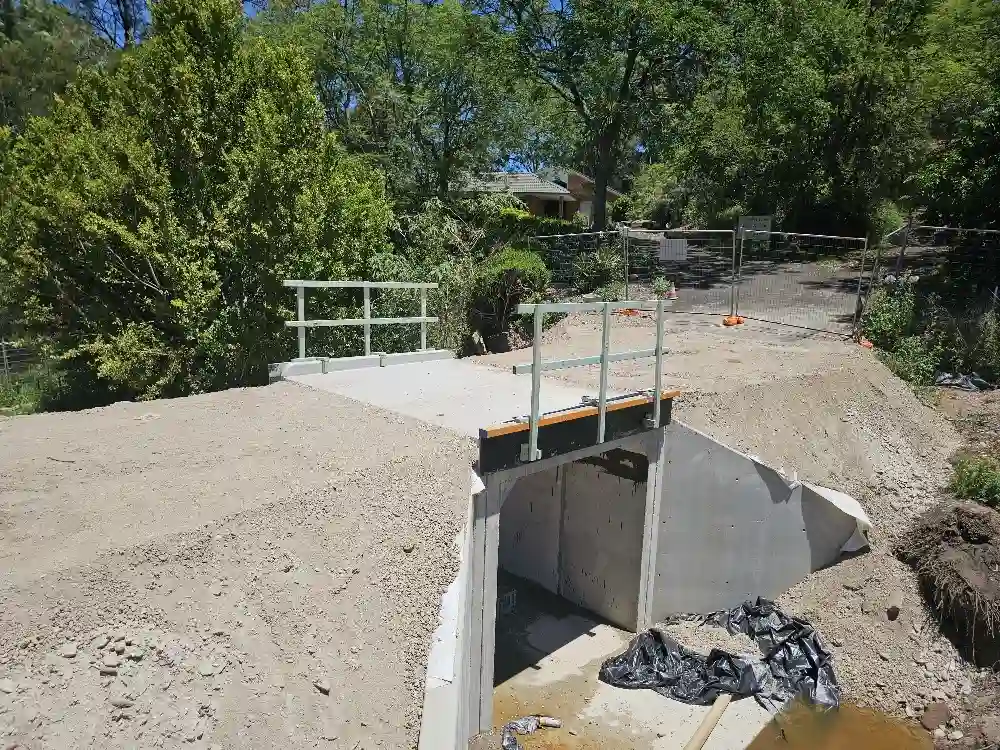
SCE coordinated reconstruction of a flood-damaged crossing at Emu Heights, connecting temporary access and groundwater management with screw-pile foundations, excavation, reinforced-concrete slabs and aprons, twin box culverts, wing walls and backfilled approaches. Each construction stage depended on the preceding structural, access and water-management work.
Managing Director Frank MANESH brings civil and construction engineering experience to technical interfaces, construction methods and project delivery. Operations Director Farshid MANESH brings estimating, procurement, programming and site-management experience to coordinating the people, materials and work sequence.
Accounts and Design Manager Sahar MANESH supports design coordination, technical submittals, drawing registers and commercial records, helping keep information current as the project moves towards handover.
Review the Emu Heights ProjectExplore support for a specific technical problem, remedial design or construction delivery, together with completed projects and SCE’s management approach.
Understand the information, professional responsibilities and delivery controls involved in engineering project management.
Engineering project management coordinates technical deliverables, responsible parties, interfaces, release points, construction records and closeout activities across an accepted project scope. The exact service depends on the project, appointments and delivery stage.
Provide the site address, project brief, current stage, drawings, reports, specifications, approvals, programme constraints, known risks, current appointments, outstanding technical inputs and the decisions that are affecting delivery.
SCE coordinates engineering and construction through its qualified team and appointed specialists, linking technical deliverables with procurement, staging, inspections and site activities. The project plan records each professional’s responsibilities. Regulated work is allocated to appropriately registered practitioners, while statutory certification and approval decisions remain with the appointed independent certifier and relevant authority.
Engineering Project Management focuses on ongoing technical deliverables, interfaces, programme, construction records and closeout across an accepted scope. Engineering Problem Solving focuses on defining a specific unresolved issue, organising its evidence and coordinating the pathway to a documented response.
Depending on the scope, useful controls may include deliverable, design-query, decision, interface, risk, change, inspection, test, non-conformance, as-built and closeout registers. Each register should identify its owner, status and source information.
Changes should be recorded with their author, revision, review status, affected disciplines, required approvals, release point and construction consequence. Superseded or unapproved information should not be treated as current.
Applicable duties depend on the building class, work type, regulated designs and practitioner roles. The project team must confirm required registrations, declarations, designs and lodgements. SCE is NSW DBP registered, but that registration does not replace another appointed party's responsibilities.
Yes. SCE provides engineering project-management support in Sydney and selected NSW locations. Share the location, scope, delivery stage and programme so the team can confirm site arrangements, resources and the required professional inputs.
Send the site address, project stage, available drawings and reports, current appointments, programme constraints, known risks and outstanding decisions. Our team will discuss the delivery priorities, information gaps and project-management services needed to move the work forward.