Major Road Maintenance
Rehabilitation, resurfacing and reconstruction of larger work areas, with staged delivery and coordinated pavement, drainage and service interfaces.
Explore Major Road Maintenance
Road maintenance and pavement rehabilitation
SCE Corp delivers road maintenance across Sydney and NSW, including pavement repairs, resurfacing, drainage and service interfaces, staged access and reinstatement. We can coordinate investigation and repair design through appropriately qualified specialists, then plan and deliver the agreed works.
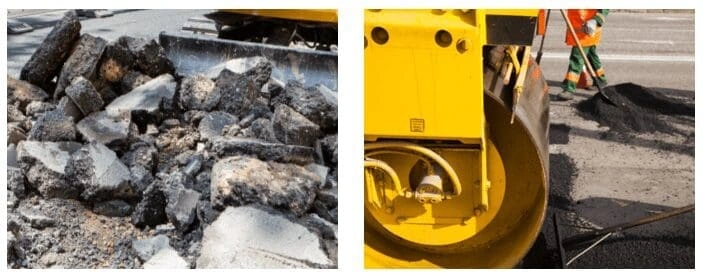
Clear responsibility boundary
Frank Manesh’s wider career experience includes Mulgoa Road maintenance, with median works, lane reconfiguration, line marking and resurfacing under live traffic. That experience supports the planning of work stages, access and pavement interfaces for SCE’s clients.
SCE can coordinate the assessment and engineering inputs needed for repair design, pavement treatments, drainage and traffic arrangements. The agreed appointments establish responsibility for design, materials, testing, approvals and acceptance, supported by a clear construction programme and inspection plan.
Direct service pathways
Choose the pathway that matches the defined need: a larger rehabilitation or reconstruction package, or a smaller localised repair and reinstatement package.
Rehabilitation, resurfacing and reconstruction of larger work areas, with staged delivery and coordinated pavement, drainage and service interfaces.
Explore Major Road MaintenanceLocalised defect repairs, patching and reinstatement, with the preparation, materials and access arrangements matched to the affected area.
Explore Minor Road MaintenanceConstruction capability
SCE delivers the following works to the agreed design, specification, inspection plan and asset-owner requirements. We coordinate the work sequence, traffic arrangements and environmental controls around the repair scope:
The agreed scope identifies construction tasks, investigation and design appointments, traffic controls, testing and records required for the road asset.
A recurring pothole, depression or broken edge needs more than a surface-area estimate. The repair decision should consider the pavement layers, water entry, drainage, traffic loading and previous repair history. Resurfacing alone may leave a weak or wet supporting layer untreated; investigation helps establish whether a local repair, rehabilitation or reconstruction is appropriate.
Separate any immediate work needed to make an area safe from the planned repair that addresses its cause. Record temporary treatments so they are included in the follow-up scope, with a clear decision on who investigates, specifies and accepts the permanent works.
Repair depth and extent, unsuitable material, drainage changes, disposal, testing and traffic staging can materially affect a maintenance package. Several small work areas may also require repeated mobilisation and temporary access arrangements. Share the defect locations, photographs, loading requirements, repair history and available investigation records so the proposal can identify assumptions and how concealed conditions will be assessed before extra work proceeds.
Project and team experience
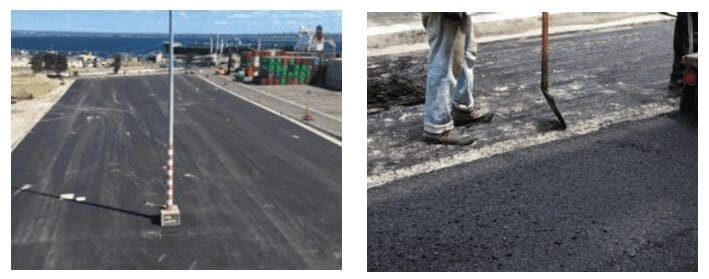
At Blackbutt, SCE’s pavement reconstruction combined excavation and lime stabilisation with rebuilding the pavement layers, asphalt surfacing, stormwater works and kerbs. The delivery plan changed from five stages to two. This illustrates why the ground treatment, drainage and work sequence need to be planned together. The Port Botany record provides separate heavy-duty pavement experience from Farshid Manesh’s wider career.
Investigation, planning and construction
Identify the road asset, observed condition, work area, project stage and operating constraints.
Review issued pavement, geotechnical, drainage, traffic, survey, utility and environmental information.
Separate construction tasks from treatment selection, design, testing, approval, certification and asset-acceptance duties.
Complete the agreed repairs and staged inspections, resolve defects, and assemble the testing and handover records required for asset acceptance.
Related pathways
Use the pavement rehabilitation planning guide to organise condition evidence, treatment questions, staging and handover requirements.
Frequently asked questions
SCE delivers pavement repairs, resurfacing, drainage and service interfaces, staging and reinstatement, with the required construction and handover records. Investigation and repair design coordination can be included through appropriately qualified engineers and specialists within the agreed scope.
Major road maintenance generally concerns larger rehabilitation, resurfacing or reconstruction packages, while minor road maintenance concerns localised defect repairs, patching, reinstatement and smaller work areas. The issued project scope determines the applicable pathway.
SCE can coordinate pavement assessment and treatment selection through appropriately qualified engineers and specialists. Their findings inform repair design, materials, staging and testing. The delivery scope identifies the responsible appointments, while statutory approvals, independent certification and asset acceptance remain with the relevant responsible parties.
Useful information includes the site location, existing-condition records, issued drawings and repair details, geotechnical information, specifications, survey levels, drainage and utility details, traffic constraints, approvals, testing plan, programme and allocated responsibilities.
Drainage, pits, kerb, gutter and service interfaces may form part of a defined construction package where the issued designs, authority requirements, responsibilities, hold points and acceptance criteria clearly allocate those works.
Staged delivery may be considered where issued traffic, access, safety and operational controls define how work areas, interfaces and handovers are to be managed. Feasibility depends on the specific site, programme and accepted scope.
Approval, certification, laboratory testing, design verification and asset acceptance remain with the parties appointed for those duties unless a particular coordination task is expressly included in SCE's accepted scope. No approval-authority or certifier role is implied.
Provide the site context, existing-condition records, issued technical information, intended construction boundary, access and staging constraints, programme and responsibility matrix through the Contact SCE page. SCE can then assess whether the package is sufficiently defined for further discussion.
Share the site location, existing-condition records, issued pavement information, project stage, access constraints and intended work boundary for an initial review of the construction package.