
NSW strata remedial procurement guide
How to Compare Remedial Tenders in NSW: A Strata Decision Checklist
Two remedial tenders can show different totals while pricing materially different work. A reliable decision starts by normalising scope, assumptions, access, compliance responsibilities, quality controls and closeout—not by comparing the bottom line alone.
One offer may include access, temporary protection, consultant hold points and closeout records; another may exclude them, use provisional quantities or assume unrestricted access. For an owners corporation, strata manager, asset owner or facility manager, the objective is to understand what each tender includes, what it assumes, how uncertainty is treated and whether the proposed delivery pathway suits the building.
This checklist begins after a common tender brief has been issued. If the brief is still being assembled, start with SCE’s scope of works brief. For entity, licence, insurance and evidence checks, use the contractor verification guide.
Eight checks for a comparable decision
1. Confirm the issued scope
List every drawing, report, specification, addendum, site inspection and clarification issued. Ask each tenderer to confirm the documents on which its offer is based. Record qualifications against work areas, quantities, finishes, access, temporary works, protection, approvals, testing and closeout.
2. Separate exclusions, assumptions and departures
An exclusion removes work or responsibility. An assumption is a condition used to price the work. A departure changes an issued requirement, material, sequence or responsibility. Record each item, then accept, price, clarify or reject it.
3. Normalise quantities and allowances
For every provisional sum, quantity or rate, record the unit, inclusions, margin treatment, measurement method and approval needed before it changes. If quantities differ, compare tenders against one agreed evaluation quantity without rewriting the original offers.
4. Test access and temporary controls
Check responsibility for scaffold, elevated work platforms, suspended or rope access, edge protection, public protection, loading zones, permits, engineering, inspections and demobilisation. Include occupant notifications, dust, noise, water protection, daily handback and emergency access.
5. Confirm design, DBP and approvals
For remedial work on a Class 2 building, regulated designs, declarations and lodgement may apply. State who owns design, consultant review, registered-practitioner functions, product submissions, authority interfaces and required records. A label such as “DBP compliant” is not a responsibility matrix.
6. Compare methodology and programme
A useful programme identifies mobilisation, access installation, trial areas, opening-up, work zones, inspections, curing or weather dependencies, rectification, demobilisation and closeout. A shorter programme is not automatically better if its access or occupancy assumptions are unrealistic.
7. Compare quality and closeout evidence
Identify required submissions, samples, trial approvals, inspection and test records, photographs, consultant inspections, variation records, warranties, maintenance information, as-built mark-ups and declarations. Allocate who produces, reviews and accepts them.
8. Record whole-project value
Show submitted and normalised price, unresolved risk, programme, scope confidence, relevant evidence, controls and qualifications. SCE does not position itself as the lowest initial-price option; the comparison should include compliant products and systems, scope clarity, quality, documentation and whole-project value.
An evaluation allowance is not an agreed tender price
For example, one tender may include scaffold installation and removal while another excludes access. An allowance can make the evaluation more comparable, but it does not mean the second tenderer has agreed to deliver that work for the amount entered by the evaluator.
Record the allowance’s source, date and assumptions, together with any effect on programme or occupation of the building. Obtain written clarification of the actual inclusion, price and responsibility from the tenderer, with the relevant consultant’s input where needed, before appointment. Reference the final agreed documents while retaining the original submitted offer.
If the access method or a technical departure remains unresolved, show it as a condition or unresolved risk in the comparison. Do not present the adjusted total as a fully conforming offer simply because an estimated allowance has been added.
Questions to resolve before appointment
- Does the offer relate to the correct legal entity and final issue of every tender document?
- Which items are excluded, assumed, provisional or subject to measurement?
- Who owns design, approvals, registered-practitioner functions and consultant coordination?
- What access, temporary works and occupant controls are included?
- What triggers a variation, and how will quantity changes be measured?
- Which hold points and closeout records are included?
- Can the tenderer show relevant, scope-comparable project evidence?
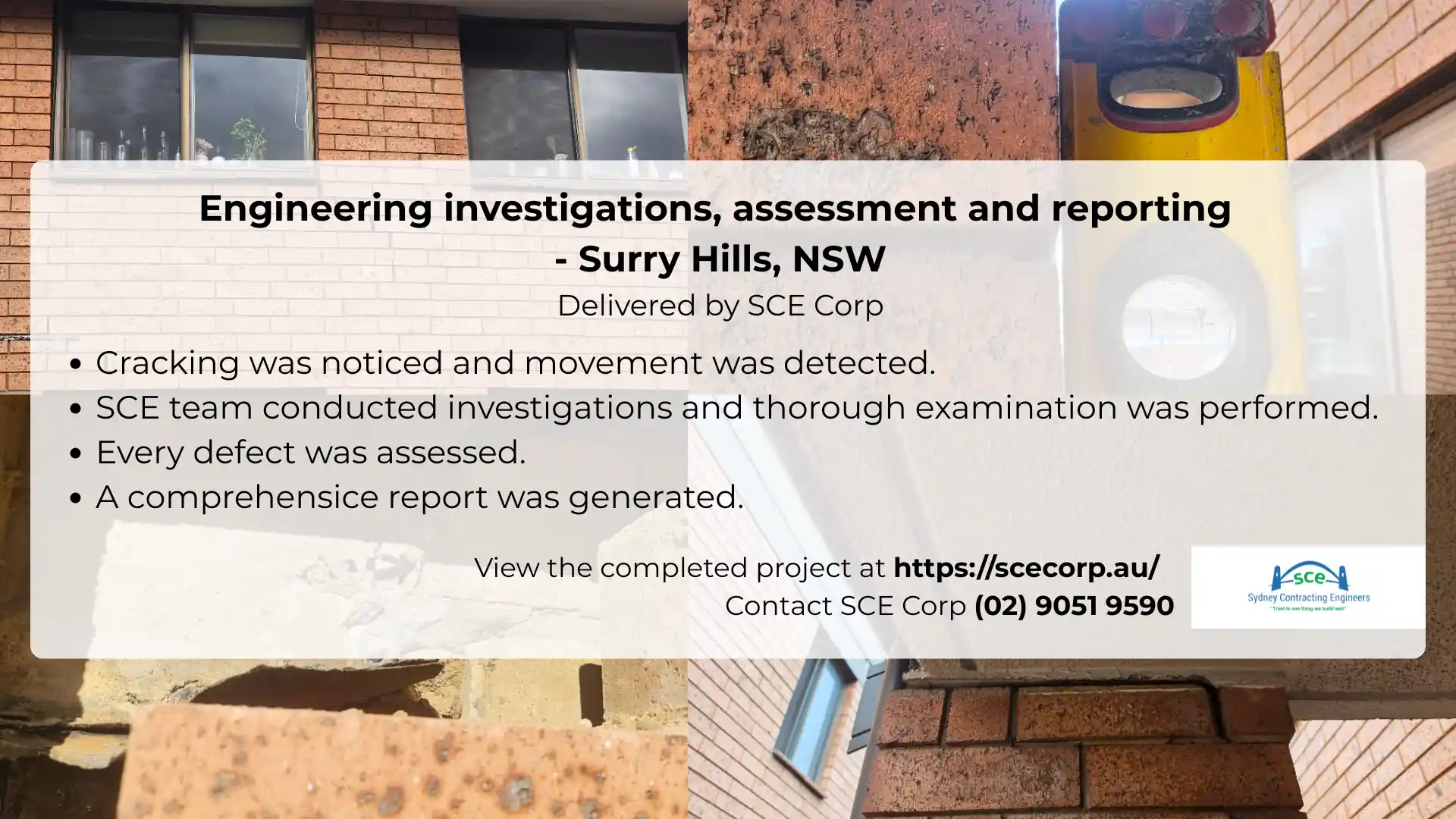
Useful supporting pathways include SCE’s building remedial services, strata services, Surry Hills strata investigation project, remedial closeout guide and certifications and credentials.
Frequently asked questions
How many quotes must an NSW owners corporation obtain?
Current NSW Government guidance states that all schemes must obtain at least two independent quotes for work valued at $30,000 or more, subject to the stated emergency-repair exception. Confirm the current rule and the scheme’s approval requirements before procurement.
Should the lowest remedial tender win?
Not automatically. First normalise scope, quantities, exclusions, access, programme, compliance responsibilities, quality records and unresolved risk. A lower initial price may represent a different or incomplete offer.
Can fixed prices and schedule-of-rates tenders be compared?
Yes, but only with a documented evaluation basis. Retain each submitted offer, apply one agreed quantity set for comparison and state how actual quantities and rates would be administered.
What if the remedial scope is not sufficiently defined?
Do not create false price certainty. Further investigation, consultant input, trial areas, measured quantities or a staged commercial model may be needed before final appointment.
Authoritative references
- NSW Government — Strata repairs and maintenance
- NSW Government — Remedial building work in regulated buildings
- Service NSW — Check a builder or tradesperson licence
References checked 8 September 2026. This article is general information, not project-specific legal, engineering, design or access advice.
Request a Project Suitability Review
If you have a defined NSW remedial scope, provide the issued documents, tender requirements, address, access constraints and programme so SCE can assess project suitability.