
By Sydney Contracting Engineers (SCE Corp) · Information checked 5 November 2026
Fibre cement vs metal cladding is a useful starting comparison for a coastal NSW home, but the material name is only the beginning. The practical choice depends on the nominated product, the building’s exposure, its supporting wall system and the maintenance the owner can realistically arrange.
A sheltered wall and an exposed ocean-facing elevation can present different conditions on the same property. Avoid choosing a product from a general statement that it is suitable for coastal areas. Ask what the manufacturer requires for the actual location and installation.
Describe the exposure before selecting the finish
Give the design team the address, building height, orientation, surrounding shelter and photographs of each elevation. Record visible salt deposits, persistent wetting and deterioration of existing components. These observations help frame the assessment; they do not replace a site-specific design or corrosion classification.
Ask whether exposure affects the proposed product, coating, fasteners, subframe and warranty conditions. A selection should identify all of those components together. The least suitable connected component can create a maintenance or durability problem even when the visible cladding remains sound.
What did coastal exposure change at Belmont?
At SCE’s Belmont recladding project, the coastal setting informed the finish specified for the replacement solid aluminium panels. SCE considered protective performance alongside colour and appearance, while the change from bonded sheets to folded panels also required different supporting construction and side details. Existing drainage pipes were also replaced as part of managing moisture behind the façade. Coastal material selection therefore needs to be coordinated with the building’s drainage and ventilation details.
The practical lesson is to select the coating, panel and support arrangement together. Check the exact finish’s exposure limits, application requirements and maintenance conditions instead of relying on a colour name or a general claim that aluminium suits the coast.
Compare specified systems, not broad categories
For fibre cement cladding, identify the precise board or panel, its joint arrangement, coating system, edge treatment and fixing requirements. For metal cladding, identify the actual metal and product, protective finish, support arrangement and compatible fasteners. Different products within each category can have different limitations.
The James Hardie Axon installation guide, for example, contains product-specific requirements for coatings, joints and fixings. Its requirements should not be transferred to every fibre-cement product. Use the current guide for the exact product proposed.
If the metal options include solid aluminium and aluminium composite panels, use SCE’s solid aluminium versus ACP comparison to distinguish those product families before returning to the coastal exposure assessment.
Check compatibility at connected components
List the proposed cladding, fasteners, subframe, flashings and nearby metal components. Ask the designer and suppliers to confirm compatibility, including contact and water runoff paths. Do not assume that a fastener described as premium or stainless is automatically appropriate for every assembly.
BlueScope’s dissimilar-metals bulletin explains how contact between different metals and moisture can affect corrosion. The project still needs a documented component selection suited to its materials and exposure.
Test the maintenance plan against the building
Ask for the nominated products’ cleaning, inspection and coating requirements. Then consider how someone will reach the relevant wall, joint or fixing safely. A maintenance instruction is not a workable plan if the upper elevation cannot be accessed without arrangements the owner has not anticipated.
- Identify which surfaces are sheltered from ordinary rain washing.
- Confirm who will inspect joints, coatings and connected metalwork.
- Record the proposed response to local coating damage or a damaged panel.
- Keep product identity and finish information for later repair matching.
- Include access costs when comparing whole-of-scope options.
Coordinate the wall’s other performance requirements
Coastal durability does not resolve fire performance, wind resistance, water management, insulation or condensation. Those matters belong in the coordinated wall design for the building and approval pathway. SCE’s safe-cladding selection guide provides the broader evidence framework.
SCE delivers engineering and design, procurement, construction, testing and handover as a coordinated cladding package. The project appointment identifies the responsible practitioners, product approvals, inspection stages and certification requirements.
SCE’s cladding project experience
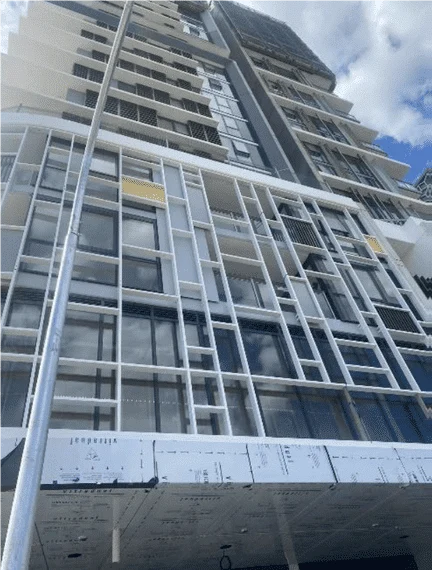
The SCE cladding portfolio includes Granville’s staged façade replacement and documented installation checks. A completed project demonstrates its recorded delivery scope; it does not establish that the same materials or details suit an exposed coastal home.
Bring the site photographs, existing-wall information, proposed products, maintenance expectations and available drawings to a Project Suitability Review. The objective is a complete, maintainable wall system selected for the property.
Planning a coastal façade? Our cladding material and maintenance questions cover product selection, complete wall systems and replacement planning.
Frequently asked questions
Is fibre cement always better than metal near the coast?
No. Compare the exact products, exposure limits, fixings, coatings, supporting system and maintenance requirements for the building.
Can I choose fixings separately from the cladding?
Fixings need to be compatible with the complete assembly and exposure. Confirm their selection through the project design and relevant product requirements before procurement.
Is distance from the sea the only coastal selection factor?
No. Orientation, shelter, wetting, deposited salt, material combinations and access for maintenance may also matter. Use the nominated product guidance and a site-specific assessment.
Which needs less maintenance near the coast: fibre cement or metal cladding?
There is no single answer for either category. Compare the specified finish, coating and cleaning instructions, joint inspections, exposure limits and safe access needed for the actual building. Sheltered surfaces can need particular attention where salt deposits are not washed away by rain. Include access and future repair costs, rather than assuming a factory finish or painted board is maintenance free.