
By Sydney Contracting Engineers (SCE Corp) · Last reviewed 7 November 2026
Rising damp and rainwater ingress can produce overlapping symptoms, including stained finishes, peeling paint and deterioration near a wall base. Plumbing leaks and condensation can also complicate the picture. The location of a stain is evidence to investigate, not a complete diagnosis.
Before authorising a treatment, ask what source has been identified, what competing explanations remain and which investigation will resolve the uncertainty. An effective scope addresses the moisture mechanism and the damaged material together.
What is the difference between rising damp and penetrating rainwater?
Rising damp is moisture moving upward through porous masonry from the ground, often where the damp-proof barrier is absent, damaged or bridged. Penetrating rainwater enters through the building envelope, for example at a roof, wall, flashing or opening. Condensation and plumbing leaks are different possible sources.
These mechanisms can occur together and leave similar marks. A low-level stain, a moisture reading or the weather alone cannot establish the cause; relate each observation to the construction and an appropriate investigation.
Build a simple event and location record
Mark affected areas on a plan and take dated photographs from repeatable positions. Note recent rain, wind direction where known, room use, plumbing activity and earlier repairs. Record whether the affected area grows, dries or returns, without disturbing finishes or exposing unsafe areas.
Include external conditions visible from a safe location: ground levels, paving, drains, gutters, downpipes, openings and adjoining structures. Those observations help the assessor choose what to investigate. They do not establish responsibility or prove that one external feature is the cause.
Compare plausible moisture sources
The Australian Government’s Your Home repairs and maintenance guidance discusses several causes of damp and building deterioration. The investigation should consider the actual building, its materials and the route water could take.
- Does the pattern change after rain or a particular wind direction?
- Is there a nearby water or drainage service requiring trade investigation?
- Could ground, paving or drainage conditions affect the wall?
- Are internal moisture and ventilation conditions relevant?
- What do previous repair records show about recurrence?
More than one source can be present. Avoid forcing all observations into a single explanation just because a treatment has already been quoted.
Give each test a specific purpose
Ask the assessor what question a proposed measurement, test or opening will answer and how the result will be interpreted. A reading is most useful when linked to the material, location, conditions and method used.
Where opening-up is necessary, agree permission, access, protection and reinstatement. SCE’s visual versus intrusive investigation guide explains when opening up adds useful evidence. Do not undertake uncontrolled water testing or excavation as a homeowner experiment; the method should suit the building and avoid creating further damage.
Separate source repair from finish repair
Once the mechanism is sufficiently established, define the work needed to manage the source and the work needed to restore affected materials. Repainting, replastering or replacing skirtings may improve appearance without resolving continuing moisture.
For older or heritage-sensitive masonry, select compatible masonry and mortar repairs and confirm the required approvals. Existing salts, damaged finishes and drying conditions may influence the repair sequence. Do not assume that a stronger or less permeable finish is automatically the more durable choice.
Set a review period and evidence of performance
Ask how the team will judge the completed source repair and whether observation through relevant weather or use conditions is needed. The review method should be agreed before the final decorative work is treated as complete.
Keep a record of the diagnosis, investigation limitations, installed work, affected locations and follow-up findings. If damp returns, this evidence helps distinguish a recurring mechanism from a separate issue rather than starting the process from an undocumented surface repair.
At SCE’s Woolloomooloo water ingress project, a later callout concerned a separate burst pipe inside the building. SCE reinspected the earlier remediation and found no water ingress through the repaired area at that visit. The example shows why a new moisture event needs its own source assessed instead of assuming that an earlier repair has failed.
How much does it cost to fix rising damp in Sydney?
The price depends on the confirmed moisture source, wall construction, access and extent of damaged material. An investigation should establish whether work is needed to drainage, leaking services, the damp-proof course or another part of the building before a treatment is priced. Ask for investigation, source repair, drying and finish reinstatement to be identified separately, with any heritage requirements and uncertain items explained. A price for repainting or one treatment alone is not comparable with a complete remedial scope.
SCE’s construction quote comparison tool helps compare the same investigation and repair scope, rather than a headline price with different exclusions.
Arrange an investigation and complete repair
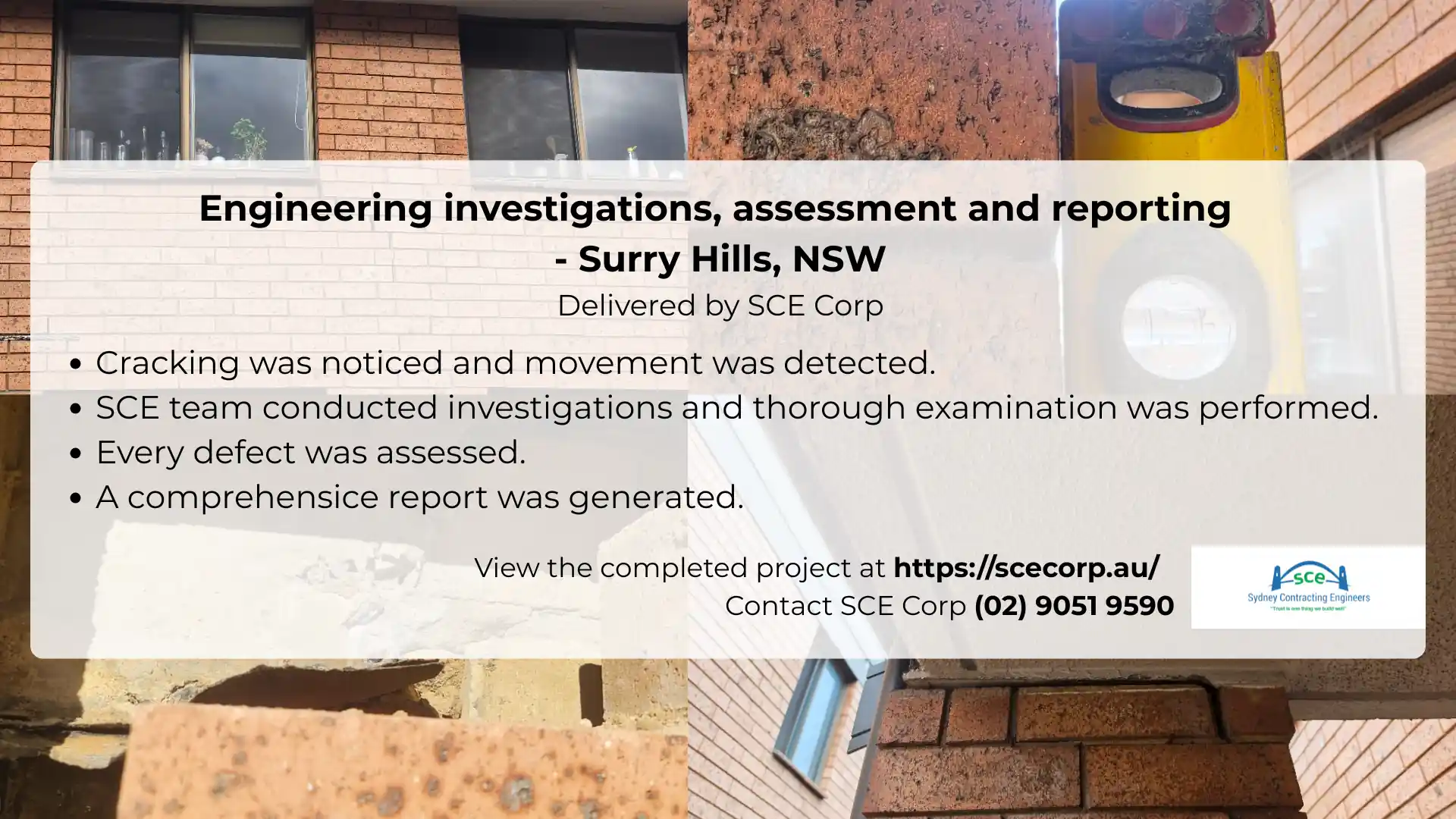
SCE’s Surry Hills investigation project records assessment, remediation design, specification, engineering inspection reporting and tender management with specialist consultants. It supports SCE’s evidence-led engineering and remedial capability without establishing a damp diagnosis for another building.
SCE delivers investigation, engineering and remedial design, procurement, construction, testing, required certification and handover. We bring the relevant building, drainage and other specialists into the scope so the moisture source and damaged finishes are addressed together. Request a dampness investigation with property details, photographs, event history and previous reports.
Frequently asked questions
Read our water-ingress source questions before deciding which moisture-control work is needed.
Does damp at the bottom of a wall prove rising damp?
No. Several moisture sources can produce similar symptoms. The assessor should compare the pattern, building construction, services and environmental evidence.
Should I repaint before investigating the cause?
Repainting may conceal useful evidence without resolving the source. Agree the investigation and repair sequence before renewing affected finishes.
Can more than one moisture source be present?
Yes. Rainwater, plumbing, ground moisture and internal conditions may interact. The scope should address the mechanisms supported by the evidence.
What helps assess whether a repair worked?
An agreed inspection or observation method, identifiable locations, relevant weather or use conditions and a retained record of the completed work support a meaningful review.
How does rising damp differ from rainwater ingress?
Rising damp involves ground moisture moving upward through porous masonry. Rainwater ingress enters through the external envelope, such as roof, wall or opening defects. Similar symptoms and multiple sources are possible, so the building, event history and investigation findings must support the diagnosis before treatment.
How much does it cost to fix rising damp in Sydney?
The price depends on the confirmed moisture source, wall construction, access and extent of damaged material. An investigation should establish whether work is needed to drainage, leaking services, the damp-proof course or another part of the building before a treatment is priced. Ask for investigation, source repair, drying and finish reinstatement to be identified separately, with any heritage requirements and uncertain items explained. A price for repainting or one treatment alone is not comparable with a complete remedial scope.
How serious is penetrating damp?
Persistent penetrating damp can damage finishes, timber and masonry and contribute to mould. The urgency depends on what is getting wet and whether there are hazards such as affected electrical equipment or unstable materials. Arrange an assessment of active or recurring leaks, keep clear of unsafe areas and address the source before decorative repairs. The visible size of a stain does not reliably show the extent of concealed damage.