
Concrete condition and repair guide
What Is Concrete Remediation? Can Damaged Concrete Be Repaired?
Concrete remediation is a condition-led process used to investigate deterioration, control risk and carry out an accepted repair, protection, strengthening or replacement scope.
What concrete remediation means
Concrete remediation is broader than filling a crack or covering a damaged surface. It starts by identifying what has deteriorated and why, then defining the work needed to restore the required function or manage the asset appropriately.
Understand the condition
Available drawings, defect history, photographs, previous repairs, exposure and observed deterioration are reviewed. Testing, opening-up or engineering assessment may be required.
Define the response
The responsible professional determines whether local repair, crack treatment, reinforcement treatment, protection, strengthening, partial replacement or full replacement is appropriate.
Control delivery
The accepted scope should define access, temporary works, removal limits, materials, preparation, application, curing, hold points, inspections and closeout records.
Why concrete deteriorates
Moisture, chlorides and reinforcement corrosion
Water and contaminants can reach embedded steel through cracks, joints, porous concrete or failed protective systems. Corrosion products expand and may contribute to cracking, delamination and spalling.
Carbonation and chemical exposure
Carbonation can reduce the concrete’s protection of reinforcing steel. Acids, sulphates, industrial chemicals or other aggressive exposures can also damage the cement matrix or reinforcement.
Movement, loading and impact
Settlement, thermal movement, restraint, vibration, overloading, impact or changes to the structure can produce cracking or local damage. The cause and whether movement is continuing matter to treatment selection.
Construction, detailing and ageing
Inadequate cover, poor compaction, curing defects, unsuitable joints, drainage problems, workmanship issues and normal ageing can affect performance. Several causes may act together.
Can badly damaged concrete be repaired?
The answer may be yes, partly or no. A repair is only appropriate when the remaining material and reinforcement can support the accepted repair system and the required performance can be achieved with controlled risk.
Repair may be appropriate when
- the cause and extent of deterioration can be established;
- sound substrate and reinforcement can be reached and prepared;
- movement, moisture and exposure can be addressed or accommodated;
- the repair can meet the required structural, durability and service criteria; and
- access, temporary works, sequencing and quality controls are feasible.
Replacement may be more appropriate when
- deterioration is extensive, deep or distributed through the element;
- the remaining concrete or reinforcement cannot provide a reliable repair base;
- the element has unacceptable deformation, instability or loss of capacity;
- the cause cannot be controlled sufficiently for the proposed repair; or
- repeated local repairs would be higher risk or poorer whole-of-life value.
How repairability is assessed
Record the symptoms
Map cracking, spalling, delamination, exposed reinforcement, staining, leakage, movement and previous repairs, including where and when changes have occurred.
Establish likely causes
Review water paths, exposure, loads, movement, drainage, joints, cover, reinforcement, construction records and surrounding defects.
Investigate to the required level
Depending on the asset and risk, this may include sounding, crack monitoring, cover checks, corrosion or carbonation testing, sampling, scanning, opening-up or structural assessment.
Define performance and responsibilities
Confirm the required function, design life, appearance, exposure, load requirements, approval pathway and who is responsible for design, certification and acceptance.
Compare repair and replacement options
Consider technical feasibility, access, risk, disruption, programme, future maintenance, uncertainty and whole-of-life cost—not only the initial price.
Document the accepted scope
Set removal limits, preparation, materials, reinforcement treatment, application, curing, hold points, testing, records and variation triggers before affected work proceeds.
Repair methods depend on the verified cause
No single material or method suits every crack, spall or damaged element. A defined scope may use one or more of the following approaches.
Local concrete repair
Controlled removal of unsound concrete, substrate and reinforcement preparation, reinstatement with a compatible repair material, curing and inspection.
Crack-specific treatment
Injection, routing and sealing, stitching or movement accommodation may be considered only after the crack cause, movement, moisture and structural significance are understood.
Corrosion-related remediation
Work may involve removing contaminated or delaminated concrete, cleaning or replacing reinforcement, restoring cover and applying protection specified for the exposure.
Surface protection or overlay
Coatings, membranes, overlays or resurfacing require a suitable substrate, compatible system, correct preparation and treatment of underlying defects.
Strengthening or alteration
Where capacity or load path must change, a designed strengthening or alteration scope may be required, with project-specific temporary works and verification.
Partial or full replacement
Replacement may be selected when repair cannot reliably achieve the required performance or when extensive repairs would create greater risk, disruption or whole-of-life cost.
Repair quantities and finish expectations
A visible patch does not show the full extent of concealed deterioration. Compare quotations on the same investigation and removal assumptions, with a clear method for recording the area, depth or volume of additional repairs after opening-up. Confirm who inspects the exposed condition and approves any changed scope before reinstatement conceals it.
Agree the required appearance separately from structural and durability performance. A sound local repair may remain visible against aged concrete. Where colour, texture or a uniform finish matters, include those acceptance criteria and any broader finishing treatment in the scope rather than assuming the patch will be invisible.
Verified SCE project evidence
At SCE’s Toronto major renovation and structural alteration project, the delivered scope included rectification of extensive concrete cancer. This repair work formed part of a wider property renovation and structural alteration package, illustrating why deterioration and the surrounding construction scope need to be considered together.
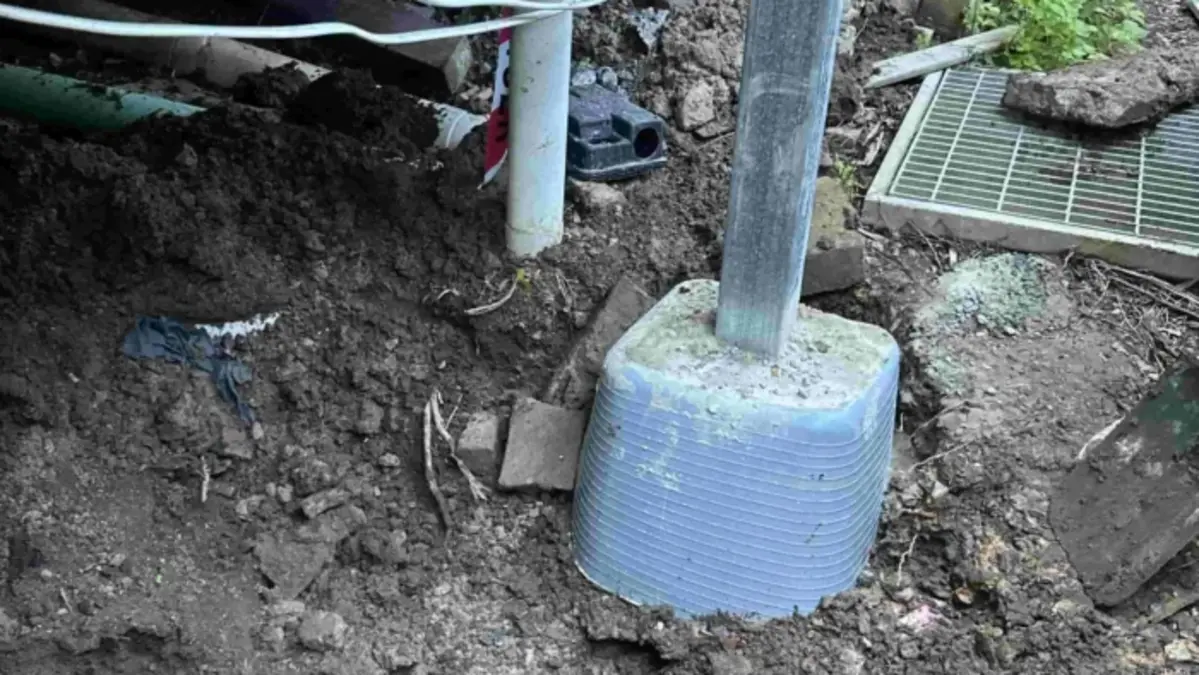
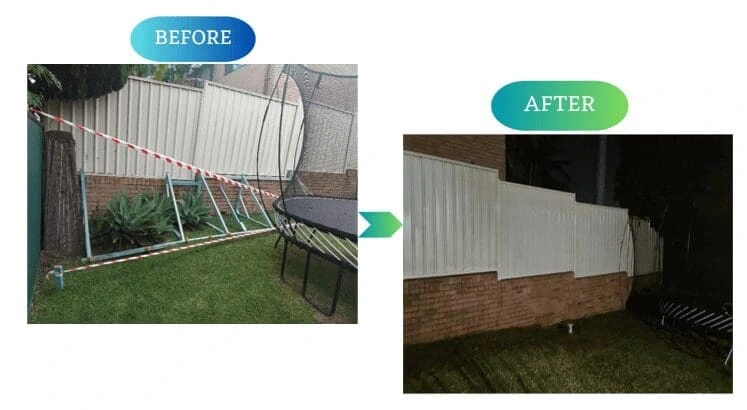
These images demonstrate controlled concrete and footing work on completed SCE projects. They are project evidence—not proof that the same method suits another asset.
Warning signs requiring prompt review
- loose or falling concrete, particularly above occupied areas, paths or vehicles;
- exposed or heavily corroded reinforcement;
- rapidly changing cracks, displacement, deflection or movement;
- damage to columns, beams, slabs, balconies, retaining walls, footings or load-bearing elements;
- water entry associated with spalling, corrosion or repeated repair failure; or
- a condition that cannot be safely accessed, isolated or understood.
NSW roles, approvals and responsibility boundaries
Owner or asset manager
Provides available records, confirms access and operational requirements, arranges appropriate investigation and identifies approval, procurement and stakeholder responsibilities.
Engineer, designer or consultant
Where required, assesses the condition, defines or accepts the repair design and performance criteria, identifies temporary works and sets inspection or certification requirements.
Contractor
Plans and delivers the accepted construction scope, manages site-specific safety and access controls, follows the specified methodology and produces the required quality records.
Service, project and planning pathways
Concrete Remedial Services
Explore SCE’s concrete remediation services for deterioration, spalling and repair projects.
Remedial Concrete Repairs
SCE delivers defined concrete repair construction scopes, including preparation, reinstatement and coordinated site controls.
Concrete Cancer Remediation
Use the dedicated pathway where reinforcement corrosion and concrete-cancer investigation or repair is the primary issue.
Concrete Cracking Remediation
Use the crack-specific pathway where cause, movement, moisture and treatment requirements must be established.
Project evidence
Review SCE structural and remedial project evidence across concrete, water ingress, restoration and repair scopes.
Remedial Planning Tool
Organise defect information, available reports, access constraints and approval requirements before seeking a defined next step.
Concrete remediation FAQs
What is concrete remediation?
Concrete remediation is the condition-led process of investigating deterioration and carrying out an accepted repair, protection, strengthening or replacement scope. It should address the verified cause, affected material, required performance, access, safety, quality controls and project responsibilities.
Can badly damaged concrete be repaired?
Sometimes. Repairability depends on the cause, depth and extent of damage, reinforcement condition, movement, structural role, exposure and whether a reliable repair base and required performance can be achieved. Extensive or unstable damage may require partial or full replacement.
How is the choice between concrete repair and replacement made?
The decision compares technical feasibility, remaining material condition, structural and durability requirements, access, temporary works, risk, disruption, programme, future maintenance and whole-of-life cost. A project-specific assessment is required.
Does epoxy or resin injection suit every concrete crack?
No. The correct response depends on why the crack formed, whether it is moving, whether moisture is present, its depth and structural significance, and the required outcome. Injection can be unsuitable where movement or the underlying cause has not been addressed.
Can new concrete or an overlay be placed over damaged concrete?
Only where the remaining substrate is suitable and the system is properly designed and prepared. Unsound concrete, active movement, contamination, moisture, inadequate bond or untreated underlying defects can cause an overlay or surface treatment to fail.
What causes concrete spalling and concrete cancer?
Spalling can result from reinforcement corrosion, moisture and chloride exposure, carbonation, inadequate concrete cover, cracking, impact, chemical attack, poor construction or several interacting causes. The cause must be verified before a repair system is selected.
How long does concrete remediation last?
There is no universal lifespan. Performance depends on the cause being addressed, remaining concrete and reinforcement, repair design, material compatibility, preparation, application, curing, exposure, drainage, movement, inspection and maintenance. Project-specific requirements should define the expected performance and monitoring.
Plan your concrete remediation project
SCE delivers complex concrete remediation and structural repair projects. Provide the site address, photographs, available reports or drawings, defect history, access constraints and required programme so we can establish the investigation, construction and approval requirements with you.