
Budget planning for owners corporations
Concrete Cancer Repair Costs for NSW Strata Buildings
By Sydney Contracting Engineers (SCE Corp)
Concrete cancer repair costs depend on the extent of deterioration, the repair design and how the work can be accessed. For a NSW strata building, a useful budget includes investigation, access, concrete and reinforcement repairs, adjoining waterproofing or finishes, and verification. A surface-area allowance alone can miss substantial parts of the job.
This guide helps owners corporations and strata managers prepare a realistic budget and understand what a contractor has priced. For project delivery, explore SCE’s strata concrete cancer repair services.
How much does concrete cancer repair cost?
There is no reliable single price per square metre for every building. Two repairs with the same visible area can have very different costs if one needs scaffold, deep breakout, reinforcement replacement or temporary support. A project estimate should identify its measured quantities, assumed repair depths, access method and exclusions.
For an early committee budget, ask for a defined base scope plus separately identified allowances for unresolved work. For tendering, give contractors the same investigation records and quantity schedule. This makes the estimate useful for a decision and explains what could change after opening-up.
If magnesite flooring is suspected, investigate the topping and the underlying slab before pricing the full repair. Our magnesite flooring guide for NSW strata explains the assessment and planning questions.
If the diagnosis or repairability is still uncertain, start with what concrete remediation involves. The term “concrete cancer” does not, by itself, establish the required repair.
What belongs in a concrete repair budget?
- Investigation and design: condition mapping, testing or opening-up where needed, engineering input, specifications and the records required for the proposed work.
- Site establishment and access: mobilisation, scaffold or other access equipment, protection, exclusion areas, loading arrangements and any necessary permits.
- Concrete removal and preparation: the location, area and depth of breakout, protection of retained elements, preparation and waste handling.
- Reinforcement and structural work: assess the allowance for steel treatment, supplementary or replacement reinforcement, anchorage and temporary support where designed.
- Repair materials and installation: the specified system, formwork where needed, application conditions, curing and finish.
- Connected building elements: waterproofing, drainage, joints, coatings, tiles, balustrade interfaces or other reinstatement included in the accepted scope.
- Verification and handover: inspections, tests, concealed-work photographs, completed quantities, warranties and maintenance information.
Keep professional fees, construction costs, client-held contingency and GST identifiable. Confirm whether the quoted total includes each item before it is used for funding or levy decisions.
Why access and repair depth change the price
Access can be a substantial fixed cost even when the visible defect is small. A high-level slab edge over a public route creates different requirements from an accessible ground-level wall. Scaffold duration, protection below the work, restricted hours and multiple mobilisation stages can change the total.
Repair depth matters because deeper deterioration can change removal, reinforcement treatment, formwork and material quantities. A quotation based on shallow repairs should explain what happens if the opened area reveals deeper damage. Ask how the extra work will be measured, authorised and priced before it starts.
Cutting and grinding concrete also require appropriate dust controls. Include the selected controls, waste handling and cleaning in the construction scope; SafeWork NSW’s silica guidance explains the need to manage this exposure.
Build a quantity schedule that supports the estimate
Give each defect a reference on marked plans or photographs. Record the element, location, visible dimensions, investigation status and proposed repair category. The measurement unit should suit the work: area for defined patch repairs, length for some linear details, or an item allowance for a specific access or temporary-works requirement.
Budget structure: defined quantities multiplied by their applicable rates, plus separately priced access and establishment, design and testing, interface work, identified allowances and applicable tax. Check that the same work has not been counted twice.
A useful contractor return distinguishes:
- Confirmed work: quantities and specifications supported by the available evidence.
- Provisional work: items with an explained allowance and a clear basis for adjustment.
- Unpriced discoveries: a documented instruction and valuation process, rather than an open-ended assumption.
Photographs and agreed measurements before concealment help reconcile the final account. SCE’s occupied-strata concrete spalling guide covers the related staging, inspection and resident-access decisions.
Three scenarios that need different budgets
An isolated, accessible repair
The repair area may be limited, but minimum establishment, investigation and protection costs still apply. Confirm that the scope deals with the diagnosed cause and the required adjacent work.
Repeated defects across balconies or elevations
Allow for repeat access, resident coordination and interfaces such as membranes, finishes and balustrades. An agreed inspection and measurement process helps control quantities across repeated locations.
Deterioration affecting a load-bearing element
Engineering assessment and the accepted structural repair sequence drive the budget. Temporary support, restricted loading, strengthening or replacement may be needed. These items should be defined by the project team before relying on a cosmetic patch-repair allowance.
What the cheapest quote may leave out
Check access duration, repair depth assumptions, steel quantities, water-source correction, finishes, testing, waste, protection and exclusions. A lower price can reflect a smaller scope or a different risk allowance. Use the same evidence and return schedule for each quotation; the NSW strata remedial tender comparison guide explains how to assess the wider offer.
Ask the contractor to identify the events that would change the price, who verifies those events and how approval will be recorded. Keep a client contingency separate from contractor allowances so the committee can understand the remaining uncertainty.
SCE experience: why the complete scope matters
SCE rectified extensive concrete cancer during the Toronto major renovation and structural alteration project. As principal contractor, SCE delivered the property-wide renovation, including structural reconfiguration and connected building upgrades. Practical completion was achieved on 28 July 2025.
For a strata repair budget, identify the concrete and reinforcement repairs separately from adjoining structural alterations, waterproofing and finish reinstatement. Then check which packages share access, protection or temporary works, so essential interfaces are covered without counting the same allowance twice. The Toronto project demonstrates SCE’s delivery experience; each building’s estimate still needs its own investigation, measured scope and repair design.
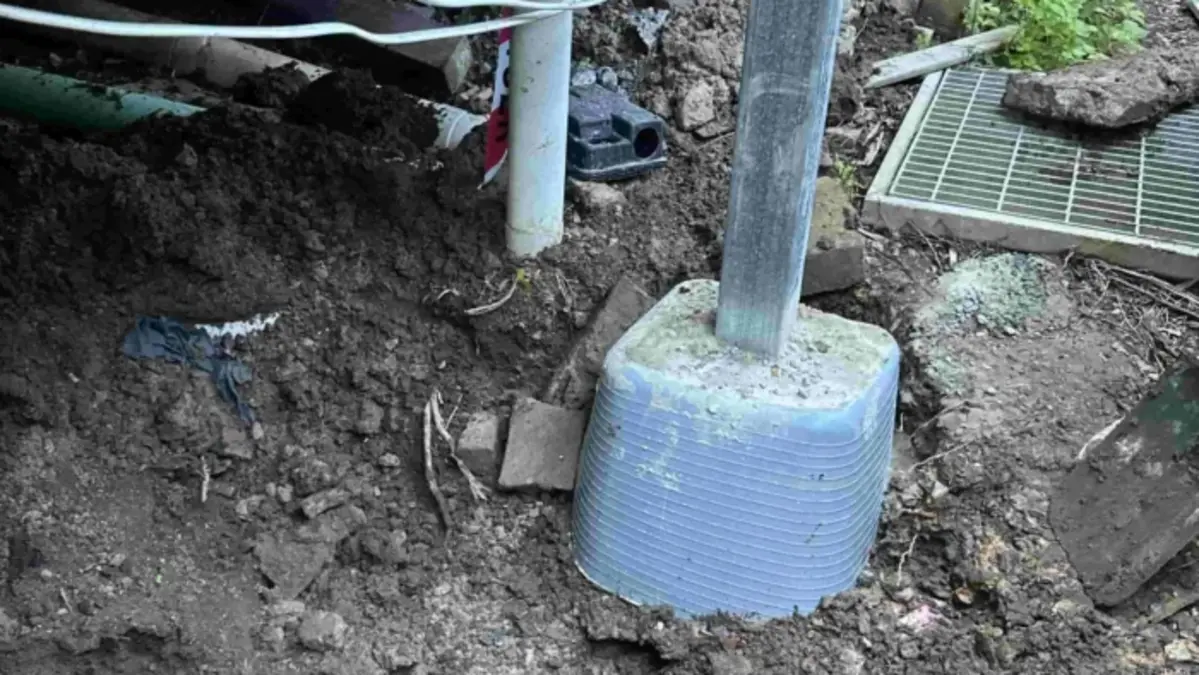
At Lane Cove, SCE’s structural remedial work included stabilisation, excavation, damaged-service repairs and a permanent concrete footing with a steel post. This is an example of connected structural and civil work packages, rather than a concrete cancer price benchmark. It illustrates why a budget should follow the actual scope and interfaces.
SCE brings engineering, construction and project-management experience to remedial projects, with qualified personnel and appointed specialists for the required disciplines. Review our concrete remedial services for the delivery pathway.
Information to send for a project review
Provide the building address, affected elements and approximate extent, dated photographs, available investigation reports or designs, access height, occupancy constraints and intended programme. Identify whether you need an initial budget, a defined tender response or delivery against an issued specification. The Remedial Planning Tool can help organise this brief.
Frequently asked questions
Can concrete cancer repairs be priced per square metre?
A square-metre rate is useful only when its repair depth, preparation, reinforcement scope and access assumptions are defined. Establishment, design, testing and adjoining work may need separate allowances.
Why can the price change after concrete is opened up?
Opening-up may reveal a different depth or extent of deterioration and reinforcement damage. Agree the measurement method, applicable rates and approval process for discoveries before construction.
Does the cheapest concrete repair quote offer the best value?
Compare the same scope, quantities, access, repair system, testing and exclusions. A lower total may omit necessary work or carry different assumptions.
What does SCE need to review a concrete repair budget?
Provide the site address, photographs, available reports or designs, affected elements, approximate extent, access requirements, occupancy constraints and intended programme. State whether you need an early budget or a tender response to a defined scope.