
Reactive Maintenance NSW | School Repairs Sydney | Emergency Construction Services
In the past year Sydney Contracting Engineers (SCE Corp) has supported School Infrastructure NSW with Reactive Maintenance NSW across Western Sydney schools. Sites included Parklea PS Hambledon PS Doonside PS Riverstone HS Wyndham College Quakers Hill HS and Kings Langley PS. Works ranged from toilet repairs and wall patching through to door replacements and elevated roofing tasks with defined safety controls.
Each job was triaged assessed and delivered or closed based on feasibility scope and contractor capacity. This program shows consistent School Repairs Sydney delivery with clear reporting and staged coordination. It also demonstrates how Emergency Construction Services support operational continuity in live education environments through controlled response and verified documentation.
Our Reactive Maintenance NSW approach prioritises fast response safe access and clear coordination with school staff and Asset Services Officers. School Repairs Sydney tasks are planned around bell times and site rules to reduce disruption and maintain hygiene and safety. Where urgent hazards arise Emergency Construction Services provide temporary stability and certified repairs with photo records and on site reporting. This Reactive Maintenance NSW model supports toilets walls roofs and doors across DoE sites and maintains continuity through responsive School Repairs Sydney delivery.
Our School Repairs Sydney workflow is built around rapid dispatch risk assessment and structured site reporting. Emergency Construction Services are activated when a defect presents immediate safety or operational risk and requires urgent stabilisation before full rectification. Each visit includes sign in controls communication with the school contact and clear evidence capture to support close out.
Our Reactive Maintenance NSW model includes priority triage and scope confirmation on arrival plus a practical repair plan that suits school timetables. We deliver School Repairs Sydney with a focus on durability and hygiene and we use Emergency Construction Services when temporary works or urgent reinstatement are required to keep areas operational.
Scope
Across the 7 unique schools listed, SCE delivered:
- Toilet partition replacements and plasterboard patching
- Rust treatment and concrete patching in wet areas
- Fixing doors, locks and aluminium panels for operability
- Repairing and securing roofing panels, downpipes and vents
- Replacing broken laminated glass panels
- Conducting safe inspections where access or scope limitations prevented immediate work
Some work orders involved full rectification (e.g., repainting after patching), while others were scoped, quoted or closed due to work exceeding the handyman scope of works.
Challenges
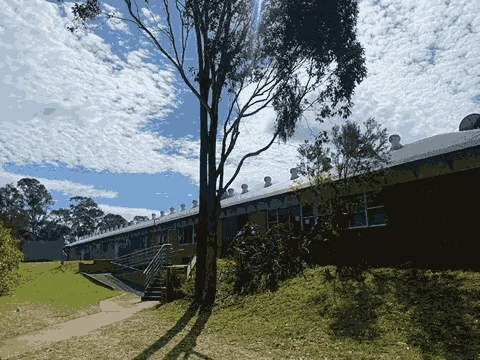
- The reactive nature of Reactive Maintenance NSW often meant conditions changed once the team arrived on site.
- Jobs that appeared minor such as patching a wall or adjusting a door sometimes revealed deeper substrate damage moisture issues or safety constraints that required revised scope.
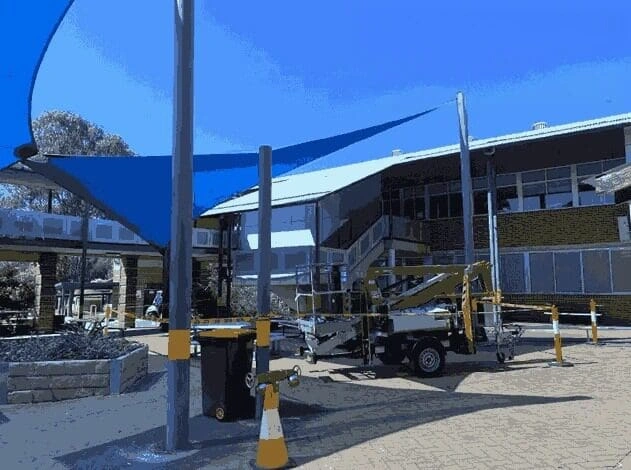
- Elevated or high access roof works required additional controls including EWP use and increased coordination which affected scheduling and resourcing for School Repairs Sydney.
- Delays also occurred due to wet weather restricted power access or the need to match specific materials such as tiles paint or laminates to maintain consistency.
- School site rules and bell times also required careful planning to keep students and staff safe.
Despite these constraints Emergency Construction Services supported urgent stabilisation and safe temporary controls while the team progressed repairs through planned follow up visits. This approach kept Reactive Maintenance NSW outcomes aligned with operational needs across School Repairs Sydney sites.
Safety and Environment
Safety
- Safety controls were applied on every Reactive Maintenance NSW visit due to occupied school settings.
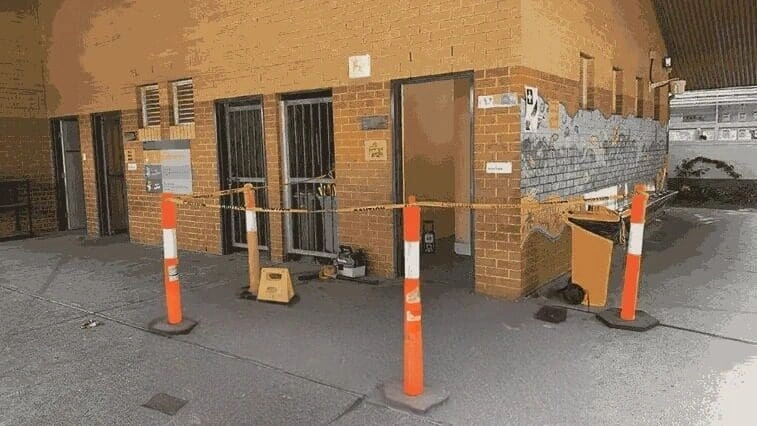
- Before work commenced site rules were confirmed and exclusion zones were set using bollards signage and caution tape.
- Any tasks involving height or roof access used harness checks equipment inspections and documented SWMS and where needed EWP controls.
These measures supported safe School Repairs Sydney delivery and enabled Emergency Construction Services to respond to hazards with controlled access and verified records.
Environment
- Environmental care included responsible removal and disposal of damaged materials and wet area waste.
- Cleaning products and patching compounds were selected to suit school environments and surfaces were cleaned on completion.
- Tools and materials were removed from site and any suitable leftover materials were handed to the school for approved future use.
This supports consistent Reactive Maintenance NSW outcomes for School Repairs Sydney sites.
Quality
Quality workmanship was prioritised across all School Repairs Sydney jobs regardless of size.
- Each site was inspected before repairs began and scopes were refined so all issues were addressed and documented.
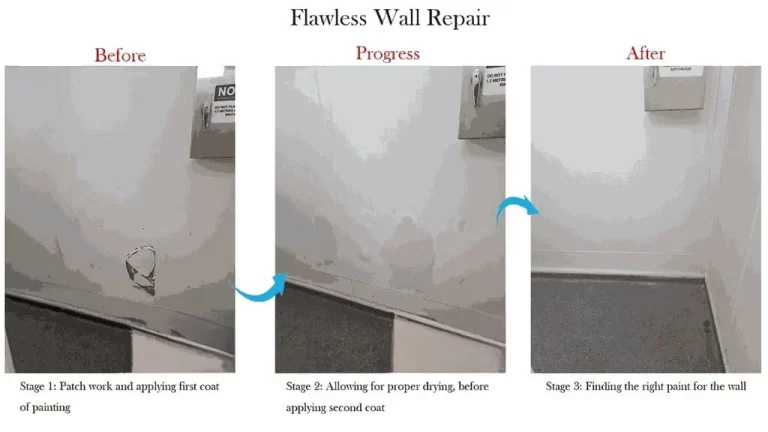
- For works such as wall patching or glazing or wet area repairs the process allowed for drying time and material matching which sometimes required additional visits.
- Correct materials and methods for each repair type using suitable patching compounds professional paint application and secure fixing of elements such as backing boards where required.
This ensured the finished repair was durable and visually consistent within the surrounding area.
Reactive Maintenance NSW close out included:
- Photo evidence and reporting to support verification.
- Where urgent works were needed Emergency Construction Services delivered safe temporary stabilisation followed by compliant permanent repairs when approved.
This approach builds trust and reliability across Reactive Maintenance NSW and School Repairs Sydney delivery.
Community
Working in live school environments requires respectful coordination and a low profile approach.
- For School Repairs Sydney delivery SCE coordinated with General Assistants and school administrators to plan works around classes assemblies and exams.
- The Reactive Maintenance NSW workflow prioritised clear communication on arrival and during works so the school contact understood scope progress and close out steps.
- The team also supported practical handover by sharing maintenance tips where appropriate and confirming how areas should be used after repairs such as drying times for paint or patching.
- When Emergency Construction Services were required the team explained temporary controls and the follow up plan so the school could manage access safely. This collaborative approach supported smooth delivery and reinforced positive outcomes for School Repairs Sydney sites.
Timeframe
Job durations varied based on access and complexity.
- Simple tasks such as door adjustments or minor patching were often completed in a single visit.
- Larger tasks such as glazing replacement roof panel works or extensive wall repairs required multiple visits due to drying time safety setup and material lead times.
- High access roofing works often required EWP planning and this could extend the programme by one to two days including preparation and reinstatement.
Despite these variables SCE progressed works efficiently and kept schools informed through Reactive Maintenance NSW reporting and clear next step actions. Jobs requiring escalation were assessed and documented promptly so the correct trade response could be coordinated. Where urgent risks were identified Emergency Construction Services enabled immediate stabilisation to support continuity while permanent repairs were scheduled. This ensured School Repairs Sydney outcomes remained aligned with operational needs.
Frequently Asked Questions
1. What types of external modifications are commonly permitted in Cranebrook?
2. What is the process for obtaining approval for structural modifications to a property?
3. Are there specific building codes and regulations that must be followed for external modifications in Cranebrook?
4. How can residents ensure that their modifications are compliant with local zoning laws?
5. What is the expected timeline for the approval process for external modifications?
6. Are there any fees associated with applying for external modification permits?
7. What considerations should be made regarding the impact of modifications on neighbours and the surrounding environment?
8. How do external modifications affect property value in Cranebrook?
9. What happens if I make external modifications without council approval in Cranebrook?
10. Can I hire a private certifier instead of the council for external modification approval?
Thank you for your visit and welcome to the construction home