
Defects Triage for Strata and Asset Owners
Defects triage helps strata teams and asset owners sort issues by risk and urgency. A building defect assessment record supports clear scope and faster quotes while strata defect prioritisation keeps budgets aligned. Early action on water ingress risk reduces escalation and avoids repeat mobilisation.
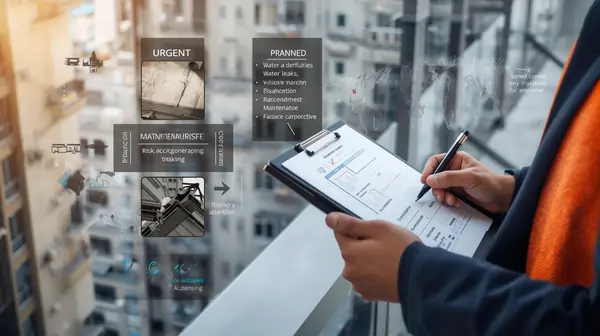
How to separate urgent risk from planned works
Defects triage is a practical way to sort building issues by impact rather than noise, keeping prioritisation consistent across committee members and building managers.
Start by grouping defects into three risk categories:
- Safety risk – damaged balustrades, unsafe edges, facade elements, and compromised fire egress routes requiring immediate controls and clear access rules
- Water ingress risk – items needing early containment, as moisture can rapidly escalate damage, mould, and internal reinstatement costs
- Structural durability risk – cracking, spalling, corrosion indicators, and movement patterns that will worsen if left unaddressed
Once grouped, assign priority levels:
- Urgent – short timeframes with immediate site controls in place
- Planned – defined scope, sequencing, and access plan confirmed before works begin
- Programme – staged on a maintenance cycle to reduce repeat mobilisation costs
A building defect assessment record for each item keeps quotes comparable and supports approvals with less debate. Defects triage does not replace technical advice. It helps you apply the right advice to the right issue in the right sequence.
What information improves prioritisation decisions
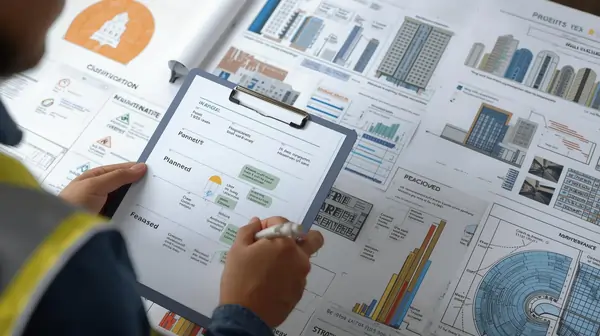
Good defects triage relies on consistent, complete information. The most common failure is incomplete inputs, which leads to conservative pricing or missed scope. Here is what to capture for each defect:
Defect documentation:
- Photos showing the defect and its wider context
- Notes on when the issue started, whether it is worsening, and any temporary controls in place
- For water ingress, record where water is observed, where it may be entering, known weather patterns, and any prior leak history
- Any existing reports or previous defect assessment records, even if preliminary
Access and programme constraints:
- Permitted work hours and lift booking requirements
- Loading area availability and whether affected spaces must remain operational during works
- Budget timing aligned to urgent, planned, and programme priority levels
Consistent inputs allow your team to plan works safely and efficiently without having to rebuild the story each time.
If you would like an independent review, SCE Corp can assess your defect list, confirm triage priorities, and recommend next steps for building defect assessment and water ingress controls.
Frequently Asked Questions
1. What is defects triage?
Defects triage is a method to sort defects by risk plus urgency so remediation is sequenced and funded with clarity.
For more information please refer to remedial, safety, certifications
2. Why is defects triage important for strata or asset owners?
It reduces confusion and supports strata defect prioritisation when multiple stakeholders report issues at the same time.
For more information refer to remedial, safety, certifications
3. What are the main risk categories in defects triage?
The three primary filters are:
Safety risks: hazards that could cause injury or compromise access.
Water ingress risks: moisture-related issues that accelerate deterioration.
Structural/durability risks: defects that may worsen quickly, like cracking or corrosion.
For more information refer to remedial, safety, certifications
4. How does defects triage support budgeting?
It separates urgent items from planned items so you can allocate funds and avoid reactive spend during delivery.
For more information refer to remedial, safety, certifications
5. What information is needed for effective triage?
Provide photos, location details, history, access limits and any prior building defect assessment reports.
For more information refer to remedial, safety, certifications
6. How does occupancy affect triage planning?
Occupancy drives staging plus work hours plus access routes which can change cost plus program and strata defect prioritisation.
For more information refer to remedial, safety, certifications
7.Can triage replace technical advice?
No. Defects triage organises decisions while technical advice confirms cause plus scope plus compliance actions.
For more information refer to remedial, safety, certifications
8. What is the difference between urgent, planned, and program defects?
Urgent: require immediate stabilisation or make-safe actions.
Planned: can be scheduled with a defined sequence and budget.
Program: lower-priority issues that can be grouped into staged maintenance.
For more information refer to remedial, safety, certifications
9. How does SCE Corp help with defects triage?
SCE Corp can review your list and confirm defects triage priorities. We support strata defect prioritisation plus building defect assessment and water ingress risk actions.
For more information refer to remedial, safety, certifications
10. What are the benefits of a structured defects triage approach?
You get clearer priorities, better pricing confidence, fewer variations and faster decisions on water ingress risk and other high impact defects.
For more information refer to remedial, safety, certifications
Thank you for your visit and welcome to the construction home.