
The Building Lifecycle: Construction, Deterioration & Repair
Every structure goes through the same journey. It’s built, it ages, and eventually it needs attention. This post covers three critical focus points: constructing tall buildings challenges, remedial work in construction, systematically repairing distressed structures.
Phase 1 - Building It: Constructing Tall Buildings Challenges
Structural & Constructing Tall Building Challenges
- Must resist vertical loads and lateral wind/seismic forces without excessive material use
- Deep foundations required; caisson shafts can extend hundreds of feet into bedrock
- Column shortening can cause misalignment and must be modelled accurately
Wind & Movement
- Excessive sway can nauseate occupants and damage the building fabric
- Tuned mass dampers and sloshing dampers are used to counteract movement
- Curved or round profiles deflect wind more effectively than flat facades
Construction Logistics
- Pumping concrete to height, cranage, and wind variation between levels are major constructing tall building challenges
- Elevator cables face enormous stress from their own weight at great heights
- Coordinating 100+ subcontractors simultaneously is a significant logistical constructing tall building challenge
Safety, Fire & Sustainability
- Complex fire egress planning required as evacuation becomes harder at height
- Energy use, emissions, and material consumption are growing regulatory concerns and also contribute to the constructing tall building challenges
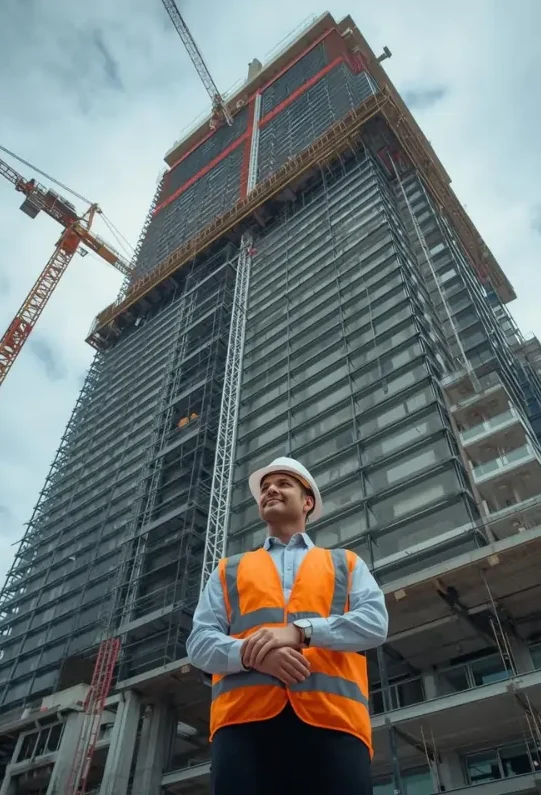
No matter how well a building is constructed, time and environment will eventually take their toll, which is where remedial work in construction comes in.
Phase 2 - When Things Go Wrong: What Is Remedial Work ?

Remedial work in construction refers to the specialised processes undertaken to repair, restore, or improve a structure that has suffered defects, damage, or deterioration.
Common Causes of Remedial Work in Construction
- Design deficiencies – poor load calculations, inadequate spatial planning, or insufficient environmental consideration
- Substandard or incorrectly selected materials
- Poor workmanship – inadequate site preparation, improper installation, or insufficient quality control
- Natural deterioration from environmental exposure
Common Types of Remedial Work in Construction
- Structural repairs – underpinning foundations, reinforcing or replacing beams and columns
- Waterproofing – sealing leaks, installing drainage membranes, repairing water-ingress points
- Concrete cancer remediation – removing damaged concrete, treating corroded reinforcement, applying new concrete
- Facade & cladding repairs – restoring the exterior for safety and appearance
- Repointing – replacing deteriorated mortar in brickwork to restore structural integrity
Key Challenges of Remedial Work in Construction
- Access in high-rise buildings often requires scaffolding or specialist equipment,
- Hidden damage discovered mid-works frequently impacts time and budget,
- Maintaining normal building operations for occupants throughout, are all key challenges of remedial work in construction
Once remedial work in construction is confirmed, engineers follow a structured process for repairing distressed structures, ensuring repairs are safe, durable, and cost-effective.
Phase 3 - Fixing the Problem: Steps for Repairing Distressed Structures
Skipping stages is one of the most common causes of repair failure.
1. Investigate the cause – Identify the root cause before anything else; eliminating it leads to more durable outcomes.
2. Inspect and map the damage – Document type, location, and extent of symptoms with photographic evidence. Hammer sounding tests detect delaminated concrete, while repairing distressed structures.
3. Assess severity – Determine whether immediate repair is required or damage can be managed progressively.
4. Provide temporary support – Support structural members before concrete removal begins to prevent further movement or collapse.
5. Remove damaged material – Remove all cracked, spalled, and loose concrete to expose a sound substrate and clean all surfaces.
6. Reinforce where required – Provide additional reinforcing bars where reinforcement loss exceeds 10%.
7. Select materials and method – Choose repair materials based on defect size, depth, and location, ensuring they don’t accelerate damage to surrounding concrete.
8. Apply repair – Use shotcrete or polymer concrete for patch repairs, and grouting for honeycombed sections, for repairing distressed structures.
9. Apply protective coatings – Coat all repaired surfaces to prevent future deterioration, while repairing distressed structures
10. Cure and monitor – After repairing distressed structures, allow adequate curing time and monitor ongoing performance before returning the structure to full service.

Bigger Picture
Construction, deterioration, and repair are three inevitable stages in the life of every structure. Whether you’re designing a skyscraper, assessing constructing tall building challenges, or repairing distressed structures the principles remain the same: diagnose accurately, plan thoroughly, and execute with precision.
Frequently Asked Questions
1. What are the biggest risks when constructing a very tall building?
The biggest risks include structural failure under wind and seismic loads, foundation instability, construction logistics at height, and fire evacuation challenges. Proper engineering design and compliance with building codes mitigates these risks significantly.
2. How do engineers stop skyscrapers from swaying in the wind?
Engineers use tuned mass dampers; large weighted mechanisms that counteract building movement, as well as sloshing dampers, which use water movement to absorb energy. Building shape also plays a role; curved and round profiles naturally deflect wind better than flat facades.
3. What is the difference between remedial work and a renovation?
A renovation improves or upgrades a structure for aesthetic or functional purposes. Remedial work specifically addresses defects, damage, or deterioration that affects the safety, integrity, or compliance of a structure. It is restorative rather than cosmetic.
4. What is concrete cancer and how is it treated?
Concrete cancer occurs when moisture penetrates concrete and causes the steel reinforcement inside to corrode and expand, cracking the surrounding concrete. Treatment involves removing all damaged concrete, treating or replacing the corroded steel, and applying fresh concrete and protective coatings.
5. How long does remedial work typically take?
This varies significantly depending on the extent of damage and type of repair. Minor waterproofing or repointing jobs may take days, while large-scale structural repairs to a multi-storey building can take several months.
6. Can a severely distressed structure always be repaired?
Not always. In some cases, the extent of damage, particularly to foundations or primary structural elements may make repair uneconomical or unsafe. A structural engineer will assess whether repair, partial demolition, or full demolition is the appropriate course of action.
7. What causes a building to become structurally distressed?
Common causes include poor original design or workmanship, use of substandard materials, prolonged environmental exposure, lack of maintenance, unanticipated loading, natural disasters, and age-related deterioration.
8. What is the most important step when repairing a distressed structure?
Identifying and eliminating the root cause is the most critical step. Applying repairs without addressing the underlying cause will result in the damage recurring, often faster than the first time.
9. Who is responsible for remedial work on a building?
Responsibility depends on the cause and timing of the defect. During the defect liability period after construction, the builder is typically responsible. Beyond that, responsibility may fall on the building owner, strata committee, or insurer depending on the circumstance and applicable legislation.
10. How can building owners prevent the need for major remedial work?
Regular inspections, proactive maintenance, prompt attention to minor defects, and ensuring any construction or renovation work is carried out by licensed and compliant contractors are the most effective ways to prevent small issues escalating into costly structural problems.
Thank you for your visit and welcome to the construction home.