
Waterproofing NSW: Process, Rules and Facade Sealing Explained
Whether you manage a strata building, own a commercial property, or are planning a construction project, understanding waterproofing in NSW is essential to protecting your asset, meeting your compliance obligations, and avoiding costly water damage down the track.
What is the process of waterproofing in construction?
It is a systematic process designed to prevent water from penetrating a building’s structure. When carried out correctly, it protects the building envelope, extends the lifespan of structural elements, and reduces the risk of costly remedial works later.
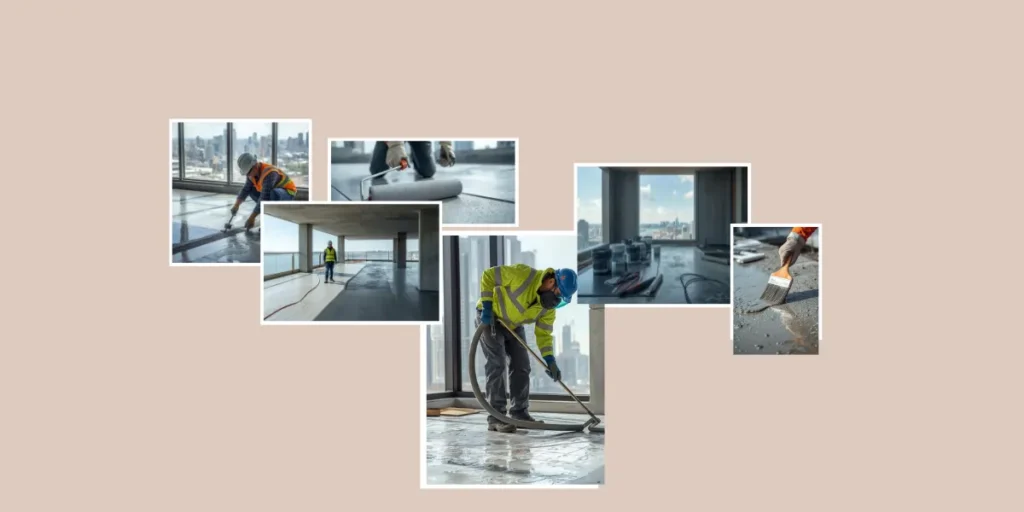
The process typically follows these stages:
1. Inspection and Assessment
- The affected area is inspected to identify existing water ingress, membrane failure, or substrate defects
- An engineer or a specialist assesses the surface condition and determines the appropriate system
- In NSW, regulated waterproofing work requires a registered design practitioner under the DBP Act.
2. Surface Preparation
- Existing failed membranes, coatings, or contaminants are removed
- The substrate is cleaned, repaired, and primed to ensure adhesion
- Cracks, joints, and penetrations are treated before membrane application
3. Membrane Application
- Existing failed membranes, coatings, or contaminants are removed
- The substrate is cleaned, repaired, and primed to ensure adhesion
- Cracks, joints, and penetrations are treated before membrane application
4. Inspection and testing
- Completed service is inspected and tested before being concealed by finishes
- In NSW, waterproofing inspections are a mandatory hold point under the NCC
- A compliance certificate is issued where required under the DBP Act
5. Protection and Finishes
- The membrane is protected with screed, tiles, or other finishes as specified
- Expansion joints and drainage details are installed to manage water movement
- The completed system is documented and handed over with relevant warranties
What are waterproofing rules in NSW?
This service in NSW is governed by the National Construction Code (NCC), and the Design and Building Practitioners Act 2020 (DBP Act). Non-compliance is one of the most commonly reported building defects in NSW, making compliance a critical priority for builders, designers, and building owners alike.
Key standards and regulations:
- AS 3740 – covers domestic wet areas, including bathrooms, en-suites, and laundries
- AS 4858 – covers wet area membranes for residential and commercial applications
- NCC Section F – sets out water management and weatherproofing requirements for all building classes
- DBP Act 2020 – requires it to be a regulated design, meaning a registered design practitioner must prepare and declare compliance before installation commences

Key compliance obligations for builders and owners:
- Waterproofing must be designed and declared by a registered practitioner for class 2 buildings and above
- Mandatory inspection hold points must be observed before it is concealed
- Building certifiers must sign off at key stages of construction
- Defective services can give rise to claims under the DBP Act duty of care for up to six years
Can a builder do waterproofing in NSW?
In NSW, waterproofing must be carried out by a licensed contractor holding the appropriate licence category under the Home Building Act 1989. For class 2 buildings and above, the design must also be prepared and declared by a registered design practitioner under the DBP Act. Unlicensed work is non-compliant and can void warranties, affect insurance, and give rise to significant liability.
What is facade waterproofing?

The term refers to the application of protective coatings, sealants, and membrane systems to the external face of a building to prevent water penetration through walls, joints, and cladding systems. It is a critical component of building envelope management, particularly for multi storey residential and commercial buildings across Sydney and NSW.
What does it protect against?
- Water ingress through masonry, render, and cladding systems
- Joint and sealant failure at expansion joints, window frames, and penetrations
- Facade tile delamination caused by moisture behind the substrate
- Efflorescence, staining, and surface deterioration from prolonged water exposure
- Structural damage to concrete and steel elements behind the facade
Common systems:
- Elastomeric coatings – flexible, paint-applied systems that bridge fine cracks and repel water
- Penetrating sealers – silane or siloxane-based products that penetrate masonry to repel water without changing appearance
- Liquid applied membranes – used at high risk areas including balcony edges, parapets, and window heads
- Joint sealants – polyurethane or silicone-based sealants applied at movement joints and facade penetrations
How long does facade waterproofing last?
The lifespan depends on the system used, the installation quality, and the building’s exposure conditions. As a general guide:
- Elastomeric coatings typically last ten to fifteen years before recoating is required
- Penetrating sealers generally perform for five to ten years, depending on exposure
- Joint sealants typically require inspection every five years and replacement every ten to fifteen years
- Liquid-applied membranes in high-exposure areas should be inspected every five years
Regular facade inspections are strongly recommended to identify early signs of sealant failure, cracking, or water ingress before they escalate into significant remedial works.
Waterproofing is one of the most critical and most frequently defective elements in Australian construction. Whether you are dealing with a failed bathroom membrane, water ingress through a building facade, or compliance obligations under the DBP Act, engaging a qualified specialist early is the most cost effective way to protect your building and avoid escalating remedial works. SCE Corp provides end to end waterproofing and facade sealing services across Sydney and NSW, from initial inspection and DBP Act compliant design through to installation, certification, and handover.
Frequently Asked Questions
1. What is the difference between waterproofing and damp proofing?
Waterproofing and damp proofing are often confused but serve different purposes. Damp proofing is a basic moisture resistant treatment designed to resist minor moisture vapour, typically applied to below ground walls and slabs. Waterproofing is a more comprehensive system designed to withstand full water pressure and prevent liquid water penetration. In NSW, waterproofing is required by the NCC for wet areas, balconies, and facades, while damp proofing alone is insufficient for these applications.
2. How do I know if my building has a waterproofing defect?
Common signs of waterproofing failure include water stains or tide marks on internal walls and ceilings, efflorescence on external masonry, bubbling or lifting floor tiles, mould growth in bathrooms or behind walls, and visible cracking or separation of sealants at joints and window frames. If any of these signs are present, a specialist waterproofing inspection by a qualified engineer or building consultant is strongly recommended before the damage escalates.
3. Is waterproofing covered under the statutory warranty in NSW?
Yes. Under the NSW Home Building Act 1989, waterproofing is classified as a major defect, meaning it carries a statutory warranty of six years for major defects and two years for non-major defects. Building owners and strata managers who identify waterproofing failures within these periods may be entitled to have the builder rectify the defective work at no cost. Claims can also be pursued under the DBP Act duty of care where the builder or designer failed to meet the required standard of care.
4. How often should building waterproofing be inspected?
As a general guide, building waterproofing should be inspected every five years as part of a routine building maintenance programme. High exposure areas such as rooftop terraces, podium decks, and facades in coastal locations may require more frequent inspection, particularly after severe weather events. Early identification of waterproofing defects significantly reduces the cost and disruption of remedial works.
5. Can waterproofing be applied over existing waterproofing?
In some cases yes, but it depends on the condition and type of the existing membrane. If the existing waterproofing system is structurally sound and properly bonded to the substrate, a compatible overlay system may be applied. However, if the existing membrane has failed, delaminated, or is incompatible with the new system, full removal and reapplication is required. A specialist waterproofing assessment should always be carried out before a decision is made to overlay rather than replace.
6. What areas of a building require waterproofing under the NCC?
Under the National Construction Code, waterproofing is required in all wet areas including bathrooms, ensuites, laundries, and kitchen splash zones. It is also required for external elements including balconies, rooftop terraces, podium decks, planter boxes, and below ground structures such as basement walls and lift pits. Facade waterproofing and joint sealing are required wherever the building envelope is exposed to weather and water penetration risk.
7. What is the role of a registered design practitioner in waterproofing under the DBP Act?
Under the DBP Act, waterproofing is a regulated design for class 2 buildings and above, meaning it must be designed and declared by a registered design practitioner before installation commences. The practitioner is responsible for ensuring the design complies with the NCC, relevant Australian Standards, and any site specific requirements. This declaration creates a clear line of accountability and ensures the waterproofing system is fit for purpose before a single membrane is applied.
8. How long does waterproofing take to cure before tiling or finishing?
Curing times vary depending on the waterproofing system used and site conditions. Liquid applied membranes typically require 24 to 48 hours of curing time before tiling can commence, though some systems require longer depending on temperature and humidity. Sheet membranes are generally ready for overlay sooner. It is critical that waterproofing is fully cured and inspected before any finishes are applied, as premature covering is one of the most common causes of membrane failure and subsequent building defects in NSW.
9. What is the difference between facade sealing and facade waterproofing?
Facade sealing typically refers to the application of penetrating sealers or surface coatings to repel water and protect masonry from surface deterioration. Facade waterproofing is a more comprehensive treatment that includes the application of membranes, coatings, and joint sealants to prevent water penetration through the full depth of the facade system. Both are important components of building envelope management, and in many cases a complete facade treatment programme will incorporate both sealing and waterproofing systems depending on the building’s condition and exposure.
10. How much does waterproofing cost in NSW?
Waterproofing costs in NSW vary significantly depending on the area being treated, the system specified, the extent of any defect rectification required, and access conditions. As a general guide, bathroom waterproofing for a standard residential wet area typically ranges from $500 to $1,500, while balcony and podium deck waterproofing can range from $80 to $150 per square metre depending on the system and substrate condition. Facade waterproofing for multi storey buildings is priced on a project specific basis following a detailed inspection and scope of works.
Thank you for your visit and welcome to the construction home.